
 E-Paper



Review: The Elsewhereans by Jeet Thayil
An olio of family memoir, autofiction and about two dozen photographs, Jeet Thayil’s The Elsewhereans chronicles life on the move

 Prefer HTon Google


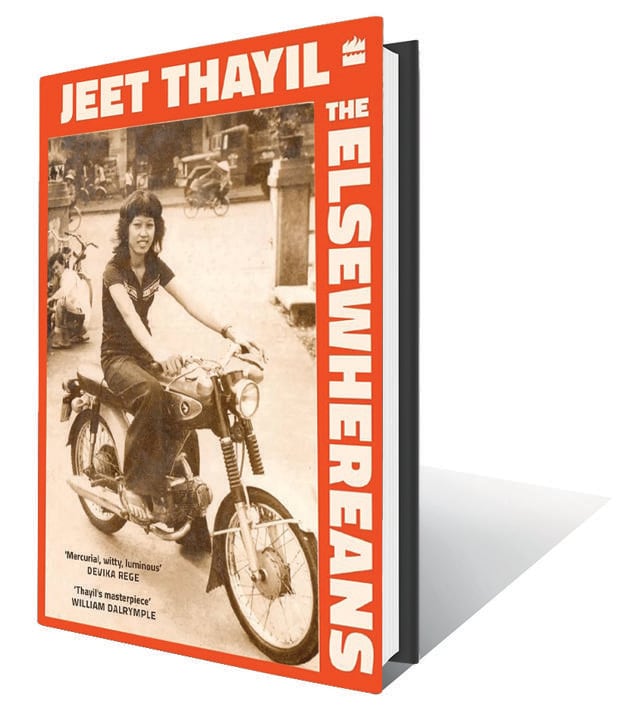
In Bangalore in 2017, TJS George pulled out an old black-and-white photograph of a Vietnamese woman on a motorcycle. “If you go to Vietnam, remember me to her. She was very important to me in those days,” he told his son. “You’ve spoiled it,” his son Jeet said. “You shouldn’t have said that. It’s better to be silent about some things.”
Jeet Thayil’s The Elsewhereans is an olio of family memoir, autofiction and about two dozen photographs. He calls it a documentary novel.
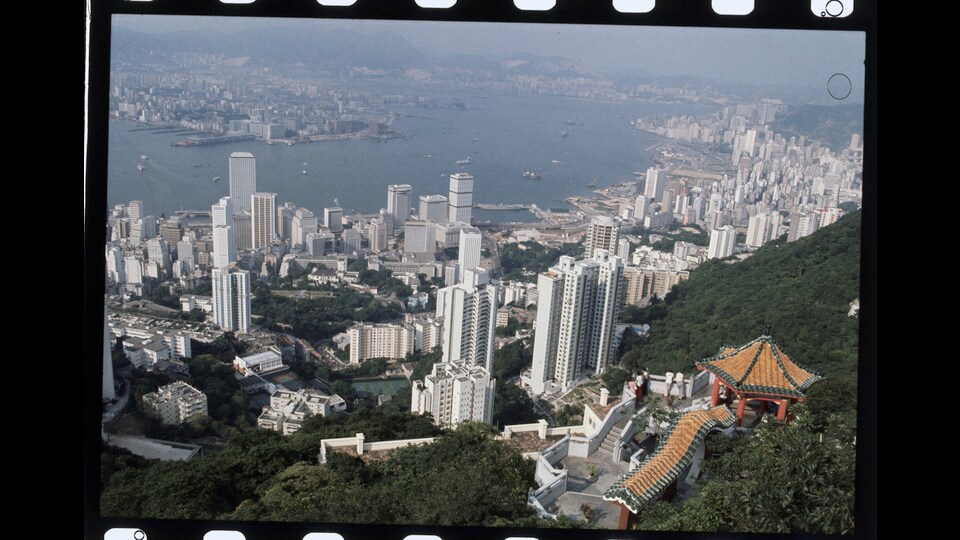
His family had “lived Elsewhere too long”; between them, in Bombay, Patna, New York, Vietnam, Hong Kong, Bangalore, Paris, Berlin... They had “become Elsewhereans.”
The book chronicles life on the move. It opens with an old photograph of a young Ammu Thomas, a schoolteacher in Cochin, posing with several sports trophies won as a student. It was sent as her matrimonial photo to George, a journalist in Bombay. Boldly for the time, he decided to meet her in person before agreeing to the arranged match. It’s a winsome little meet-cute followed by their wedding described in impossible — visual, saturated, visceral — detail spread over 10 buoyant, luminous pages. The wedding was held at Ammu’s home in Mamalassery, built on land that was once a “pleasure station” for the king of Travancore gifted to her ancestors, near the Muvattupuzha river.
Inaccessible by road, older guests were brought it on boats. The mad wedding cook conjured up succulent dishes while drunk on toddy and had loud fights and sex with his assistant for the time whom he called his wife. George declared he won’t marry in a church because he’s more Hindu than Christian — “we were all Hindu once” he said; “two thousand years ago,” an aunt pointed out. An uncle had a heart attack en route the boat but returned from the hospital in time for the feast and whiskey because “heart is the size of undivided Hindustan, too large to partition or attack.” (The year was 1957.)
This is all to say that The Elsewhereans is set up to be a very different novel than the one that ultimately unfolds. Ammu and George’s marriage is told like an adventure even as it is told through his phenomenal journalism career and her astute financial investments. Just before the wedding, George had spent a few months teaching at a journalism school in the US. A few years earlier, he had taken up a job as a cook on a cargo ship to travel the world and write a book about it. After they were married, they lived in Bombay for a few years — it was her first time out of Kerala.
They moved to Patna in the 1960s where he, the editor of a newspaper, was arrested on charges of sedition for upsetting the chief minister. He went to North Vietnam on a four-week reporting trip and stayed on for seven months even after the fall of Saigon. In Hong Kong, fed up of working in a predominantly white newsroom, he launched a magazine covering Asia for Asians — without the white gaze and not under white supervision — in the 1970s.
She invested in property and stocks and her financial wizardry is how, Thayil said in an interview, he is able to afford write novels. And in Hong Kong, “In the pageantry of the island, unfolding district by district, Ammu experiences Elsewhere as a spiritual calling. Among crowds of people of every race and religion, she knows internationalism as the true nationalism and freedom as the only patriotism.”
The narrative is non-linear, it zigzags across time and tone. In 2018, their son — Jeet — goes to Vietnam looking for Nguyen Phuc Chau, the woman from his father’s old photograph. Here the book turns into a travelogue as he goes on a guided tour with Chau’s granddaughter who runs a travel agency.
The photograph — this family secret — is also the cover of The Elsewhereans.
But how much of it is true?
In an interview, Thayil has said, his mother had wanted to tear that photo into a thousand pieces. It’s easy enough to piece together or at least check the veracity of this novel online. But the mysteriousness is kind of the point. The photos too aren’t always from the family archive. Sometimes it’s something corresponding with the text. A Chinese photographer who “insists she’s not a photographer as much as a documentarian” (the author’s hat tip?) shows Jeet a photo of a Song dynasty woman with those broken and bound golden lotus feet and it’s in the book corresponding to the text. But there’s also a picture of a little poster of the Janpath Hotel at the beginning of a chapter set in Delhi but if there’s a deeper or hidden meaning to be made here, you could not tell.
The veneer of fiction is fine because it just flows. It reads like a novel and it feels real. And at some point, in life, all family stories blur into gossip and end up as lore. The best works of most Indian novelists (at least those writing in English) are about their families: Vikram Seth’s A Suitable Boy, Arundhati Roy’s God of Small Things, Salman Rushdie’s Midnight’s Children. Jerry Pinto’s Em and the Big Hoom. It’s a rare thing to be able to write well about one’s family without necessarily excavating pain. It’s what makes The Elsewhereans so enjoyable.
But in the middle, it becomes sort of fragmentary. Thayil shifts to the first person in these sections. A stream of unrelated strangers make appearances. He has a bad trip at a poetry reading, and shoplifts booze in Paris. He meets a tofu stall owner in Hong Kong who tells him the story of his life: he had once been a famous as a poet of fortune cookies and then Mao’s ghostwriter. It’s all interesting enough, but it sticks out. This section (and the vast cast of minor characters, all Elsewhereans here to make a point) undercuts an otherwise-satisfying novel.
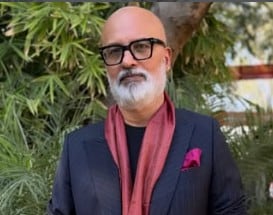
Thayil’s genre defiance, particularly his smoke-and-mirrors form, has divided readers and critics. How much of the novel’s Jeet is Thayil? What’s true, what’s untrue? Perhaps the answer is to be found in a hypnotic little note:
“If memory could speak what would it say? Only lies. Beautiful lies quietly said with a straight face and a pure heart. And in the saying, the lies, of every colour and size and degree of intent, all the lies would be true. As here, at the start, where memory might say something as plain and clear as this: All stories begin with a river, and end with one. And you might say in reply, Yes, I believe this to be true.”
The tale picks up again when the family coalesces at Ammu’s childhood home. Ammu and George are in their nineties. It’s raining incessantly. His cousin has left her husband and returned to the family home. There are her parents (and their migration story). There isn’t any family drama, it just, as Ammu thinks, “seems correct then that these memories have lost their sting and can no longer cause hurt or happiness. They are only receptacles to return to her past.”
Saudamini Jain is an independent journalist. She lives in New Delhi.


