
 E-Paper



Review: The Master of Unfinished Things by Geet Chaturvedi
This book outlines the author’s reflections on various subjects including his childhood dream of becoming a fast bowler, cats, Buddha and life in Mumbai

 Prefer HTon Google


Writing essays and memoirs is a strange art. While cultural magazines in the West are always on the lookout for well-written personal essays, in the Hindi sphere, essays are hardly ever read. Why this is so is unclear. Perhaps there really aren’t many readers for this form. While there are many readers of creative non-fiction in the Anglophone world, Hindi readers seem to be fixated on good fiction.

This doesn’t mean Hindi lacks good essayists or writers of nonfiction. From Agyeya, Shivani and Nirmal Verma to Geet Chaturvedi and Mridula Garg, there has been a rich tradition of essay writing in Hindi. Still, they have always had a niche readership, one that appreciated how essays and memoirs allow readers to encounter the “real” writer and engage more intimately with them.
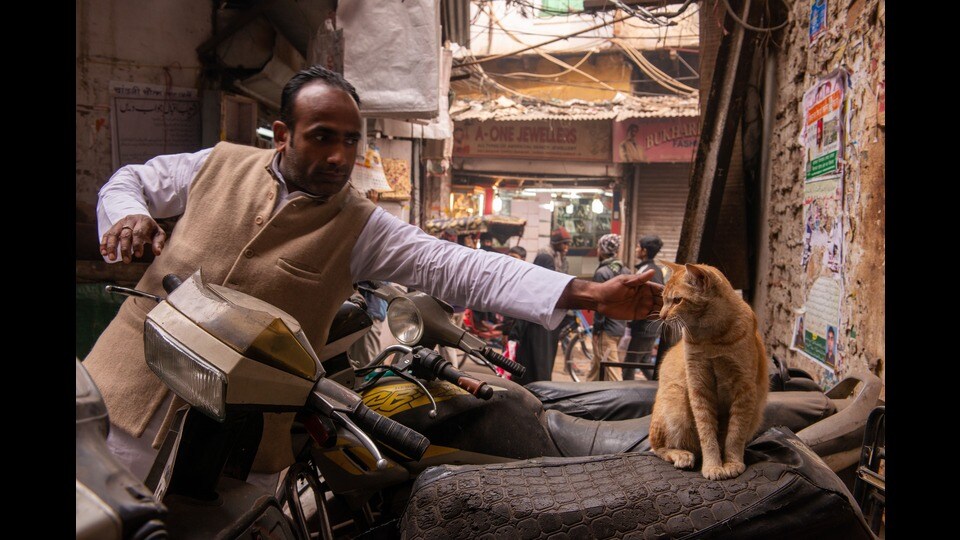
Geet Chaturvedi enjoys a well-established presence as an essayist. His collection of essays, memoirs, and creative non-fiction, The Master of Unfinished Things, translated by Anita Gopalan, offers a glimpse of his literary acumen to English readers. This slim volume presented without any preface or introduction is a meticulously curated selection of Chaturvedi’s works. Divided into three parts: memoir, diary and creative prose, and essays, all the works in this volume are delightful to read with the memoirs being especially interesting. Erudite and impactful they have just the right balance of pathos and logos. Take his piece on Marathi tribal poet Bhujang Meshram, which not only introduces the reader to the subject but also focuses on his equation with the author. Another piece, Cat Years, is equally riveting. Unlike Japanese literature, Hindi literature rarely features writing on cats. English literature, too, has a rich body of both fiction and non-fiction devoted to cats. Perhaps Hindi writers, especially those who live outside urban milieux, are less likely to keep pet cats; perhaps they are deterred by feline pescetarianism, who knows?
In the titular essay, The Master of Unfinished Things, Chaturvedi conveys an idea that many poets have also expressed – that they often leave their work unfinished. He quotes the French poet Paul Valéry, who said, “A poem is never finished; it is always an accident that puts a stop to it.” Similar thoughts have been shared by the Urdu poet Faiz Ahmed Faiz in his Nazm Kuch Ishk kia kuch Kaam kia. By referring to himself as The Master of Unfinished Things, Chaturvedi acknowledges that he too has several unfinished works. The inability to complete a work has long been an important aspect of literary pursuits.
Chaturvedi has largely been known for his poetry. In the age of social media, his metaphors and his ideas of tender love have gained him popularity. His prose too has been admired for its craft and simplicity. This book outlines his reflections on various subjects including his childhood dream of becoming a fast bowler, cats, Buddha, the Karvi flower, writing, his friends, and life in Mumbai.
Reading this collection is an experience. However, the author’s obsession with quoting various authors and poets even for the most banal things reveals an interesting aspect about Hindi writers: to establish credibility, they often seek validation through something. For Chaturvedi, that validation, perhaps, comes from his engagement with world literature. And it’s true that many of his fellow writers know him as someone who is also an avid reader. Maybe Hindi writers seek external validation because Hindi readers are difficult to please. Hindi books don’t sell easily either.
There is also no robust discourse around craft in Hindi. As a result, experimentation is rarely appreciated unless the author has some tool or authority to validate it. Hindi publishing is also struggling to afford experimentation, especially in non-fiction. And because credibility is the biggest selling point in a world where virality decides a book’s worth, Hindi authors often end up being bigger than their craft. Still, good writing usually finds a way to be appreciated.
Reading this collection reminded this reviewer of Vineet Gill, author of Here and Hereafter: Nirmal Verma’s Life in Literature. Gill writes with an editor’s precision and clean sentences, while Chaturvedi writes in simpler, poetic sentences. Despite writing in two different languages, both come across primarily as readers. It is a wonderful thing for a writer to also be a good reader.

And it is exciting that Hindi essays and creative non-fiction is now being translated into English. Essays offer a distinct form of cultural expression. However, due to the paucity of Hindi literary magazines, essay writing in the language is becoming a dying vidha (form). Geet Chaturvedi is an important contributor and driver of this tradition and his book deserves to be widely read. Perhaps it will preserve and engage with this vidha in Hindi.
Mayank Jain Parichha is an independent bilingual journalist. He writes about the environment, wildlife, culture, literature, and politics.


