
 E-Paper



Review: The South by Tash Aw
The first in a proposed quartet, this Booker-longlisted title tells the story of the Lim family and their farm manager Fong while also examining the silences around familial and national histories

 Prefer HTon Google


In the introduction to Michel Foucault’s collection of essays, Power, Colin Gordon invokes the author’s submissions from Discourse and Truth: The Problematisation of Parrhesia. He notes that the “function of ‘truth telling’”, which in all its complexity is an “endless work”, can neither “take the form of a law” nor can it come from one source alone. In today’s world, when truth and facts can be made up, fiction seems to be a fertile ground to tell the subverted truth. Taiwan-born Malaysian writer Tash Aw has been making effective use of it.
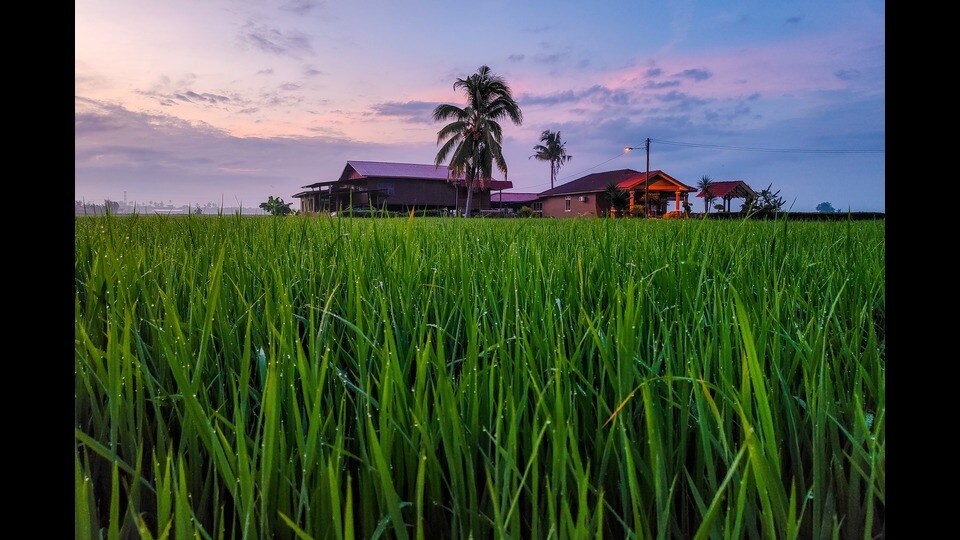

Making connections between historical memory and truth, exploring the relationship between power and knowledge that Foucault notes, Aw has been spinning stories that make characters negotiate with the silences their familial — and national — histories have meticulously observed and preserved. Aw is interested in this exercise because his family’s history is “a story of silence” too, which he mines to vocalise truths that don’t usually have an easy way out in real life. The emotion that simmers across his work is a testament to his labour, which is particularly reflected in his 2025 Booker-longlisted title, The South, set in rural Malaysia.
Aw, like another Malaysian novelist, Tan Twan Eng, is a third-time nominee. The South is the first in a proposed quartet. Initially, Aw was determined to write an 800-page tome; however, he rejected the idea, thinking it to be “hypermasculine” in ambition. In an interview, he notes that he has built this quartet “bottom up”, signalling a Cuskian influence (one of the writers Aw is inspired by, whose novel Parade began with an artist who, late in his career, began painting “upside down”).
Like his previous works, both internal and larger political forces inform Aw’s novel. In telling the story of the Lim family and that of the farm manager, Fong, he manages to illuminate fractures that are part of the everyday life of families who haven’t successfully negotiated with their shared histories.
Leveraging dialogues and internal monologues, and switching voices, Aw effectively builds a believable world where several identity crises of sorts are staged. The reader can only marvel at his prose and his storytelling capabilities.
The novel begins with this sentence: “Two boys walk through the scant shade of an orchard, far from the house where they are staying.” The beginning of this story cements what’s going to unfold as it progresses: two young men will learn who they are to each other as they find the spatial and temporal spaces between them compress and expand.
The writer, who has rightfully earned the moniker, ‘Malaysian Graham Greene’, asks of readers, “What are they, then”, because they’re boys who’re no longer boys, but aren’t men yet either. It crystallises a feeling in readers and makes them wonder if they should examine the characters’ actions liberally. The boys are Jay and Chuan. The former is the only son of Jack Lim, a schoolteacher, who married his former student, Sui Ching. His family had a piece of land, a farm — a wasteland; it’s to this land that the family goes to one summer. The farm is managed by Fong, whose complicated relationship with the Lim family is revealed in a remarkable fashion.
Chuan, Fong’s son, is a freewheeling young man who doesn’t care for the charades that most families observe — the same charades that have seem to bore the two daughters of the Lim family, Lina and Yin, who, when the novel begins, are occupied by the idea that their parents are “on the brink of divorce”. The initial ruptures began to surface way back, when the two were getting married against Jack’s mother’s will. She wanted her son to marry “into the kind of old Chinese family that streets and buildings in the city were named after. What better way for a family of immigrants to ensure that they were part of the history, and future, of the country?”
From here on, the novel moves at a deliberate pace, revealing the different working styles and attitudes that Jack and Fong have as well as their disagreements. However, they essentially converge on one thing: money. Aw sketches characters masterfully. For example, when Fong explains the weather conditions upon the Lim family’s arrival, Sui Ching says, “You’re not responsible for the weather”, while Jack reads newspapers and reaches for “the coffee without looking up”. In setting such scenes, Aw explains more in fewer words. Moreover, these conversations allude to a larger conversation — on the climate and economic crises — that must be had.
It’s in this environment that the seed of same-sex desire between Jay and Chuan is planted. Though it grows slowly and quietly, as any love that blossoms must, its ferocious intensity isn’t lost on readers when they witness exchanges between the two young men. There’s a carelessness about Chuan that’s disguised as freedom; Jay’s cluelessness is enveloped in shame. These differences explain why the two seem to operate on different axes, but they converge when they desire each other. And when they do, Jay makes himself readily available, while Chuan ‘cleans’ himself for Jay. This is peculiar, for this can also signal that Chuan is experiencing something shameful, which is why he doesn’t want to ‘dirty’ Jay, who doesn’t understand this behaviour at all. He wants Chuan as is, with his flesh marinated in dirt, sweat, beer, or whatever. It’s the shape of desire: organic, raw, and nascent.
Jay’s imagination further reveals something about the kind of conversations Aw seems to centralise in this novel. When Jay thinks of his father as an “elderly” and “weak” man, for a moment he feels Jack would be “divested of his power” but he soon realises that even when his father is 100, he’ll not fail to exercise the same level of control and fear as he does now. Extrapolate this internalised familial fear and replace fathers with political leaders, and the reader understands that this is also true about an authoritarian nation.

In an interview, Aw notes growing up in a country where “censorship was a way of life”. As an artist he feels that creativity then was being calibrated against authority. Similar power play can be observed in a family with a homophobic father. In such a situation, a queer child has to either come out all guns blazing or indulge in pretence, a performance that nearly everyone in the family excels at in order to stay together even though they may be as fragmented and disconnected as the Lim family is in this book.
However, some moments crack the neatness of this keeping up of appearances, and the family is confronted with the novelty of the information that’s revealed to them. To a daughter, it may be an act of domestic violence. To a son, it may be his sexuality. To a wife, a susurration of desire in the presence of a man who is not her husband. To a man, his uselessness in the face of events. All these experiences help inform the reader’s understanding of what once was. With this novel, Aw states that he was trying to “recreate how I understood life at that point”. In locating that understanding, Aw manages to verbalise the innately private that rings universally, and the reader is left waiting eagerly for what will follow in this story in the next part.
Saurabh Sharma is a Delhi-based writer and freelance journalist. They can be found on Instagram/X: @writerly_life.


