
 E-Paper



Review: Memoirs by Mannu Bhandari and Rajendra Yadav
Poonam Saxena’s translations of Mannu Bhandari and Rajendra Yadav’s memoirs provide an insight into their lives

 Prefer HTon Google


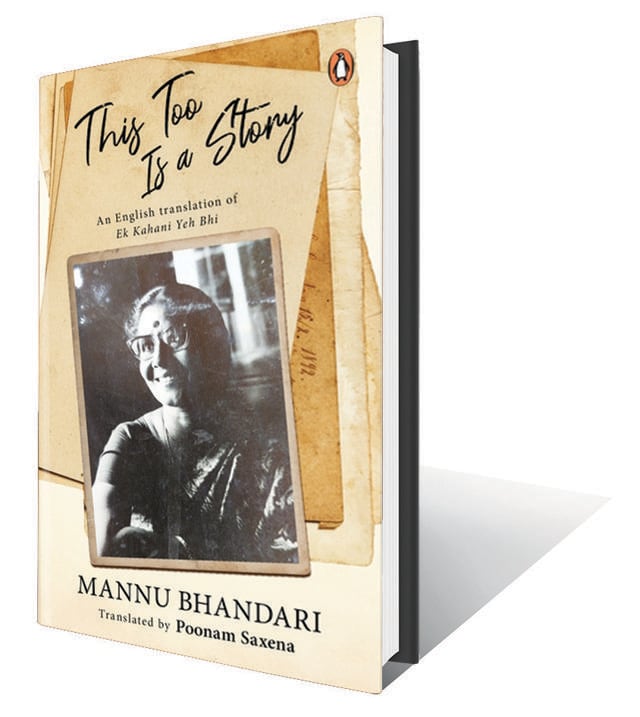
The Nayi Kahani movement in Hindi literature, which emerged in the 1950s and ’60s, focused on interpersonal relationships, urban life, and the dilemmas of the middle class. One literary couple, Mannu Bhandari and Rajendra Yadav, was an intrinsic part of the scene. While Yadav wore many hats as a writer, journalist, editor, and publisher, and lived a colourful life that ended in biting loneliness, Bhandari remained, in her own effortlessly natural way, a writer, professor, and a rebel of sorts. Both of them looked at their own lives in remarkable memoirs that writer and journalist Poonam Saxena has now translated: Bhandari’s Ek Kahani Yah Bhi (2007) as This Too Is a Story, and Yadav’s Mud Mud Ke Dekhta Hoon (2001) as Echoes of My Past.
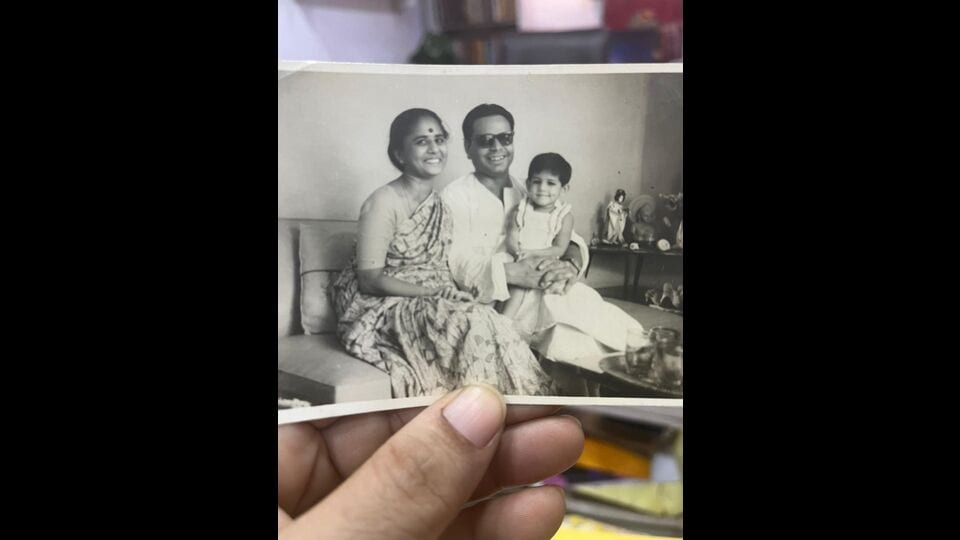
Bhandari and Yadav, through their craft and their public personas, left a huge imprint on the Hindi literary space. Yadav, one of the finest short story writers of his time, later became the editor of the reputed literary magazine, Hans. From its helm, he could both foresee literary directions and help shape them. He gave a chance to many new writers, including International Booker Prize Winner Geetanjali Shree, and expressed his strong opinions about literature and society through the magazine.
His personal life, however, was a struggle. An absent husband and father, he found it hard to form long-term friendships and bonds. He had many affairs and did little to hide them. In his own admission, he took his family and wife for granted. For Yadav, writing was his “primary responsibility”. Ironically, in his memoir he wrote about how, in the last decades of his life, he struggled with his inability to write. He, in fact, moved from fiction to journalism.
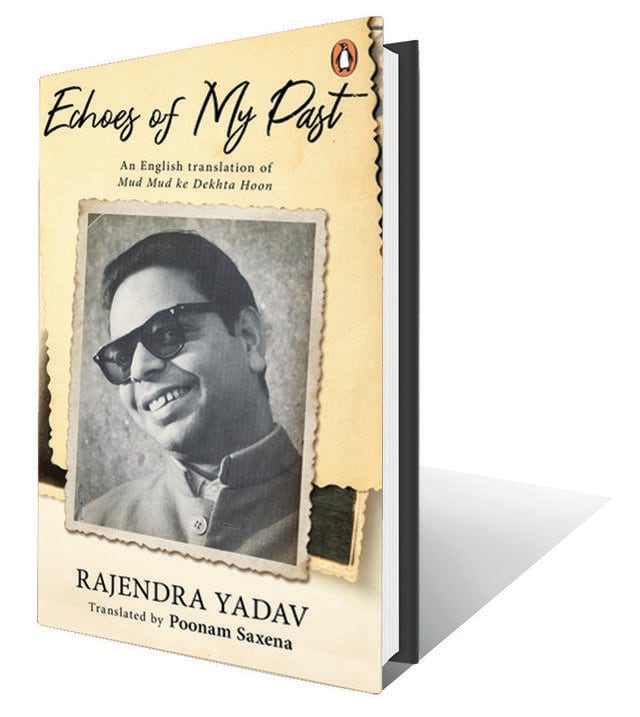
Yadav’s own quest for identity and his struggle to come to terms with himself appear frequently in his memoir. He mentions news reports about criminals who happened to share the name Rajendra Yadav, and incidents in Kolkata where people mistook him for someone else who looked exactly like him. He became conscious of his vices and regretted his life decisions and actions, and wanted to change them. Quoting Chekhov’s short story, Three Sisters, he wrote, “Alas! if only what we have lived so far was a rough draft and we had an opportunity to make it fair!”
But he remained a prolific writer. Saxena writes in the introduction to his memoir that his writing was “by and large, a kind of unrelenting realism”. “A lack of happy, hopeful endings is the hallmark of quite a few of his short stories. Characters crave change, but can’t escape the rut their lives are in,” she adds. This seems to have been a characteristic of many of the male writers of the Nayi Kahani movement. As the editor of a literary magazine, Yadav had many interesting takes on his fellow writers and some of them feature in the memoir. He wrote honestly about writers’ struggles with money and fame and about the culture in the literary spaces of Calcutta and Delhi. Though he criticized feudal elements, and the romantic radicalism in the language of fellow writers like Kamleshwar, Shivani, Nirmal Verma, and some Urdu writers, he also praised them.
Mannu Bhandari was different. Perhaps one of the most brilliant writers of her time, she often wrote to prove a point or as a form of rebellion. For instance, her political novel Mahabhoj was written as a reaction to the idea that women can only write about the domestic sphere. Her novel Aapka Bunty was also a revolt against her absent husband.
Born into a Jain family, with a father who was, in some ways, a lot like Rajendra, Bhandari married against his wishes. She married for love but it was also a revolt against her father. However, her hope of building a wonderful life with her husband was dashed by his frequent absences and affairs. Despite all that, she could not leave him until her sixties. Perhaps she did not want to prove her father right. She also did love Rajendra, and maybe the drama he unwittingly offered too. Even after they separated, they continued to talk almost every day, until Yadav’s death in 2013. Bhandari’s health too then began to deteriorate and she died in 2021.
Through their writing, the couple played a role in the emergence of middle-of-the-road cinema. Basu Chatterjee’s Sara Akash was based on one of Rajendra Yadav’s most remarkable literary novels. The director’s friendship with the couple helped him go on to make films like Rajnigandha based on Bhandari’s short story Yahi Sach Hai, and even the television series, Rajni.
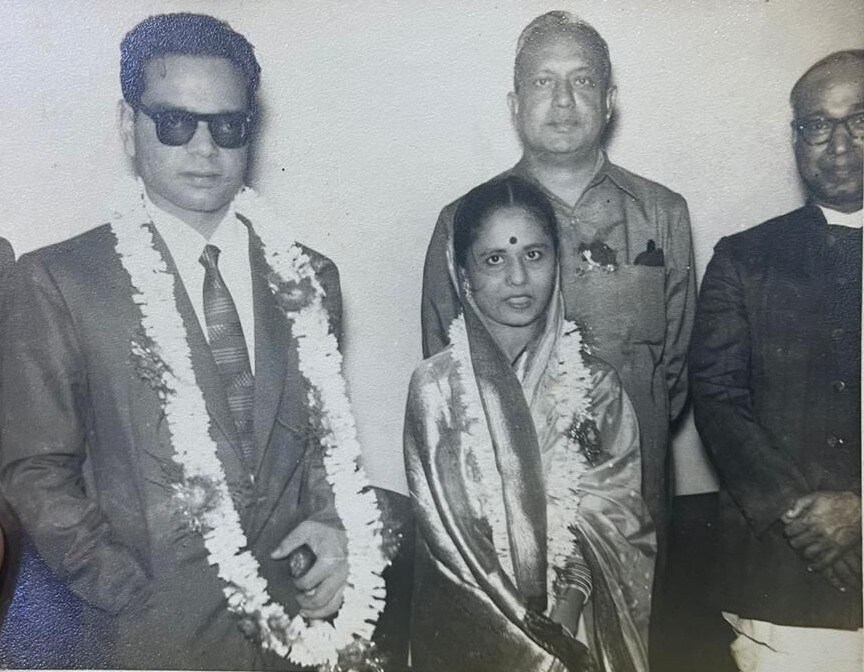
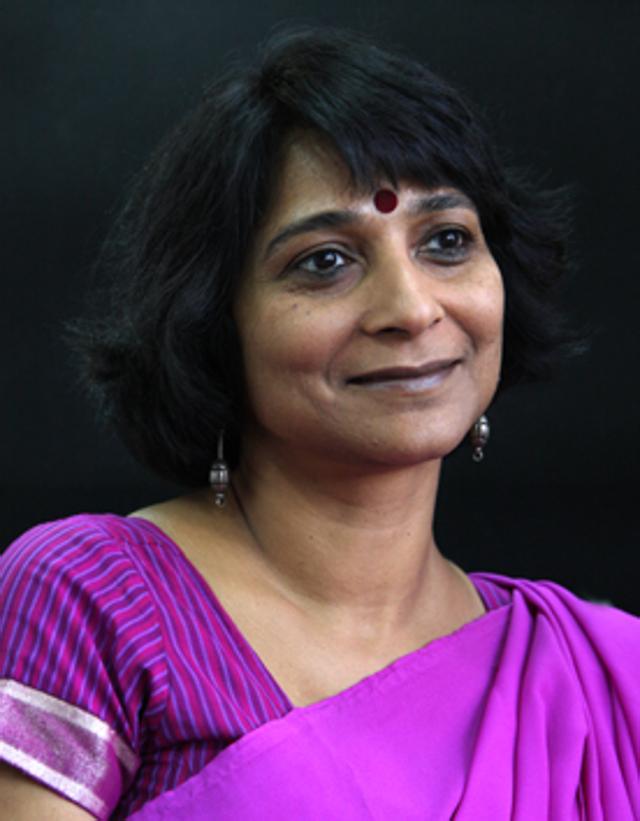
Poonam Saxena has done a wonderful job of translating both the memoirs. Her notes provide important details about writers and incidents mentioned, which makes the reading effortless. Her introductions to both books provide context that’s useful even for those readers familiar with the Hindi literary milieu. For non-Hindi readers unfamiliar with it, Saxena builds a bridge by introducing the couple in a way that gently sparks intrigue.
Reading Bhandari’s memoir, this reviewer was struck by how effortless her writing is and how sure she was about what she had to say – even when she was complaining. That’s why reading her memoir, even in English, feels delightful. Reading Yadav’s memoir elicits similar feelings but he seems to struggle while recounting his life. Sadly, his weak memory and his regrets often come in the way. Poonam Saxena has gifted two remarkable memoirs to English readers; both deserve to be read widely.
Mayank Jain Parichha is an independent bilingual journalist. He writes about the environment, wildlife, culture, literature, and politics. He is the author of Nietzsche ki Kutai.


