“Dear Anglos leaving India, Where you running off to men? Where? England? You going back home? Go, you buggers, go! Go see. Then you’ll come to know,” wrote Keith St Clair Butler in The Secret Vindaloo. And what did the Anglo-Indians migrating to the UK see? As a relative of author Barry O’Brien puts it, “Not only were the streets of London not paved with gold, it was also too bloody cold!”
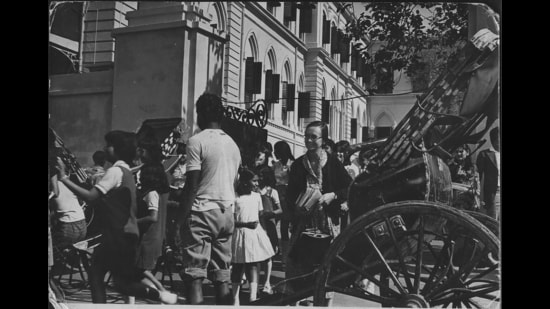
O’Brien’s book The Anglo-Indians: A Portrait of a Community brings together such diverse — and entertaining — voices to capture the community’s history, culture, and trajectory. While the Constitution of India defines an Anglo-Indian as an Indian citizen and resident of European descent from the father’s side, many argue that the identity draws from culture, language, and way of life rather than just lineage. That’s perhaps why O’Brien devotes a significant chunk of the book’s 500 pages to these aspects, resulting in meditations on linguistic and temperamental quirks, migration, and kinship.
He paints a holistic picture of a community whose depictions in popular culture are often enmeshed in stereotypes. The author rues the constant characterisation of Anglo-Indian girls as unwed mothers in yesteryear films, such as Julie (1975). Even though Indian cinema has changed considerably, the stereotype has not: Monica, O My Darling, released in 2022, replicates that tired trope.
O’Brien’s incisive exploration yields delightful anecdotes, such as a girl writing in his “autograph book”: “My heart is like a cabbage / Broken into two / The leaves I give to others / The heart I keep for you.” Lists such as “Ten things you are most likely to find in an Anglo-Indian home”, “Ten toilet euphemisms… used in the privacy of our homes!”, and “The three best-sounding names of dishes” have a wealth of ethnographic details.
{{/usCountry}}O’Brien’s incisive exploration yields delightful anecdotes, such as a girl writing in his “autograph book”: “My heart is like a cabbage / Broken into two / The leaves I give to others / The heart I keep for you.” Lists such as “Ten things you are most likely to find in an Anglo-Indian home”, “Ten toilet euphemisms… used in the privacy of our homes!”, and “The three best-sounding names of dishes” have a wealth of ethnographic details.
{{/usCountry}}The book’s first two sections tracing the community’s 500-year history are equally insightful. It delves into how the British discriminated against Anglo-Indians after biracial people in Haiti led a revolt against French colonists in the late 18th century. O’Brien speculates that the British would have probably failed to suppress the 1857 revolt without Anglo-Indian support. The community’s sacrifices during World War 2 also remain shrouded as the British drafted them as ‘Europeans’. Eurasians could not apply to many jobs after an 1882 resolution restricted the term “natives” to those of “pure Asiatic origin”. Neither did they receive the benefits Europeans did, resulting in poverty and unemployment.
While The Anglo-Indians talks extensively about community luminaries such as the lawyer and parliamentarian Frank Anthony, and Henry Gidney, an ophthalmologist and community leader, it also touches on lesser-known figures like Gloria Berry and Francesca Hart. Berry, an air hostess, received the Ashoka Chakra posthumously, becoming the first woman to receive the award. Hart ranked third in the 1994 Femina Miss India, behind Sushmita Sen and Aishwarya Rai. However, there’s not much information about her in the book or elsewhere.
While the book’s delights are aplenty, they are often ensconced in reams of banality. The first two sections are crisp, though they occasionally get bogged in historical minutiae. In the next two sections, things go awry. Many essays are a litany of names, details, and anecdotes without a sliver of allure. Take the chapter Serving the Community (1876–Present). It has a paragraph dedicated to the different names of the Anglo-Indian Association of Southern India over the decades and under which act it was incorporated. Such trivia could have easily been excised or relegated to the appendices, of which the book has many.
The surfeit of information is perhaps not an issue if the reader were to regard The Anglo-Indians as partly a reference book. She could dip into it to learn about the sundry community associations that O’Brien dedicates 15 pages to, if she were so inclined. These chapters’ sole redeeming feature is that they can be skipped since each dwells on one topic rather than adding up to a larger narrative.
Besides, O’Brien’s characterisation of “Anglo-Indian traits” is misplaced. He quotes a handful of instances of individuals exhibiting a certain quality and then extends that to the whole community. He repeats this pattern to demonstrate that Anglo-Indians are generous, god-fearing, friendly, “house-proud”, courageous, and enjoy “wholesome entertainment and having fun”, music, dancing, and going to the movies — as if these were remarkable revelations or unique to just one community.
The evidence to buttress these contentions can be as confounding. Consider the line: “Sushmita, a leading doctor whom I call an ‘almost-activist’, admires the community for the natural way it treats women as equals, without making a hue and cry about it.” Why should a reader care what a random doctor has to say about how the community treats women? What is “natural” about that way? Who makes a hue and cry about these things that their absence is so remarkable? I wish O’Brien had injected academic rigour into these sections and drawn upon diverse sources rather than quoting whimsically or stating the obvious.
These tracts might have been readable if they had been pruned or organised in a more cogent manner, for O’Brien can be an engaging writer. His joie de vivre and breadth of vision often shine through his prose, especially in the introduction, where he weaves a conversational style, Anglo-Indianisms, and lists to make a compelling case for why one should read the book.
In O’Brien’s recounting of the Anglo-Indian way of life, I found insights regarding cultural confluences, what we lose and gain with cultural assimilation, and identity markers in the homogenising bulwark of globalisation. The book marshals evidence for how the mixing of communities and cultures benefits everyone.
And even as it dwells on one community, it puts into question notions of racial and cultural purity. As O’Brien says, “I don’t for a moment think of myself as being of mixed-race. I belong to one race — the Anglo-Indian race — which happens to be of mixed-race, like most other races of the world.” And if this engenders concerns about identity, O’Brien has the perfect riposte: “You can only find your roots in one place — under you.”
Syed Saad Ahmed is a writer and communications professional.