
 E-Paper



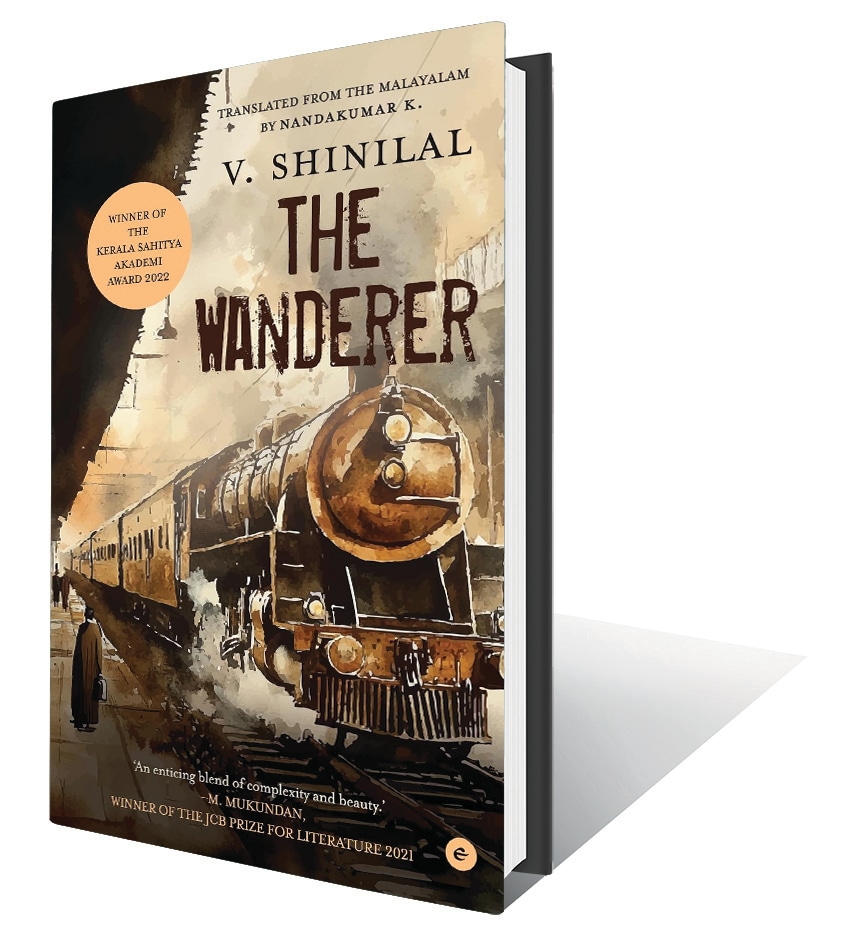
Review: The Wanderer by V Shinilal
A novel of ideas that is also a reflection on the power of literature, this book translated from the Malayalam by Nandakumar K, references the past and comments on the present

 Prefer HTon Google


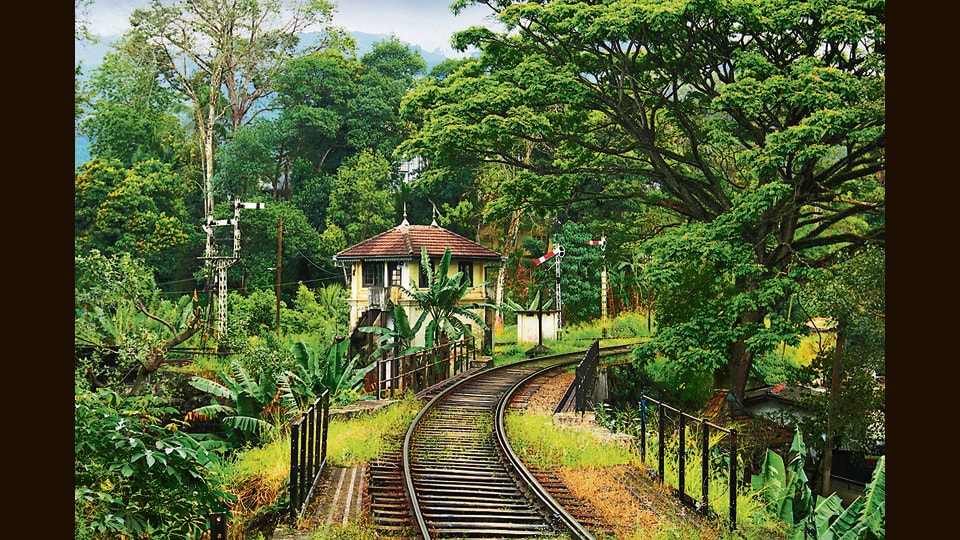
Early on in the novel, the narrator-sutradhar, Karamchand, sees a travel guide, India, fall in muck and get rescued by a porter who then hands it over to a white man. He muses, ‘India drops into shit. A labourer redeems it. A foreigner rewards him. As a Malayali, he was unable to ignore the politics concealed in those actions.’ He thus invites readers to read into the politics of the goings-on in the train. The fact that the train, Sampark Kranti, is a metaphor for the country and humanity is also established early on.
Karamchand is a writer while his co-passenger, the generic white man, John, is a wildlife photographer. Karamchand is, of course, named after Gandhi. So, we know his ideological standpoint from the very beginning and that we are meant to trust him. This despite Karamchand at one point echoing Dvi, the self-appointed people’s leader-turned-despot. But there’s a still a sense of whose words are to be heeded – Karamchand, maybe John, Kariman, the boy with no history, Sameera, Amanushi. The reader is told to recognise that Karamchand is to Dabholkar is to Govind Pansare is to Gauri Lankesh is to MM Kalburgi is to Sunil P Ilayidom is to Perumal Murugan is to KS Bhagwan is to Kamal Haasan is to Amartya Sen, among others.
On the other side are the people in the black, the power-hungry despots like Dvi and Almeida, the railway authorities. They are all later besieged and their reigns ended – often violently. Even so, the hunter and the hunted do not quite cross over despite it happening symbolically and the narrator insisting that they do. We empathize with Kariman’s acts but not with Almeida’s. One is justified as revenge, anger and survival, the other was just an act that stems from sadism and the need to dominate. Almeida is served just desserts only when he is powerless. Before that, he has brutalised so many that the reader cheers his gruesome death.
Then, there is the mob, ‘an ogre-sized human’. It adjusts in the face of shortage, then revolts, turns it back on the weakest among them, appoints a new leader, obeys his every whim without question and then overthrows him too. But never do the white and black bleed into each other. In that, this is a novel of ideas alone and the people in it are just metaphorical, two dimensional. The reader is left wondering if everything that happens in it is actually all in Karamchand’s imagination, just like the boy without history is. Karamchand is more chronicler than character.
The novel is also a reflection on the power of literature. The narrator at one point, talks about how Train to Pakistan has stayed with him despite his having read it 20 years ago. This book is, in some ways, an update. While the Partition and the Emergency loomed large in the imagination of a certain generation of writers, for us it is rampant materialism, the invasiveness of social media, dependence on smartphones, the dream and disappointment in the promise of a better life and communal disharmony. The book references the past and comments on the present.
Language and dialect changes as the topography outside changes with the train moving from south to west India. The translator does a commendable job of bringing out these changes. There’s a reflection on the ‘zha’ sound which fails many north of the Vindhyas. However, The Wanderer was perhaps not the best choice for the title of the translation. The original Sambarkkakranti or Sampark Kranti was more apt as the book is both about connection and revolution. There are a few lines that seem to hew too closely to the original.
‘Does a man carry his memories or do his memories carry him?’ Karamchand wonders but the reader might wonder if a nation carries its memories or have its collective memories carried/shaped? As a nation, are we where we are because of our history? An amusing bit has the narrator wondering why Indians prefer arson as weapon of choice during protests and riots; is it because the Vedas prescribed fire in all purification rituals?

The same sense of meditation comes through in the reflection on sex and power play in different contexts – in rape, in the marital and the extra-marital. There is a surfeit of phalluses in the book. Train bogies decoupling and re-coupling seemed like another pun with a couple of bogies going their separate ways. If the intention was to show how arbitrarily relationships can be sundered by sudden lines, then Sameera’s desire to fill Pakistan and India with mustard fields so as to erase those lines, does it more effectively.
The women in the book flit in and out and are mere sites of action. Sameera, Lekha Namboothiri, and the Gujarati Nimesha Mehta reflect on the happenings around them but are like cardboard cut-outs without much agency or even the capacity to reflect too deeply. The heavy-lifting is all left to the men, though they don’t quite save the day.
Priyanka Sarkar is an editor, translator and writer.


