The history of the novel in India has been an intriguing one so I was happy to see an English translation of Yamunaparyatan, published in Marathi in 1857 and regarded as India’s first vernacular novel. Baba Padmanji, a reformer, author, and Christian missionary, wrote it to sensitise people towards the sordid condition of widows in Brahmanical society and to advocate widow remarriage.
The scholar Deepra Dandekar has brought out an abridged version of the work in English as Yamuna’s Journey. She writes, “Though I have kept Padmanji’s arguments intact, I have at other places paraphrased, and desisted from providing verbatim translations, especially when Padmanji quotes Sanskrit passages or older Marathi texts… Since the original Yamunaparyatan contains voluminous prefaces, introductions, and appendices… I have left these out.” The result is a straightforward narrative, which makes for a breezy read.
The novel begins with the marriage of the protagonist, Yamuna. She shares a loving relationship with her husband Vinayak, but her mother-in-law is wary of her education and forbids her to read and write. The couple embarks on a journey through Maharashtra with various pit stops, during which they meet widows and learn about their travails. They try to help some of them and one widow joins them along with her son. But soon, tragedy strikes, forcing a reckoning with the social norms they were fighting against.
{{/usCountry}}The novel begins with the marriage of the protagonist, Yamuna. She shares a loving relationship with her husband Vinayak, but her mother-in-law is wary of her education and forbids her to read and write. The couple embarks on a journey through Maharashtra with various pit stops, during which they meet widows and learn about their travails. They try to help some of them and one widow joins them along with her son. But soon, tragedy strikes, forcing a reckoning with the social norms they were fighting against.
{{/usCountry}}As a novel, Yamuna’s Journey can be baffling for contemporary readers. The story is mostly predictable. Its fictional universe focuses exclusively on widows and each plot point either highlights their mistreatment or advances arguments for their remarriage. Its valorisation of remarriage as the panacea for all ills afflicting widows might come across as a stretch. The regularity with which protagonists use misfortunes as a pretext to hold forth on the glories of Christ is rather funny. Their self-righteous sermons on vice and virtue are more annoying than edifying.
But the story is not entirely unidimensional or devoid of nuance. When Vinayak chastises a widow for becoming a priest’s mistress, she punctures his sanctimonious posturing and criticises social reformers like him for being all talk and no action.
Besides, it would be unfair to judge the novel based on contemporary ideals of storytelling. For as a work that shines light on its time, Yamuna’s Journey is a fascinating text. With its fictional cladding, the book brings to life the beliefs, efforts, and modus operandi of 19th-century Indian social reformers.
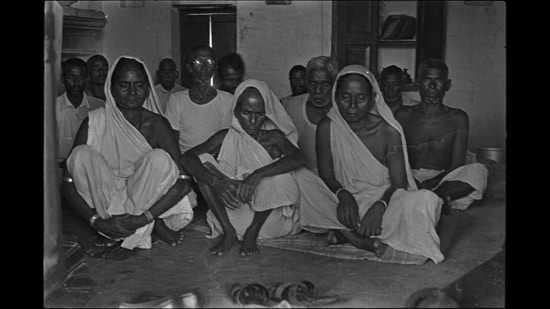
It illustrates how caste-based restrictions and hierarchies have impinged on personal freedoms, especially for widows. It talks about how many castes on the lower rungs of the social ladder, seeking to emulate Brahminical mores, forced widows to suffer privations.
While the opposition to widow remarriage might seem merely like a manifestation of conservatism, there were economic considerations underpinning it. In the novel, an opponent of widow remarriage opens his arguments by invoking “traditional customs”, but then spells out what was a major concern for many: “They will continue to own property and their children born from remarriage will be legitimate heirs.” This anxiety around property is not a relic of the past. Even in recent years, Indian courts have weighed in on whether widows have rights to their husbands’ assets after remarriage.
Although the book is more than 150 years old, many of the issues it raises are remarkably prescient and have contemporary resonance. The appeals to culture and tradition by those against widow remarriage in the novel are remarkably similar to the arguments against gay marriage in the Supreme Court of India in 2023.
The book touches upon the intersection of religious and national identities, which has come to define India in many ways. The author emphasises that “native” Christians are an “equal part of Indian society” and “love the country as much as any other Indian, if not more, as they want their country to progress”. This was decades before Gandhi articulated nationalist ideals that made space for all religions.
In the novel, an opponent of widow remarriage criticises the British administration for “interfering” with traditions, mischaracterising the condition of widows, and passing laws inimical to their customs. Another says that the widow-remarriage law “disarms, weakens, and vanquishes the Hindu community”. Echoes of their stance abound in some contemporary Hindu-American groups’ criticism of legal measures to ban discrimination on the basis of caste in the United States.
Interestingly, while Yamuna’s Journey is regarded as the first Indian vernacular novel, Padmanji referred to it as a grantha or pustak (synonyms for book) rather than upanyas or kadambari (fictional genres). Dandekar writes, “Padmanji views Yamunaparyatan as a collective enterprise based on empirical research… This collective nature can be gleaned from Padmanji’s acknowledgement of all those who sent him empirical case studies about widowhood… Other literary critics of the postcolonial period blamed this anecdotal nature of Yamunaparyatan as responsible for the book falling short of a full-blown novel, and more akin to the traditional kadambari genre consisting of interwoven stories. It was mostly ignored that the story-within-a-story format was deliberately chosen by Padmanji to compose his empirical research into a fictionalised narrative.”
Dandekar’s introduction to her translation is replete with such insights into the novel’s reception, the context in which Padmanji wrote it, and his life and preoccupations. For readers who might want to dig deeper into these topics, Dandekar’s earlier book Baba Padmanji: Vernacular Christianity in Colonial India is an invaluable companion to Yamuna’s Journey.
Syed Saad Ahmed is a writer and communications professional.