
 E-Paper



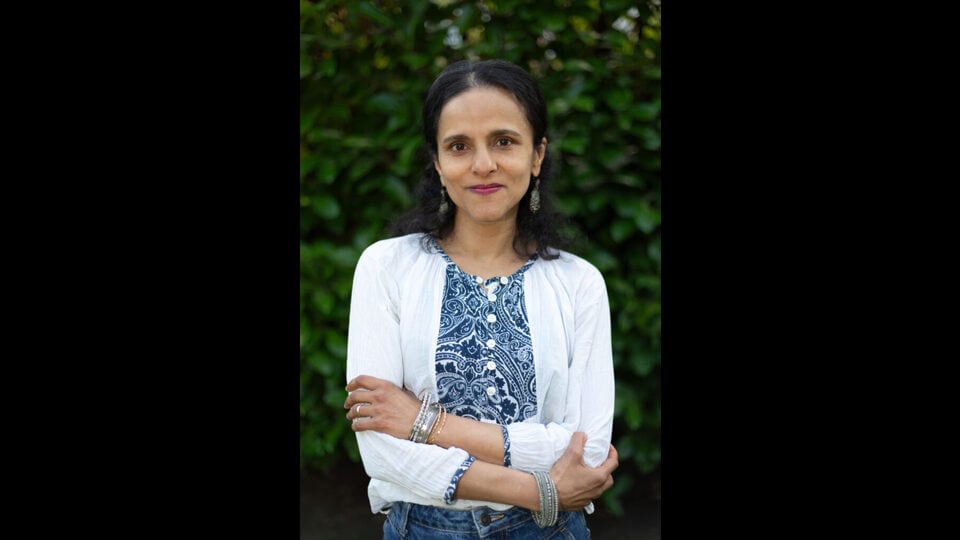
Sheena Kalayil: “We need to acknowledge our successes with humility”
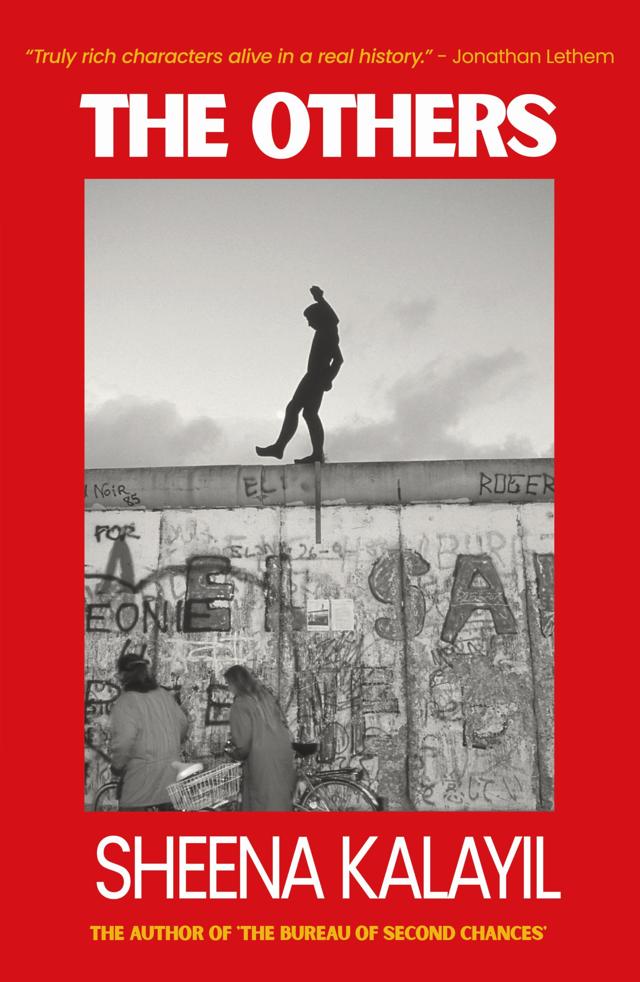
The author of The Others, that’s been longlisted for the Women’s Prize for Fiction this year, on shame and how large events impact individual lives

 Prefer HTon Google


One of the three central characters in your book is Lolita Devi. Why did you use that name and how has Vladimir Nabokov’s Lolita influenced your understanding of subverting readers’ expectations from a character?
I might have subconsciously wished to challenge readers with the name ‘Lolita’! I wanted to tell the story of the collapse of the DDR (and the Soviet Union) from the perspective of people from what we now call the Global South. I suppose having a character called Lolita challenges Western perspectives of the power of the name — is it now verboten to use it? Can it only be used to index objectification and illicitness? I think not. A young woman will always be at risk of being objectified, whatever her name. It’s a name whose sound is pleasing to the Indian ear; Lolita’s parents studied in Moscow, and if anyone is being mischievous, it’s them! A few years ago, a short story of mine — The Eighth Jew, commissioned by BBC Short Works — was read out on the radio by the British Indian actor and playwright Lolita Chakrabarti. The name was on my mind.
Your characters feel the ripple effects of the fall of the Berlin Wall. Please comment on the elasticity of time, and how understanding is shaped in hindsight in the case of events like this.
I wasn’t present at the fall of the Berlin Wall, but I was an engineering student in Budapest — so, behind the ‘Iron Curtain’. I have been looking back a lot lately — I’m at a time in my life when looking back has helped me understand a lot of things. This way of making meaning from past events reflects what I have grown to understand as the adverse experiences of my childhood, how the past continues into the present — that elasticity of time you mention. And this understanding feeds into my writing — not necessarily into the plot, but in its themes and sensibility, and the very different perspectives people can have of the same, shared events.
The novel also explores trust as an exercise in making oneself belong to a person or a place.
Falling in love involves opening yourself to being vulnerable, allowing another person to learn about you, and trusting that they will take care with what they learn. I find it compelling to think of these micro-scenarios of trust and trusting, within a macro-scenario — the relationship we have with each other in a society, and with our governments. I was drawn to setting a love story within a society which is both collectivist and secretive, nurturing and domineering. There are several lines of trust in the novel, almost all at peril of being betrayed.
Tell us how you explore in the novel.
I didn’t consciously think about shame when I was writing the novel. But you can’t come from my generation of women, brought up in a Keralite Syrian Catholic family, without absorbing vast amounts of shame. You’ve made me consider this a bit more deeply than I want to! Growing up, I was made to feel ashamed for many things I had no control over — for being short, for being a gauche, pimply teenager, for any imperfections in my Malayalam. As an adult, for the choices-not-choices I made — for not pursuing an engineering career (and the world is a safer place for it), for not having an arranged marriage (but no one arranged one for me), for working and living all over the world (but my parents did not want me to live with or near them). I suppose there must be something that comes out in my writing. But what I also hope comes out is forgiveness and strength — I am a survivor above anything else.
You’ve noted how life is a mix of circumstances and chance encounters. An event like the fall of the Berlin Wall presents immense possibilities and people in the novel mull over all sorts of what-if scenarios. Were you, in a way, sharing alternative histories through these characters?
I believe we need to acknowledge our successes with humility. Very often, it is only by chance or a stroke of luck that something else didn’t happen; we could have ended up somewhere else. Much like being longlisted for the Women’s Prize. If you really think about it… masses and masses of luck involved!
I was fascinated by the seemingly minor characters who cast a huge shadow in the book – Tommy, Clara, Joachim Bechtel. In positioning their viewpoints, were you centralising what is often considered marginal?
I’m glad you mention[ed] the wider cast of characters, because nobody lives in isolation, and we are always buffeted by external events — but also other people. I don’t think of any of them as being minor — they each have a significant role in the lives of Lolita, Armando and Theo. The difficulty as a writer is to ensure they are not too far back in the shadows when maintaining the central narrative drive. Clara made her presence known very early on. She is Armando’s daughter, and he loves her utterly. It is this love which brought tears to my eyes when I was writing their scenes. We learn a lot about Armando through Clara — just as I have learned a lot about myself from my daughters. I have known so many Joachims, in the sense that I have been fortunate that people who are not my blood relations have shown me extraordinary love and kindness. I hope I can be that person to others. Tommy is a character, but also a metaphor for that dilemma, which none of us can predict but which can set off a chain of events with lifelong consequences.
Music is invoked at crucial moments in the novel. Did you have any particular playlist while working on it?
I don’t write to music. But music for me is a source of energy and solace in equal parts. My father had a beautiful singing voice; he was often compared to Yesudas. And I married a man with a beautiful singing voice — so, in that way at least I am a cliché! My husband encouraged me to pick up the guitar again, a few years ago — and we now have a band, an acoustic duo, The Long Game. It helps with the empty nest, as well as the ups and downs of a literary career.
Saurabh Sharma is a Delhi-based writer and freelance journalist. They can be found on Instagram/X: @writerly_life.


