
 E-Paper



Shobhaa Dé: “Our society does not encourage emotional nakedness”
At the JLF, she spoke about antiquated attitudes towards sex, the toll that ageing takes on relationships, marital rape, and her new book, The Sensual Self

 Prefer HTon Google


What led you to write The Sensual Self , your new book on love, romance and sex?
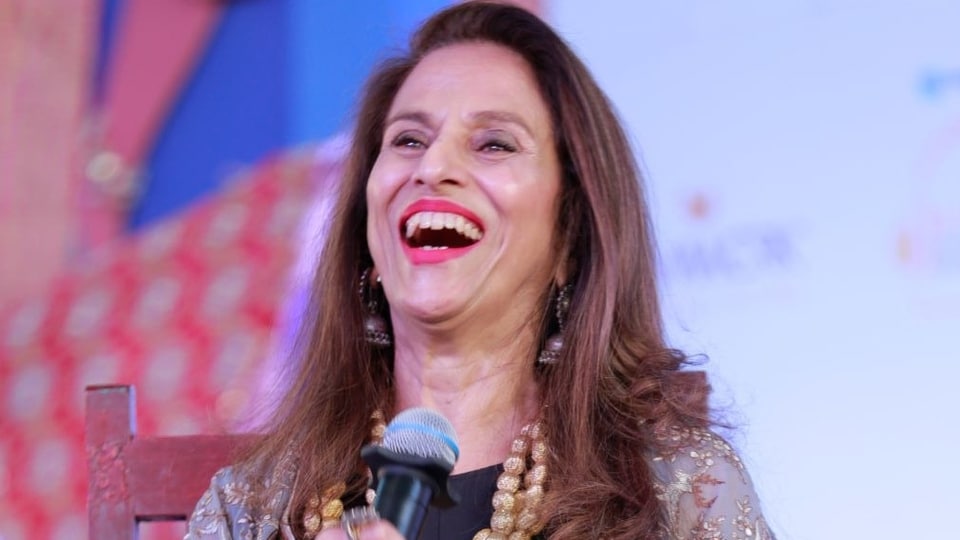
What readers take away in the process of reading the book and understanding it is partly because of their own attitude towards sensuality, and how keenly they are in touch with it or not. Sometimes a book like this can remind you that it is worth reconnecting to a former self, which is how I felt when I was writing it. There were many aspects of my life that I had taken for granted, become lazy about, and was actively missing. This book is an outcome of that search.
On a slightly different note, several years ago, Khushwant Singh and I had co-edited an anthology called Uncertain Liaisons: Sex, Strife and Together in Urban India. It was an examination of attitudes towards sensuality, sexuality, bodies, pleasure, guilt and shame. When I look back on that book, which didn’t do particularly well, I guess it was a bit too academic since the essays were mainly from scholars. Recalling it, I asked myself: Has a lot changed since then?
If you were to work on a project like that today, who would make a good collaborator since Khushwant Singh is not around any longer?
Someone much younger, I would say. A Gen Z person, perhaps, because theirs is the generation that I am concerned about. Forget about sensuality, they barely make eye contact or hear the outside world. They’ve got EarPods in their ears. Forget about touching one another, their self-absorption is almost scary. They are like robotic people moving through life, deadened to everything but themselves. I hope their inner voices are rich enough to keep them engaged.

In the book, you write about how bodily changes that accompany aging as well as illness can take a huge toll on relationships. Why was it important for you to address this?
This affects a lot of people but it is not talked about much because there is some deep sense of shame. If your partner is ill, you become acutely conscious, and wonder if you are doing enough. But the thing about sensuality is, as we’ve seen, whether it’s with Pablo Neruda or Pablo Picasso, MF Husain or Michelangelo, even Leonardo da Vinci, the imagination never ages.
How you experience sensuality in terms of your thinking, and the imagery that you can conjure up, does not have an age limit. But your body ages. It has its physical limits. And that’s where the conflict comes in. A lot of people find bodily changes very hard to accept. Their body cannot keep up with their mind and their imagination. And that leads to tremendous frustration.
I believe that you have to be realistic about things, and enjoy what you can as senior citizens. But the idea of senior citizens even indulging in feelings and fantasies is very squeamish for the young. Society brands them as dirty old men and dirty old women for harbouring sensual thoughts. They are expected to be in a lofty, spiritual, detached state like yogis where their thoughts turn to God but never to anything that can possibly happen in the boudoir. Even reminiscing about past pleasures is seen with a judgmental eye, and almost forbidden. I believe that your feelings towards your own body should be celebrated. Also, if you are in an environment where you see something that stirs your imagination, why should you curb it?
When a partner dies, doesn’t society become even more judgmental?
Yes, it does. Also, people’s own guilt kicks in. They wonder how they can have feelings for a new person when they have shared 20 or 30 years of their life with a partner that they have been loyal to. Things are much harder for women. Society is a lot more accepting of men’s desire, which is framed as a need. When a woman seeks it, she is called a nymphomaniac who has no control over her feelings and her need for sex. People are so nasty that they even say things like “She was only waiting for him to die so that she could happily indulge!”
To what extent have love, romance and sex changed after the MeToo movement?
A little bit of self-consciousness may have crept in. Have attitudes radically changed in terms of how we engage with one another? No, I don’t think so. The reason is that men still get away with what they do. Consent is not a word that people are comfortable with. They don’t even understand what consent means. For me, consent is the most critical word in any relationship. Even if you have been married to someone for, say, 20 years, consent is a prerequisite.
You cannot ask for sexual intimacy if your partner does not want it or is not ready for it. I guess the MeToo movement has maybe made us a little more aware of the consequences of what can happen if you cross the line. But I don’t think that it has impacted people enough for a change to occur from within. They will still do what they want if they think they can get away with it.
In several Indian families, sex is viewed as a duty that wives must perform rather than an experience that is exciting and enriching for them. Why does this idea persist?
You are right, even today, I hear the so-called educated urban elites of India telling their daughters that, no matter what, they have to please their husband. These parents raise their daughters to believe that the home they get married into will be their home for the rest of their lives until they die, and that they must stay no matter what happens and how they are treated. “Shut up and put up with it” is the advice that mothers, aunts, cousins and grandmothers give out. Daughters are told, “Don’t try and fight it. This is how a woman’s life is supposed to be”.
Also, when we talk about purity, it only means one thing: she has to be a virgin. Even today, a young bride is expected to bleed on her suhaag raat. What is never spoken about in blunt terms, is how traumatic that wedding night can be for a girl who is completely unprepared for it. I have written about it in the book because there is nothing or nobody to warn her of the kind of awful associations that she can have if that one night goes wrong. It is too romanticized and glorified.
People who are sexually abused by their relatives often don’t have the words to talk about their experience. Isn’t this because sexuality is not discussed openly in families?
Even in 2026, the shame and guilt that women grow up with is immense. From the time they are little girls, society makes them feel ashamed for being born female. Fear is drilled into them. They are told that they are vulnerable, and they can be attacked. They are warned that there are bad people around, who will try and touch them. The word ‘molest’ is rarely used in families but girls are told that there are uncle-jis to watch out for. Not that any of this is completely untrue, but young girls grow up with such prejudice about men and their own vulnerability. Sadly, they are in attack mode like little warrior princesses from the time they are too young to look out for people who are going to harm them physically. Or they withdraw into themselves and do not want to share intimacy and feelings of love with anyone. I think that girls are too scared to let themselves be completely open and transparent, and to place a deep level of trust in their partners. Our society does not encourage that kind of emotional nakedness.
What are your thoughts on discussions about marital rape in India, and especially the bill that Shashi Tharoor introduced in the Lok Sabha to criminalize it?
It is a very tricky bill and a tricky subject because to establish that marital rape has happened, legally speaking, is a huge challenge. At the end of the day, it all boils down to consent. Unless there has been a case of assault that can be established clearly, it is very difficult to hold someone accountable. Then you have a situation where it is one person’s word against the other. And often, in the domestic sphere, there may not be any eyewitnesses either.
Why does writing continue to be an enduring love for you?
I am emotionally invested in words. Nothing makes me feel as fulfilled as I do when I am writing. When I physically see words forming on a page, oh my God, I love it! That’s why it is very important for me to write by hand. Of course, I do type things out when I need to but the connection between the eyes, the heart, the mind, and the hand is absolutely erotic, isn’t it?
Chintan Girish Modi is a writer, journalist, educator, artist and literary critic. He has contributed to various anthologies including 101 Indian Children’s Books We Love (2013), Borderlines: Volume 1 (2015), Clear Hold Build (2019), Fearless Love (2019), and Bent Book (2020).


