Kashmiri writer and journalist Basharat Peer has, after great struggle, got the smog of his painful past off his mind. Today, he admits, there is a clear sky above his head.
Sitting at a café in Delhi's Khan Market, the 37-year-old revealed how a slice of his own life story made its way into Vishal Bhardwaj-directed movie, Haider, and his worthwhile journey from New York Times–India Ink to Bollywood.
In the middle of handling the desk at NYT and finishing his second book, Peer didn't realise what was coming his way. One fine day, when he received an email from filmmaker Vishal Bhardwaj, he started taking films--- Bollywood rather---seriously. The way the Indian film industry had traditionally represented Kashmir made him reluctant initially.
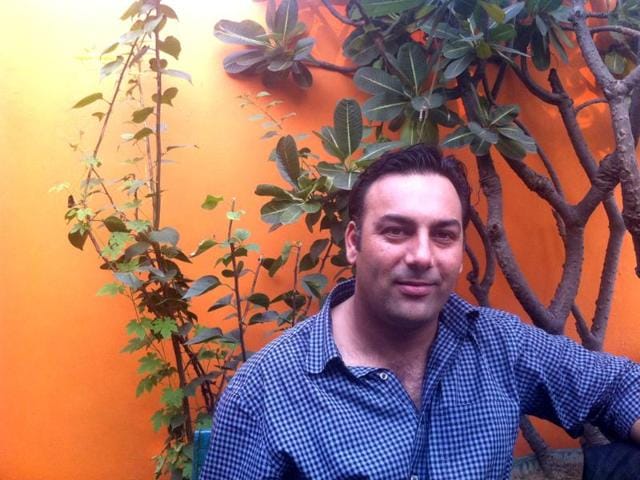
The director had read Peer's internationally acclaimed memoir, Curfewed Night, about growing up during the early years of anti-India rebellion in his homeland, Kashmir. After adapting Macbeth (Maqbool) and Othello (Omkara), Bhardwaj saw the Curfewed Night could be the source of the third part of the Shakespeare trilogy, Hamlet (Haider).
After Vishal's insistence, Peer went back to Hamlet, saying he read and never understood it better than this time.
"The moment Vishal mentioned Hamlet, I thought of one of the iconic lines from the play, which refers to the political and moral corruption and an unjust state of affairs in the setting of the play: Something is rotten in the state of Denmark. And I said, yes, of course you can set it in Kashmir," said Peer, smiling and fingers fiddling with the tissue on the table.
He still remembers, sitting face to face with the director, his first reaction to the offer, "what?!"
"Vishal, then, gently pushed his case saying tum likh do. I hesitantly said I haven't done it before," Peer said.
Basharat could relate to the play. He could find similar themes in his life--- betrayal, abuse of power, justice, revenge and espionage. He had an image for each character in the play.
"Many political operators in Kashmir who have done terrible things to their own people and to others in pursuit of money and power came to my mind when I was thinking of Claudius, the villain of the play who murders his brother, King Hamlet, for the throne and to marry his wife Gertrude," he said.
"It was like I understood Hamlet for the first time." Only by transposing his world to the Shakespeare's did the Bard's real message reveal itself to Peer. "I called Vishal and said, listen, I have it. This is the story."
Basharat always saw Bollywood from a distance. He also joked about how the famous dialogue from Sholay came to his mind every time somebody would talk about filmy lines. "Kitne aadmi thei," he recalled, adding his wife also teased him about this once in a while.
A majority of Kashmiris believe Bollywood is a huge disappointment. They have a life beyond selling carpets and flowers on houseboats, said Peer.
Being a Kashmiri, and especially after having written a first-hand account of the conflict, Peer knew his approach had to be different so that the people of his troubled state are represented in a more responsible manner.
"This reminds me of the famous Merchant of Venice line: If you prick us, don't we bleed; if you tickle us, don't we laugh."
Kashmiris are real people too, Peer insists. Haider is conscious of this fact.
"The film is an attempt to answer the stereotypical, jingoistic films Bollywood has made about Kashmir. Every character in the film is a Kashmiri---a doctor, a lawyer, teacher, a research scholar, a police officer. These are people who have agency and they're not just victims."
Basharat could relate to the play. He could find similar themes in his life--- betrayal, abuse of power, justice, revenge and espionage. He had an image for each character in the play.
"Many political operators in Kashmir who have done terrible things to their own people and to others in pursuit of money and power came to my mind when I was thinking of Claudius, the villain of the play who murders his brother, King Hamlet, for the throne and to marry his wife Gertrude," he said.
"It was like I understood Hamlet for the first time." Only by transposing his world to the Shakespeare's did the Bard's real message reveal itself to Peer. "I called Vishal and said, listen, I have it. This is the story."
Basharat always saw Bollywood from a distance. He also joked about how the famous dialogue from Sholay came to his mind every time somebody would talk about filmy lines. "Kitne aadmi thei," he recalled, adding his wife also teased him about this once in a while.
A majority of Kashmiris believe Bollywood is a huge disappointment. They have a life beyond selling carpets and flowers on houseboats, said Peer.
Being a Kashmiri, and especially after having written a first-hand account of the conflict, Peer knew his approach had to be different so that the people of his troubled state are represented in a more responsible manner.
"This reminds me of the famous Merchant of Venice line: If you prick us, don't we bleed; if you tickle us, don't we laugh."
Kashmiris are real people too, Peer insists. Haider is conscious of this fact.
"The film is an attempt to answer the stereotypical, jingoistic films Bollywood has made about Kashmir. Every character in the film is a Kashmiri---a doctor, a lawyer, teacher, a research scholar, a police officer. These are people who have agency and they're not just victims."
"It's a story of their moral choices, their dilemmas, their courage, and their tragedies. I am hopeful that the film conveys a sense of what Kashmiris lived through, hoping there are images--never before shown in a Bollywood film---that will make the viewers think, ask questions."
Talking about the controversial flag-hoisting scene in the movie which triggered protests in the valley, the author said, "Students weren't protesting against Haider in particular. In general, they're worried about how the state will be projected. Also, anyone who saw it from a distance wouldn't know the context."
"Irrfan Khan had something great to say. He said 'these incidents are nothing in comparison to what they have suffered in the past 25 years'. I think Kashmiris have been very generous to the film crew," Peer said.
Peer, along with other Kashmiris, is looking forward to the film. He is over the moon, as ten events from Curfewed Night have been incorporated in the film.
"I hope those scenes survive censor board scissors and people get to watch them," he said.
Another interesting feature about the movie is Peer's cameo appearance as what he likes to call a "pareshaan (anxious) Kashmiri".
"Vishal said 'arey yeh ek aam aadmi, ek pareshaan Kashmiri ka role hai, tum karlo. I said, haan, iski toh bahut practice hai," he chuckled.
Basharat is playing a regular man who is scared of stepping out of his house, something which was very common in the nineties in Kashmir. People carried their addresses in pockets with little hope of returning home.
"I grew stubble, wore a pheran and I was sorted. It was a proud moment to share 30 seconds of my role with an actor like Irrfan Khan."
On the writing front, Peer is satisfied with the new crop of Kashmiri writers and their take on the conflict, the most obvious and dominant issue in Kashmir to be written about.
"Be it Waheed Mirza, Siddharth Gigoo or Rahul Pandita---all of us have written just one book on Kashmir. This is just the beginning. We're dealing with the first rush. There is a novel by Shahnaz Bashir forthcoming. Two brilliant young writers, Feroz Rather and Arif Ayaz Parrey, are working on collections of short stories. Malik Sajad, a very young graphic novelist and cartoonist, is working on a graphic novel."
Basharat Peer is currently busy working on his second book, Shadow of the Broken Dome: India and Its Muslims.
The book requires him to travel across India to research on the contemporary Muslim life and politics.
"The book has traumatised my mind at the moment," he joked.