Amidst all the frenetic social media sharing going on during this Coronavirus-Lockdown one particular meme got my attention. It’s a photograph of a sign in a bookstore window that reads, “The Post-Apocalyptic fiction section has now been moved to Current Affairs”. Despite the gloom-doom scenario, it made me chuckle. After all, what we’re facing in reality right now is the most hackneyed storyline in outbreak-fiction- a deadly virus breaks out around the world and several governments first try to cover it up, and later grudgingly acknowledge its existence, but by that time thousands of people lose their lives while teams of doctors and scientists struggle to cope and desperately try to come up with a vaccine. The world locks down awaiting a hero with a cure. Enough said.
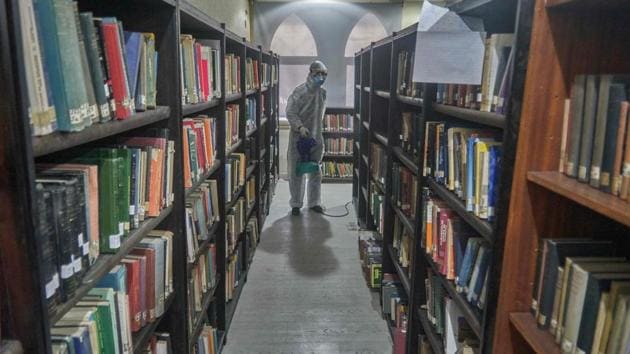
Elsewhere, I read an article in The Guardian about how various literary agents and publishers are receiving a large number of submissions of manuscripts and book proposals from aspiring writers. Fact is, these days of the Lockdown have forced us into a near-monastic existence. A great time for writers, one would imagine. It makes one wonder what impact this watershed moment in the history of mankind will have on literature? How can writers make fiction stranger than the bizarre truth of these times?
One thing is for sure, with no hero on the horizon, it’s just turning out to be endless days of humdrum existence. But then, the minutiae of our daily lives is perhaps where great stories lie. These turn of events are begging to be documented through people’s experiences, much like Anne Frank chronicled her thoughts while hiding during the Nazi occupation of the Netherlands. Lockdown diaries, letters, and notations of feelings and the details of everyday life of people that come out of the present crisis could create a fascinating archive for posterity. Apart from Frank’s- The Diary Of A Young Girl, there are also many others of note. For example, The Diary Of Lena Mukhina, The Pianist- the memoir of the Polish-Jewish pianist and composer Wladyslaw, or the one which cuts closest to the bone- A Journal Of The Plague Year by Daniel Defoe. Like the aforementioned books, perhaps some of the diaries of people during this Lockdown could be guidelines for tomorrow’s generations to understand these unprecedented times. After all, if there’s anything that we have learnt, it is that history repeats itself.