
 E-Paper



Venki Ramakrishnan: “The source of funding might distort research priorities”
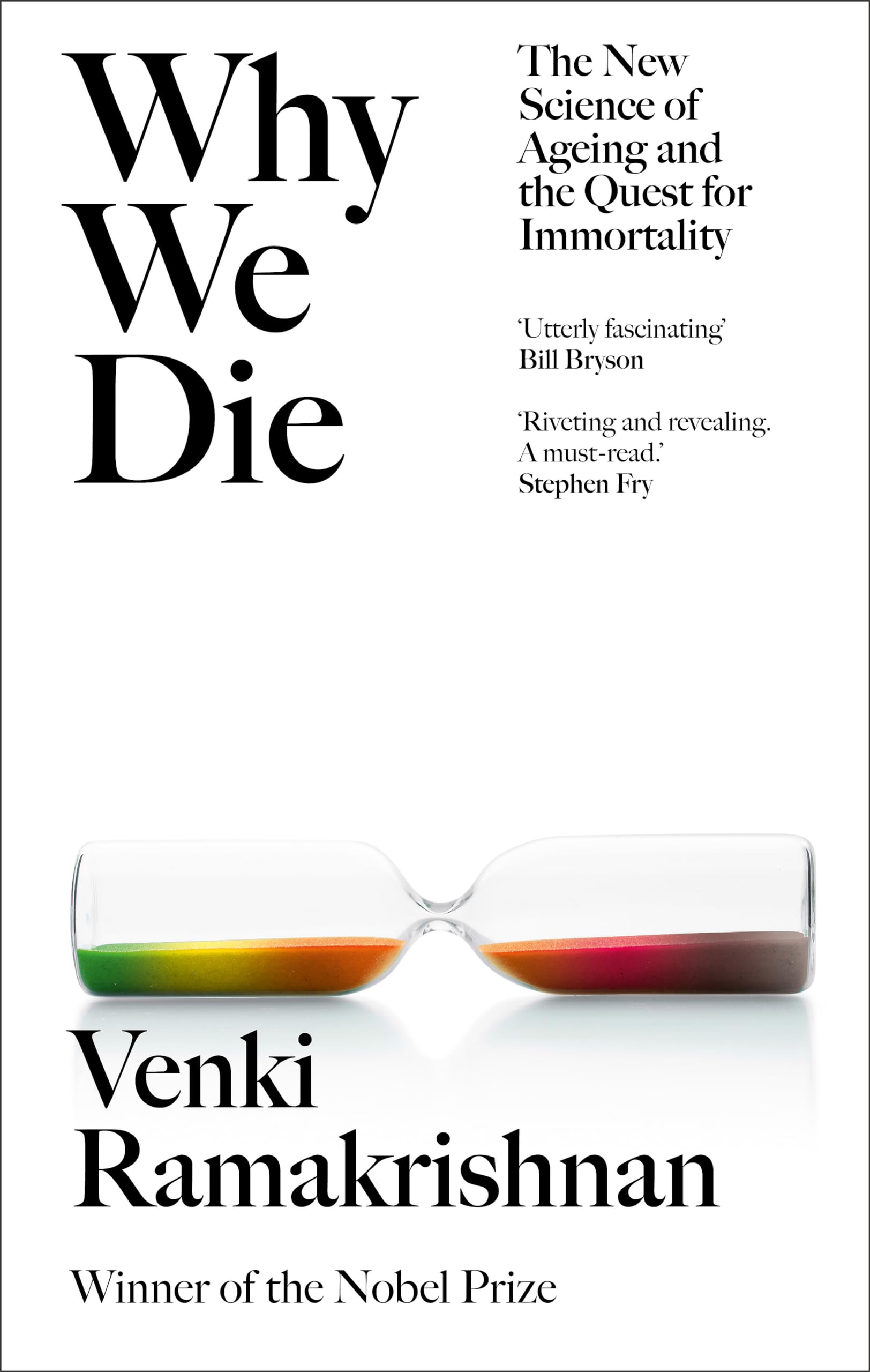
The Nobel laureate on his latest book, Why We Die: The New Science of Ageing and the Quest for Immortality

 Prefer HTon Google


What made you write Why We Die: The New Science of Ageing and the Quest for Immortality? Why did the subject of longevity interest you?
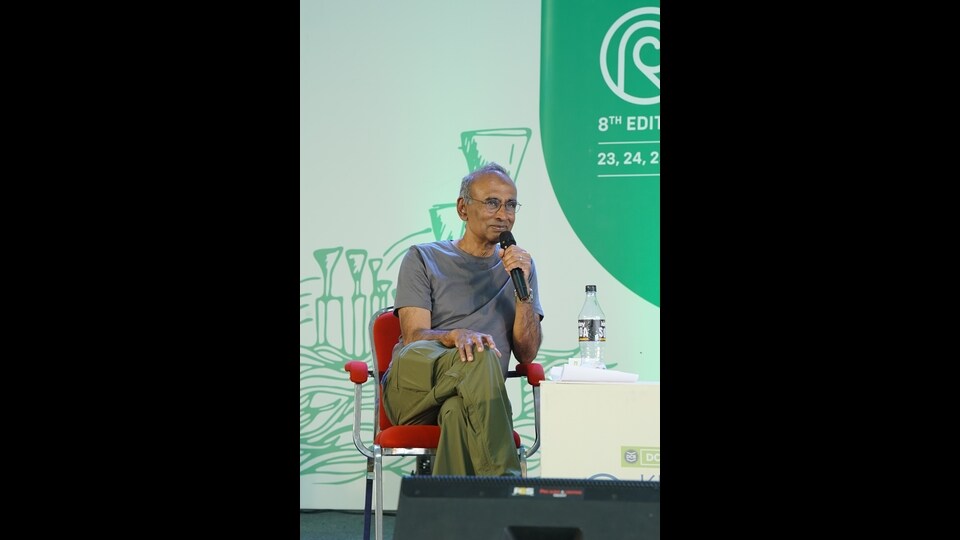
I felt that the field itself was at a critical juncture, where a lot of advances have been made, but there is now a huge amount of money going into it. And it could go in directions that were not necessarily beneficial in many ways. The other thing that annoyed me about the field was that it was so full of hype. I thought that maybe somebody who doesn’t have very much skin in the game could take a hard look at it. Of course, we are all growing old, so we all have some skin in the game in some sense. But I don’t have financial skin in the game.
Your mention of financial skin in the game is very interesting because a lot of scientific research is funded either by governments or by corporates. How does the source of funding affect the manner in which the scientific findings are used?
Well, it depends. If the research is funded by governments or non-profit charities, then it usually has an objective for the broad social good. For example, a lot of government research is about how to age healthily because populations are growing older and you want to keep people healthy when they are old. That is actually a very creditable aim. On the other hand, if it is a corporate funder, then maybe they are trying to sell you stuff. And that is okay. I mean, corporations also produce antibiotics and statins and we all benefit from that. But the source of funding might distort priorities. Things that are maybe more profitable might be emphasized over things which are less profitable. So, there’s always this slight problem.
In the book, you mention that advances in medical science often have the potential to increase inequalities in society. If we look at longevity research in particular, what kind of problems do you see in terms of increasing inequality?
Already, the rich in the United Kingdom — which has a national health service — live about 10 years longer than the poor. In the US, this disparity goes up to 15 years. And if you look at healthy lifespan, the difference is almost twice that. The poor are not only living shorter lives, but they are living less healthy lives. If you have new scientific advances, which are very expensive, they are going to favour rich people even more. So, we might get into a situation where, if you are well off, you are going to live a longer and healthier life.
In India, many people think in terms of multiple lifetimes rather than a single lifetime. In the West, however, there is this widely accepted idea of a person having only one life. How do cultural differences affect the way people think of aging and death?
Culture may affect the way people think of aging and death in their daily lives. But I don’t think that culture will affect the way you do research on aging and death. Because scientific research then comes down to evidence and logic. Modern science came out of the Age of Enlightenment in Europe. The way of doing science and thinking about science is converging all over the world. It is fairly common throughout, and is not going to change. For instance, I do not think that a Chinese person working on neuroscience or artificial intelligence or physics is really thinking about it differently from, say, an American or a European. If I go to science institutes in India, I don’t see that they are involved in an Indian way of doing science. I do believe that science is much more universal than many things, including music or art, which have a really strong cultural aspect to them. However, culture may impact the choice of problems that scientists wish to study. India may be more interested in infectious diseases than some countries in the West. Other countries may be more interested in Alzheimer’s disease since they have a growing population of very old people.
With right-wing governments coming to power in many countries across the world, there has been a clampdown on science education with religion and mythology being pushed instead. As a Nobel Laureate, what kind of public-facing work do you feel called on to do?
Well, I think that scientists have to really step up their game and push back when outrageous claims are made. If people mix up mythology and pseudoscience with actual science, then it is up to scientists to point out why it is not true. We must, in a very calm and objective way, point out the difference between what is actually science and what is not science. Some things belong in the realm of faith and personal beliefs, and other things belong in the realm of science. And they are not necessarily overlapping. There are some things which will never be science, but you might believe them anyway. Please don’t pretend that they are scientific. I also feel that no country that doesn’t support fundamental literacy in science, and sustains a core of high-level scientific expertise, can prosper in the 21st century.
We are at the Kerala Literature Festival. What is it like for you to be at a literature festival, which must be quite different from the experience of working in a lab or being at a science conference?
I have been to literature festivals before, but the Kerala Literature Festival is quite an occasion. I have never seen so many different sessions going on in parallel. I was very impressed by the fact that a lot of the sessions were in Malayalam. For scientific literacy, you have to have good textbooks and good teachers in local languages. People in Poland, Germany, France and Italy don’t learn science in English. They study all the way through school and even university in Polish, German, French and Italian. Only when they become professional scientists do they start using English because it is an international language of science. You don’t want to disadvantage children by making them learn science in a language that they are not familiar with. It is very important to have good quality science textbooks as well as books on popular science that children can read just for fun in their local languages.
Your wife, Vera Rosenberry, writes and illustrates for children. What advice have you received from her about writing for a general, non-scholarly readership?
Oh, actually none at all because I don’t show her any of my drafts. Often, I don’t even discuss the book with her while I am working on it. I just like to keep that side of me separate. Writing is a very personal thing to me. I show it to very few people. The people I show it to are experts in the field because I want to make sure that I have got things right, and no errors have seeped in. But otherwise, I don’t show it to my friends or my family.
What are you working on at the moment? Is it related to longevity?
Well, currently, I am working on how ribosomes are regulated in response to stress, how ribosomes initiate on the genetic instructions to start making proteins, and how that process of initiation is regulated. These, I believe, are the next-level questions. And yes, the enquiry into stress and control of proteins during stress is, in a way, related to longevity.
Though you are now based in the UK, and have lived in Australia and the US, you grew up in Chidambaram and Baroda. What are your fondest memories of those places?
I hardly remember Chidambaram because I left when I was three years old. But when I grew up in Baroda, it was a beautiful town. It wasn’t the hugely crowded, overgrown city it is today. And it was largely a university town, although it had one or two factories. It was very well planned by Sayajirao Gaekwad, one of the leading maharajas of the Gaikwad dynasty. For example, he built a huge reservoir, which was many times what Baroda needed for water supply. And it lasted for 50 years. It was enough for Baroda, despite the growing population. Now, of course, the city needs much more water. He built beautiful parks, and a very nice museum for the public. The university itself had a very beautiful campus. And you could travel on your bicycle anywhere in the city. My memories of Baroda are totally different from what a child growing up in Baroda today would have.
Chintan Girish Modi is a journalist, educator and literary critic. He is @chintanwriting on Instagram and X.


