
 E-Paper



India took short term pain for long time gain: Chief economic adviser
The Economic Survey has projected that the Indian economy can contract by 7.7% in the current financial year ending on March 31 and the growth could be 11% in the next financial.

 Prefer HTon Google


India's policy response to the coronavirus pandemic was guided by the realisation that gross domestic product (GDP) growth will come back but human lives won't, chief economic adviser (CEA), Krishnamurthy V Subramanian said on Friday. Subramanian's comments came after the Economic Survey was tabled in both the Houses of Parliament by the Union finance minister Nirmala Sitharaman.
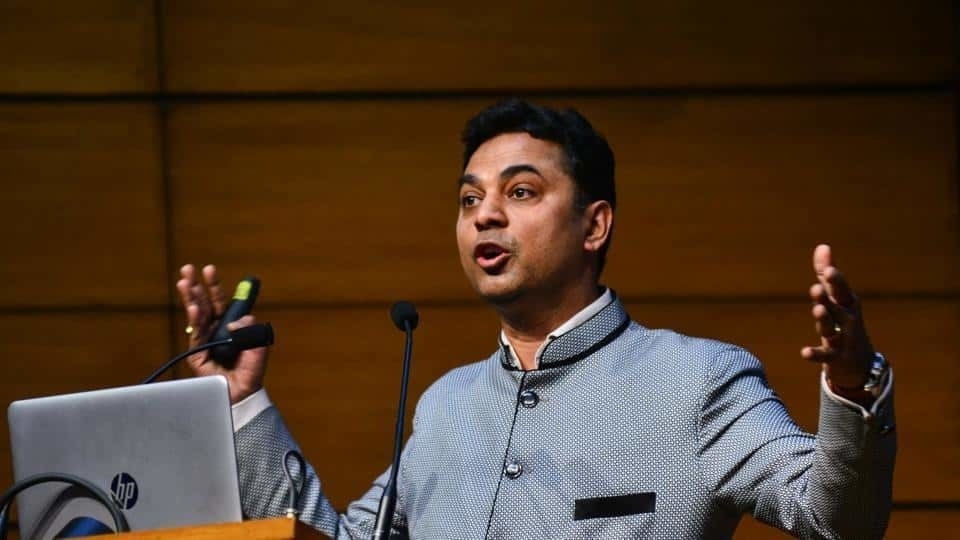
"India's response stemmed from humane principle advocated eloquently in the Mahabharata 'Saving a life that is in jeopardy is the origin of dharma'," Subramanian said. "The policy response which India came up with was mature and a farsighted one. India undertook short-term pain to get long-term gain. The 'V-shaped recovery' makes India a sui generis case in mature policymaking," he said during a press conference.
Subramanian also said that the government's measures, including the nationwide lockdown, prevented 3.7 million cases of the coronavirus disease (Covid-19) and 100,000 deaths as he dedicated the survey to frontline workers helping the country battle the pandemic. "Early, intense lockdown not only saves more human lives but also enables quicker, better economic recovery," he said.
Also read | India pegs 11% GDP growth in fiscal 2022 helped by vaccine drive
The survey has said that India has transformed the short-term trade-off between lives and livelihoods into a win-win in the medium to long-term that saves both lives and livelihoods.
The survey compares these estimates with actual numbers to show that India restricted the spread of the viral disease by estimating the natural number of Covid-19 cases and related deaths expected across countries based on their population, population density, demographics, tests conducted, and health infrastructure.
Uttar Pradesh, Gujarat and Bihar have restricted the case spread the best; Kerala, Telangana and Andhra Pradesh have saved the most lives; Maharashtra has underperformed the most in restricting the spread of cases and in saving lives, according to the survey.
Also read | Covid-19 impact: Govt not to print Budget documents this year
India was amongst the first of the countries which imposed a national lockdown, from March 25 to May 31, when there were only 500 confirmed cases of the coronavirus disease. The stringent lockdown was necessitated by the need to break the chain of the spread of the virus.
The Economic Survey has projected that the Indian economy can contract by 7.7% in the current financial year ending on March 31 and the growth could be 11% in the next financial. The contraction in FY21 is mainly due to the coronavirus pandemic and the damage caused by the subsequent countrywide lockdown to contain it.
Also read | Maharashtra’s growth to drop to 5.7%, says economic survey
The survey unveiled two days before the Union Budget is in line with the forecasts by the Reserve Bank of India (RBI), which has said it expected the country's GDP to contract by 7.5% in the year ending March 31.


