The most hawkish member of the Reserve Bank of India’s (RBI) monetary policy panel is likely to get support from an influential colleague, signalling an interest rate increase is more probable than a cut.
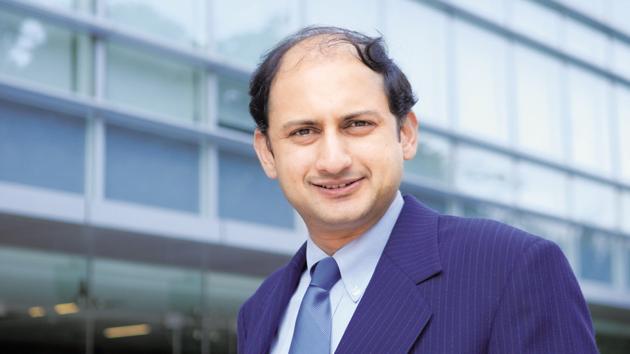
At the April 4-5 policy meeting, Deputy Governor Viral Acharya said there was a revival in investment activity and an improvement in capacity utilisation, which boded well for the economy. As a result, he was switching from a neutral stance to shift “decisively to vote for a beginning of ‘withdrawal of accommodation’ in the next monetary policy meeting in June.”
Minutes of the policy meeting this month showed most members of the monetary policy committee (MPC) are optimistic that Asia’s third-largest economy will rebound this year with the output gap closing, a factor that is likely to boost inflation in coming months.
A majority of the six-member panel flagged upside risks to inflation earlier in April when the central bank retained the benchmark repurchase rate at 6 percent as expected. Five of the six members voted for the decision, while one, Michael Patra, who is an executive director heading the research department, sought an increase. The panel also kept its neutral policy stance.
Preparing for hike
{{/usCountry}}Preparing for hike
{{/usCountry}}“He might be preparing markets for a rate hike in the coming months,” said Rohan Chinchwadkar, assistant professor of finance at the Indian Institute of Management at Tiruchirappalli in southern India, referring to the statement of Acharya, who is in charge of monetary policy. “But it still seems unlikely to happen in June.”
Governor Urjit Patel said there are clear signs of revival with the manufacturing sector strengthening, adding that input cost pressures were rising and companies were gradually regaining some pricing power.
All of which indicate that the current easing in inflation is likely to prove temporary, with firm fuel prices, an expansionary budget, higher food procurement prices for farmers and a recovery in vegetable prices in coming months set to fuel price pressures.
Just two weeks ago, Patel and his monetary policy committee lowered inflation projections, raising expectations that interest rates will be on hold for sometime to come.
But the tone of the minutes show the debate was veering toward a possible interest rate increase and the next meeting could see the split deepening.
More hawkish
“The minutes look more hawkish than the policy statement,” said Indranil Pan, chief economist at IDFC Bank Ltd. “From here on, the probability of a rate hike has increased.”
The RBI is forecasting inflation for April to September at 4.7-5.1%, slower than 5.1-5.6% made just two months back. It expects the second half inflation to ease to 4.4%, having earlier estimated it at 4.5-4.6%. The bank’s goal is to keep headline inflation close to 4% over the medium term.
The flip-flops on inflation projections plus the surprise in the minutes caught many bond investors on the wrong foot. The benchmark 10-year bond yield jumped 15 basis points to 7.79% on Friday, undoing most of the rally seen in March.
“Minutes of the Reserve Bank of India’s April policy review sounded a surprisingly hawkish tone. This was in contrast to the perception that the monetary policy committee had backed away from its hawkish bias, given the inflation downtrend of the past few months”, Abhishek Gupta of Bloomberg Economics said.
The central bank forecasts the economy will expand 7.4% in the financial year to March 2019, up from an estimated 6.6% in 2018. That’s faster than a 6.5% expansion projected for China in 2018 in a Bloomberg survey.
“RBI in all probability is on the cusp of raising rates,” said Teresa John, an economist at Nirmal Bang Equities Pvt Ltd. in Mumbai, adding that the expectation is for a 25 basis point increase in the second half of the calendar year of 2018 with inflation likely to average 5% in the financial year to March 31.
--With assistance from Tuhin Kar