...
...
Next Story

8th Pay Commission approved: Central government employees may see 186% rise in pension

8th Pay Commission: The 8th Central Pay Commission (CPC) will come into effect from January 1, 2026

Updated on: Jan 24, 2025 05:33 PM IST
Advertisement

8th Pay Commission: The 8th Central Pay Commission (CPC), which will come into effect from January 1, 2026, will revise salaries, pensions, and allowances, benefiting more than one crore central government employees and pensioners.
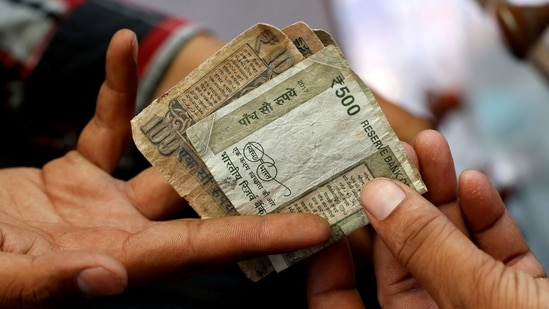
8th Pay Commission: Over one crore Central employees and pensioners are set to benefit from the setting of the 8th Pay Commission. (REUTERS)

Also Read: 8th Pay Commission approved: Central government employees may see 186% rise in pension

It may come with a fitment factor of 2.86, resulting in a significant increase in monthly pensions.

The prevailing 7th CPC, implemented in 2016, had a 2.57 fitment factor, which significantly hiked the basic pay.

It also has the minimum basic pension for central government retirees at 9,000 per month, while the maximum pension is capped at 1,25,000 per month, which is 50% of the highest salary in government service.

Also Read: 8th Pay Commission approved by Cabinet: When will benefits reach central government employees?

The DR is generally revised biannually to align itself with inflation, measured by the Consumer Price Index (CPI), ensuring pensioners can maintain their purchasing power despite rising costs.

If the 8th CPC does have a 2.86 fitment factor, the minimum pension which is currently 9,000 will rise to nearly 25,740 per month, a jump of 186%.

Also Read: 8th Pay Commission approved: What salary hike can central government employees expect?

Meanwhile, the maximum pension could jump from the current 1,25,000 to potentially exceed 3,57,500 monthly.

In addition, the DR may further enhance the revised pensions, along with increasing gratuity ceilings and family pensions.

 
ABOUT THE AUTHOR
HT News Desk

Follow the latest breaking news, major developments and agenda-setting stories from India and around the world with the newsdesk at Hindustan Times. Operating round the clock, the desk brings together experienced editors, reporters and correspondents to deliver fast, accurate and contextual reporting across subjects that influence public policy, governance, business, society and international affairs. The HT News Desk covers politics, elections, government policies, the economy, business and markets, science and technology, the environment, law and order, infrastructure, education, climate issues and geopolitics, while closely tracking developments across states, institutions and global capitals. The team also leads coverage of major breaking news events, policy announcements, court proceedings, natural disasters, public emergencies and significant international developments. Reports published by the newsdesk are based on information gathered from reporters on the ground, official statements, government agencies, court records, regulatory filings, recognised institutions and other authoritative sources. Stories undergo editorial scrutiny and verification processes to ensure accuracy, fairness and relevance, and are updated as events evolve and additional information becomes available. Whether covering a key political decision in New Delhi, an economic policy shift affecting millions, a landmark court ruling or a major global event, the HT News Desk aims to provide readers with reliable, fact-based journalism that delivers not only the latest developments but also the context and analysis needed to understand their wider implications.

SHARE THIS ARTICLE ON
Hindustantimes wants to start sending you push notifications. Click allow to subscribe