State-controlled fuel retailers have frozen petrol and diesel rates — often aligned with daily movement of global oil prices — for more than a week, even as international crude oil prices surged by 12% during this period.
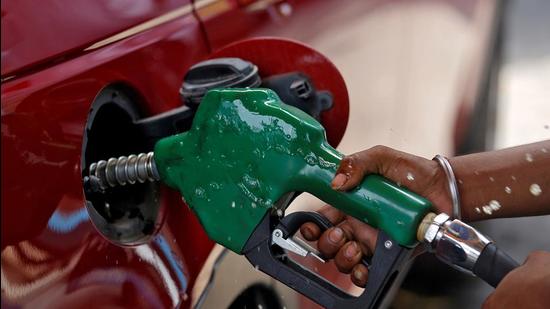
Pump prices have been frozen since February 27, a day after the Election Commission announced crucial assembly elections in five states, including West Bengal. There is also speculation that politically sensitive auto fuel prices will be reduced before polls start on March 27.
This will certainly have revenue implications, and the burden is likely to be shared equitably by the Centre through excise duty reduction, states by cutting value-added tax (VAT) and public sector oil marketing companies by absorbing some revenue losses as they are making profits. HT reported about an equitable burden-sharing plan on March 5.
Also Read | Disruption in oil supply from Saudi Arabia causes US oil prices to fall
According to experts in government and energy sector, there is a scope of reducing taxes. Petrol, which is sold at record ₹91.17 per litre in Delhi, has a tax component of 59%, including the central excise duty and state’s value-added tax (VAT). On diesel, which is being sold at ₹81.47 a litre in the national capital, the tax component is 54%.
{{/usCountry}}According to experts in government and energy sector, there is a scope of reducing taxes. Petrol, which is sold at record ₹91.17 per litre in Delhi, has a tax component of 59%, including the central excise duty and state’s value-added tax (VAT). On diesel, which is being sold at ₹81.47 a litre in the national capital, the tax component is 54%.
{{/usCountry}}The government’s impending move will, however, provide immediate relief to the consumer, but it is not a long-term solution. India’s energy security is dependent on whims of the cartel of oil producers — the Organisation of the Petroleum Exporting Countries and its allies, including Russia (together known as OPEC+).
International oil prices are surging because of a supply squeeze by OPEC+. Benchmark Brent crude that was trading below $20 per barrel on April 21 last year due to weak demand, triggered by a lockdown in major global economies, have now surged by 255% to touch a 52-week high at $71.38 a barrel on Monday intra-day trade.
Even on Tuesday, Brent was hovering around $69.30 per barrel. Panicked by the freefall in oil prices, OPEC+ had cut supply by unprecedented 9.7 million barrels per day, one-tenth of global output in April last year. In a recent meeting, OPEC+ decided against restoring the supply to push up price even further. The reduction in supply and gradual opening of global economies with increased availability of Covid-19 vaccines pushed up demand, leading to a spike in international crude oil prices.
India, the world’s third largest oil consumer after the United States and China, imports more than 80% crude it processes and pays in dollar. Thus, it is affected by volatility of both — global oil prices and rupee-dollar exchange rate. According to experts, India needs to take concrete policy decisions to negotiate better pricing terms with oil producers and reduce dependence on imported crude in medium to the long-run.