Sensex Today: Indian stock indices kicked off a fresh week on a muted note. On Friday, it rose over 500 points after the central government as part of its Budget showed intent that it was aiming for fiscal consolidation even as the General elections are around the corner.
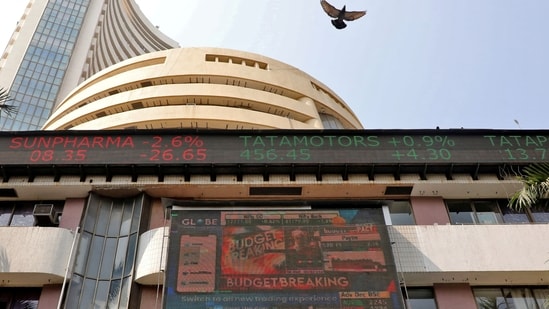
At the opening bell Monday, Sensex was at 72,022 points, down 63 points or 0.1 per cent, and Nifty at 21,850 points, down 4 points or 0.01 per cent.
On Budget Day - February 1, Indian stock indices took a rollercoaster ride and settled marginally in the red.
Analysts had said dampening performance in the indices could be due to below-expected capital expenditure markup in the Budget document and the US Fed's unclear guidance on loosening the monetary policy stance. Some, however, attributed it to mild profit booking.
The broader market indices, Sensex and Nifty, were in the green at the opening bell on February 1, but as the day progressed and with the tabling of the budget, they edged towards the red.
Going ahead into this week, investors will keep track on the three-day RBI monetary policy meeting that starts Tuesday. The RBI typically conducts six bimonthly meetings in a financial year, where it deliberates interest rates, money supply, inflation outlook, and various macroeconomic indicators.
{{/usCountry}}Going ahead into this week, investors will keep track on the three-day RBI monetary policy meeting that starts Tuesday. The RBI typically conducts six bimonthly meetings in a financial year, where it deliberates interest rates, money supply, inflation outlook, and various macroeconomic indicators.
{{/usCountry}}In its December meeting, the RBI unanimously decided to keep the policy repo rate unchanged at 6.5 per cent, thus maintaining the status quo for the fifth straight time.
The Monetary Policy Committee of the Reserve Bank of India (RBI) in its February review meeting is expected to again put a pause on the repo rate, according to SBI Research. The repo rate is the rate of interest at which RBI lends to other banks.
Barring the latest pauses, the RBI raised the repo rate by 250 basis points cumulatively to 6.5 per cent since May 2022 in the fight against inflation. Raising interest rates is a monetary policy instrument that typically helps suppress demand in the economy, thereby helping the inflation rate decline.
The retail inflation in India though is in RBI's 2-6 per cent comfort level but is above the ideal 4 per cent scenario. In December, it was 5.69 per cent.