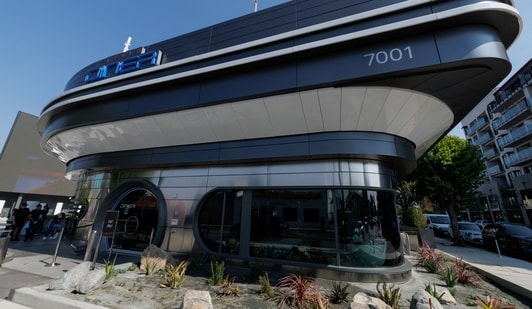
The Tesla Diner, an electric-vehicle (EV) charging hub and roadside restaurant that opened in July in Los Angeles, is not your typical service station. The architecture is sleek and retro-futuristic. The menu offers traditional diner fare with a deluxe twist (including wagyu-beef chilli). Optimus, Tesla’s humanoid robot, serves popcorn at an open-air cinema, which drivers can enjoy while their vehicles charge.
Service stations are getting a glow-up. It takes around two minutes to fill up a petrol car, but around
The Tesla Diner, an electric-vehicle (EV) charging hub and roadside restaurant that opened in July in Los Angeles, is not your typical service station. The architecture is sleek and retro-futuristic. The menu offers traditional diner fare with a deluxe twist (including wagyu-beef chilli). Optimus, Tesla’s humanoid robot, serves popcorn at an open-air cinema, which drivers can enjoy while their vehicles charge.
Service stations are getting a glow-up. It takes around two minutes to fill up a petrol car, but around 25 minutes to charge a Tesla Model 3 to 80% of its capacity. Longer stops are fuelling demand for a more pleasant experience than what the industry has customarily offered. Last year Rove, an American startup, launched a charging hub in Santa Ana, California, where drivers can relax in an on-site lounge and shop at Gelson’s, an upscale grocery chain. William Reid, its boss, says the site has received an “extraordinary response”, averaging 700 charges a day since the launch, double what it expected.
It is not just an American trend. Westmorland Motorway Services, a chain of posh British driving stops that serve up local produce, has been investing in more EV chargers for its forecourts. Sarah Dunning, its chair, reckons that its sites are perfect for well-heeled EV drivers looking “for a happier way to spend their time while charging”.
The rise of EVs is not the only disruptive development for service stations. More fuel-efficient petrol engines and the growth of alternatives to car ownership such as ride hailing have also weighed on the industry. In response, service stations are getting larger and offering higher-quality food, drink and shopping to entice customers who aren’t stopping to refuel, says Dan Munford of Insight Research, a consultancy. Applegreen, a fuel retailer with sites in America and abroad, recently sold its British petrol-pump business to invest in bigger sites with fancier food and drink. “When people do stop, they want to be spoiled,” says Joe Barrett, Applegreen’s boss.
Yet reinventing the service station will be hard. The Tesla Diner was billed as an around-the-clock dining experience, but is open to the public only from 6am to midnight and has removed several items from the menu (Tesla drivers can still order food from their vehicles at all hours). “It’s hard to offer high-quality food 24/7,” notes Mr Munford.
What is more, advances in charging technology could lead to less idle time for EV drivers. BYD, a Chinese EV-maker, has developed a charger that supplies about 250 miles (400km) of range in five minutes. More city-dwellers may also be able to power their EVs at home or work as street-side charging points become widely available. Only the swankiest of service stations may survive.
To stay on top of the biggest stories in business and technology, sign up to the Bottom Line, our weekly subscriber-only newsletter.
One Subscription.
Get 360° coverage—from daily headlines
to 100 year archives.
Archives
HT App & Website