US stocks fell on Monday as tensions between the US and Iran returned to the markets. The three major US indexes moved lower after the two countries exchanged strikes for the first time in about a month. However, Wall Street was still on track to finish August with strong gains.
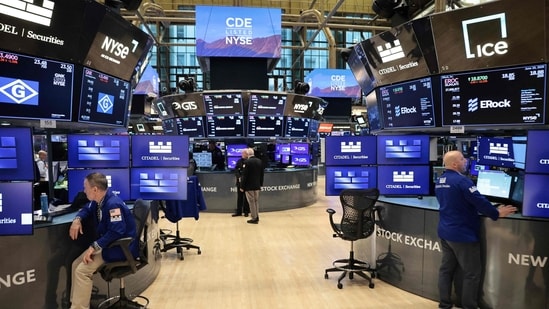
The Dow Jones Industrial Average was down 346 points, or 0.7%. The S&P 500 fell 0.5%, while the Nasdaq Composite also dropped 0.5%, according to CNBC. The latest US-Iran conflict came after a US strike on Iran. US Central Command confirmed to MS NOW that the US struck two rocket launchers on Iran’s Larak Island on Sunday.
The Sunday attack was the first publicly acknowledged US strike on Iranian positions since late July. Iranian state media said Tehran responded by attacking US bases in Jordan. The renewed fighting pushed oil prices higher. US West Texas Intermediate crude rose more than 3% to above $86 a barrel, while global benchmark Brent crude also gained more than 3% to above $91 a barrel.
Higher oil prices are raising fresh inflation concerns for investors. A prolonged rise in oil prices can increase costs for businesses and consumers, adding pressure on inflation and making it harder for central banks to cut interest rates.
{{/usCountry}}Higher oil prices are raising fresh inflation concerns for investors. A prolonged rise in oil prices can increase costs for businesses and consumers, adding pressure on inflation and making it harder for central banks to cut interest rates.
{{/usCountry}}August still on track for gains
Despite Monday’s fall, the US stock market was still heading for a positive August. The Dow was up more than 1% month to date and was on track for its fifth straight monthly gain, according to CNBC.
The S&P 500 and Nasdaq were also heading toward monthly gains. The S&P 500 was up about 2%, while the Nasdaq was higher by about 3% during August. Both indexes were on track for their first monthly gains since May.
The Dow and S&P 500 also touched record highs earlier in August. This shows that Monday’s decline came after a strong month for US stocks rather than during a broader market collapse.
Technology stocks were the biggest driver of August’s gains. Artificial intelligence-linked companies performed strongly during the month, helping lift the broader market. The S&P 500 technology sector was up nearly 6% for August. Nvidia gained more than 7%, while Microsoft rose 9% and Micron Technology jumped 14%, according to CNBC.
Inflation and interest rates remain a concern
August was still a volatile month for Wall Street because of inflation fears. Treasury yields climbed to multi-year highs as investors worried that inflation could remain high. The US Treasury tried to calm the bond market by saying it would increase debt repurchases. However, longer-term Treasury yields remained elevated.
Also read: Aon to buy USI Insurance Services for $17 billion: What it means for US middle-market businesses
Federal Reserve Chair Kevin Warsh also added to rate concerns. Speaking on Friday, Warsh said that although summer inflation readings were better than expected, they did not show that underlying inflation trends had improved significantly.
Barclays economist Jonathan Millar said the Fed could be more likely to raise rates in September. In a note, Millar said Warsh’s comments made a 25-basis-point September rate hike more likely than not. He also expected another hike in December.
Investors now turn to jobs data
Investors will get fresh clues about the US economy this week. The August jobs report is due on Friday morning and will be closely watched for signs of strength or weakness in the labour market.
Manufacturing and services data are also due this week. These reports could give investors more information about how the US economy is performing. Markets will also watch the G20 finance ministers’ meeting in Asheville, North Carolina. Any developments from the meeting could influence investor sentiment.
Energy stocks rise as oil prices jump
Energy was the only S&P 500 sector trading higher on Monday morning. The sector gained about 2% as oil prices jumped following the renewed US-Iran fighting. Energy stocks were already among the strongest performers in August. The S&P 500 energy sector was up more than 6% for the month.
Communication services and utilities were the biggest sector losers on Monday. Communication services fell 1.9%, while utilities dropped 1.6%. Both sectors were also heading for monthly losses. Communication services were on track to fall about 1.5% for August, while utilities were down about 5.6%.
Stocks open lower
The three major indexes started Monday’s trading session in negative territory. The S&P 500 and Nasdaq were down 0.2% shortly after the opening bell, while the Dow fell 207 points, or 0.4%.
The broader Russell 2000 index was also heading for a monthly gain. It had risen about 1.4% during August. The market’s August gains came despite relatively quiet and narrow trading. The S&P 500 remained close to where it was three weeks earlier and stayed within about 2% of its latest record high.
Investors are entering September with several risks to watch. Middle East tensions, oil prices, inflation, Treasury yields and expectations for Federal Reserve interest-rate decisions could all influence trading.
Also read: Stock market warning: S&P 500 faces correction risk as inflation stays high and Fed rate hikes loom
Chevron, PG&E and Pinterest move
Oil companies gained in premarket trading as crude prices jumped. Halliburton rose more than 2.5%, Chevron gained 2%, and Valero Energy and Occidental Petroleum also added about 2%. Exxon Mobil climbed more than 1.5%.
PG&E shares plunged 16%. California lawmakers blocked a proposal that would have limited the amount of money individuals could seek from utility companies whose equipment caused wildfires.
Several Wall Street analysts downgraded PG&E after the legislative decision. Mizuho analysts said investors may be better positioned in utility companies with fewer wildfire-liability problems.
Pinterest shares fell more than 3%. The company said Friday that CFO Julia Brau Donnelly will leave at the end of October. Pinterest’s vice president for finance and business operations, Vikram Naidu, will take over as interim CFO.
Bond yields rise globally
Government bond yields also moved higher as investors worried about inflation. Short-term borrowing costs in several major markets reached multi-year highs on Monday after fighting between the US and Iran resumed.
Japan’s two-year government bond yield reached a 31-year high. Germany’s two-year bond yield climbed to its highest level since July 2024, while France’s two-year yield reached its highest level since April 2024.
Bond prices and yields move in opposite directions. When bond prices fall, their yields generally rise, which means the latest moves point to selling pressure in government bonds. The bond sell-off spread across Europe. Short-term government borrowing costs also increased in the UK, Spain, Portugal, Poland and Switzerland.
Overall, Monday’s market decline reflected a mix of geopolitical and economic worries. Renewed US-Iran fighting pushed oil prices higher, while inflation and interest-rate concerns continued to weigh on bonds and stocks. At the same time, strong technology gains meant the major US indexes were still on track to finish August higher.