Weak demand is the biggest challenge for India Inc followed by managing cost and tight financial liquidity, 212 companies said in an industry survey conducted during the first eight days of current month.
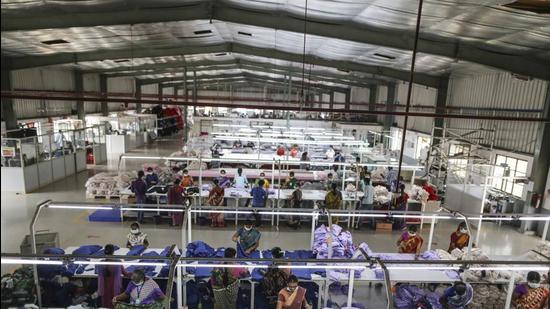
While 58% companies have reported weak demand as their biggest challenge, managing costs has been the next big issue for 56% of the respondents and tight financial liquidity is a concern for 43% of them, a joint survey conducted by the Federation of Indian Chambers of Commerce and Industry (FICCI) and consultancy firm Dhruva Advisors said.
According to ‘Business Survey’ for June 2021, manpower issue is the fourth major challenge for 36% of them, while 35% of the respondents are still grappling with supply chain issues as some regions are still under full or partial lockdown.
The second wave of the Covid-19 pandemic that hit in April this year and its devastating impact continued for most of May, disrupted business activities, which was still recovering from the impact of the first wave that had seen a 68-day nationwide lockdown since March 25, 2020.
Businesses performed poorly last year because of a hard nationwide lockdown for over two months that led to a 24.4% contraction of the economy in the first quarter of 2020-21. The economy shrank by 7.3% in the second quarter, before expanding by 0.5% in the three months ended December 31, 2020 and 1.6% in the March quarter. Overall, the Indian economy contracted by 7.3% in 2020-21, according to the GDP statistics released by the National Statistical Office on May 31.
{{/usCountry}}Businesses performed poorly last year because of a hard nationwide lockdown for over two months that led to a 24.4% contraction of the economy in the first quarter of 2020-21. The economy shrank by 7.3% in the second quarter, before expanding by 0.5% in the three months ended December 31, 2020 and 1.6% in the March quarter. Overall, the Indian economy contracted by 7.3% in 2020-21, according to the GDP statistics released by the National Statistical Office on May 31.
{{/usCountry}}According to the survey, while the government avoided a nationwide lockdown during the second wave and resorted to localised containment zones, these did have an impact on the economy. While the Reserve Bank of India (RBI) has lowered its annualised growth forecast for FY-22 by 1 percentage point at 9.5%, it appears optimistic about quick economic revival as the vaccination process is expected to gather steam in the coming months. The central bank has projected real gross domestic product (GDP) growth at 9.5% in 2021-22, consisting of 18.5% in Q1; 7.9% in Q2; 7.2% in Q3; and 6.6% in Q4.
The second wave has hit not just demand in urban centres, but also in the rural areas, the survey said. About 37% of the companies have reported a ‘high impact’ on their sales in rural markets, it said. “The weak demand situation impacted capacity utilisation with 40% of the companies seeing utilisation rates of less than 50% of their installed capacity,” it added.
The survey found companies optimistic vis-a-vis their expectations about business performance over the next 6-12 months. “With different states getting into the ‘unlock’ mode, there are immediate indications of improvement in economic activity. This trend is also reflected in the expectations companies have regarding capacity utilisation over the next 6-12 months,” it said. According to the survey, nearly 63% of the companies foresee utilisation rates to be over 70% in the next two to four quarters.
FICCI president Uday Shankar is, however, cautious as a third wave is imminent. “Even as we see signs of improvement, we must prepare ourselves well for the subsequent waves... clearly ‘vaccination at scale’ has to be the priority if we have to beat Covid-19 and put it behind us,” he said.
“While there is an immediate effect on the businesses in terms of capacity utilisation and demand, the industry is optimistic about the future and hopeful of better performances. Importantly, there is a significant expectation from the government that we are well prepared for subsequent Covid-19 waves,” said Dhruva Advisors CEO Dinesh Kanabar.