
 E-Paper



Jaswant Singh Kanwal: The proud patriarch of Punjabi letters
OBITUARY Wielding a powerful pen, the writer who lived to celebrate a centenary passes from life to legend

 Prefer HTon Google


The celebrated Dhudike writer, Jaswant Singh Kanwal, lived a 100 years, wrote some 50 books, won many awards, led life on his own terms, swaying from extreme Left to the Right but left behind a rich legacy of fiction rooted in the rural landscape of Punjab and still popular with the readers for his inimitable style and memorable prose.
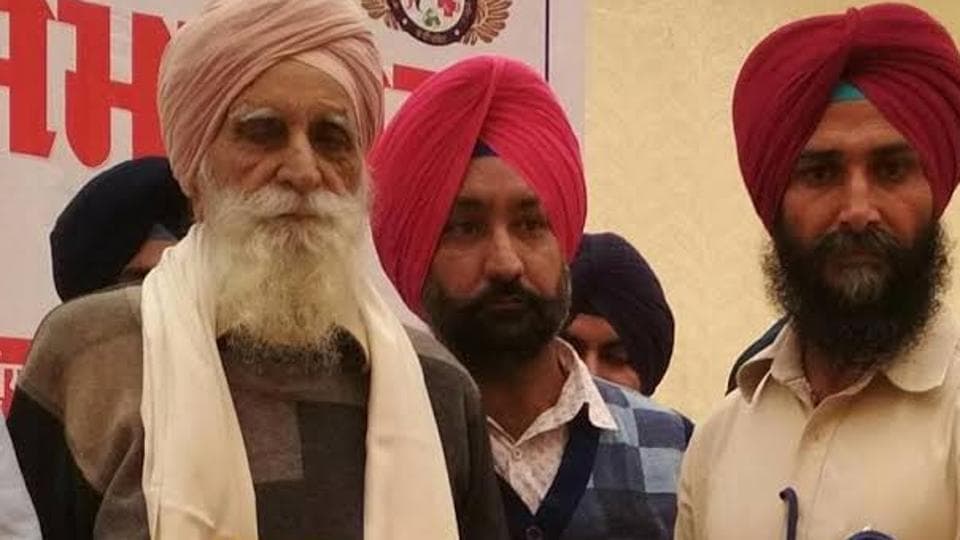
Born in a family of land-owners in Dhudike village of Moga district of Punjab and leaving school, he went as a teen to British Malaya and it was there that he started developing a taste for literature. Away from home, he longed for the sounds, sights and way of life that he had left behind. He returned after a few years to his village and decided that his would be the vocation of a writer and not a tiller of the soil. Yet he was to reap a rich harvest of words of the nurtured in the ethos of the life around him. Such was the reach of his words that they were etched in the minds of people. His readers still recall the dialogues from his novels.
INIMITABLE STYLE
Just a year ago, functions were organised to celebrate his completing 99 years. One remembers him stepping in style with his well-tied turban, black robes and a sword handing down his waist as one proud of his Punjabi Sikh origins which remained his hallmark even though he was given to ideological swings.
The most celebrated novel from his vast literature was Lahu Di Lao, a novel written on the brief Naxalite uprising that followed in Punjab in the footsteps of Bengal. The novel got a huge response from readers as the vision of the uprising lived long after the movement had been suppressed. Only later did some writers critical of him point out that the words he put into the mouth of one of his characters implied that the uprising was a movement of Jats, who ironically belonged to the land-owning class. Interestingly, this novel was published in Singapore during the Emergency and the copies were smuggled here. The other novel, Puranmashi, is also lauded for his beautiful prose.
COURTING CONTROVERSY
He had the gall to court controversy with the pride of a feudal lord. His sympathising with the separatist Khalistan movement caused a stir in the literary world but Kanwal ignored the criticism and saw nothing amiss in swinging from the extreme Left to the Right, taking them as movements which were similar in nature and their aim being to end the miseries of the struggling masses.
A couple of Punjabi authors also wrote fiction about the mysterious murder of one of his daughters, a student of Panjab University who wished to marry a non-Jat boy of a lower caste. However, nothing was proved and a relative who was convicted was let off on grounds of mental instability but the alleged honour death is talked about in hushed tones.
A writer’s world is made of many contrary pulls but even his detractors did not question the power of his pen.
AWARDS AND ACCOLADES
Among the many honours awarded to Kanwal were the Sahitya Akademi Award for his novel Taushali di Hansi in 1998 and Guru Nanak Dev University conferred upon him the degree of Doctor of Literature.
With his death, he passes from life to legend with a writer who will always have a prominent place in the world of Punjabi letters.


