
 E-Paper



Only 19% land used for direct sowing of wheat in Patiala dist
It’s not viable for us to manage stubble and then sow wheat using happy seeders; govt should take care of logistics if they want the method to succeed: Farmers


Even as the state government is widely promoting direct sowing technique of wheat on paddy stubble, the idea has received a lukewarm response in Patiala district. Only 19% area is being used for direct sowing of wheat.
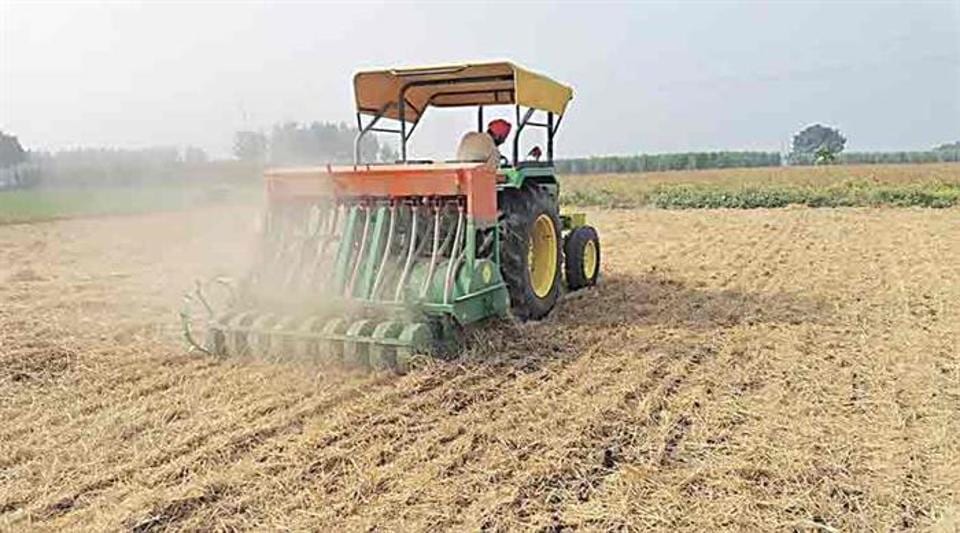
Of total 2.3 lakh hectare area under wheat cultivation, only 50,000 hectare has been covered through the direct sowing technique. Lack of machinery at the agricultural department and reluctance among farmers are said to be the main reasons behind this.
Moreover, most farmers have carried on with the traditional way of sowing wheat after burning the paddy crop residue, thus resulting in pollution and hampering the environment.
“The acceptance for direct sowing is quite low. Hardly any query has been raised for the technique,” said a senior agriculture official, pleading anonymity.
“The department has received 430 applications for machinery including happy seeders, rotavators, zero-tillers and bailers. Of all applications, only 224 were approved,” the official added.
Chief agriculture officer (CAO) Arvinder Singh said that they are yet to compile the final data, but so far wheat on at least 50,000 hectare is sown using happy seeders.
“99% wheat sowing has been completed. Thus, there are very few chances of more area being covered under direct sowing technique,” he said.
Farmer Jasbir Singh said that it is not financially viable for farmers to first clear their fields through machines and then sow the wheat crop with the help of happy seeders.
“If the state government is truly committed towards promoting direct sowing, it should provide adequate number of machines and take care of other logistics for the farmers,” he said.
POPULAR VARIETIES
The disease-resistant wheat varieties of HD 2967 and HD 3086 have gained popularity among farmers and most area under wheat has been covered by these varieties.
The CAO said that these varieties have been sown in more than 70% area under wheat cultivation as farmers are showing great interest in these after last season’s results.
“Not only their resistance against diseases, but the higher yield than other varieties of wheat has made these varieties popular among farmers,” he said.
Its average yield of these varieties is 21.4 quintals per acre and the varieties are resistant to yellow rust and brown rust and other smut diseases.
“Our field teams are keeping tabs on the wheat sowing activities and have been directed to minutely collect day-to-day data pertaining to cultivation of secondary crops during the rabi season,” he said.
WHY DIRECT SOWING?
In direct sowing methods, wheat seeds can be sown directly over paddy stubble either through happy seeders, zero tillage machines or rotavators. The agriculture department claims that there is no affect on the development, size and growth of the crop. Besides saving time, direct sowing helps to lower input cost on labour and irrigating field.


