Dimple Kapadia won the National Award for her true to life depiction of a lower caste Rajasthani “professional weeper” in the film Rudaali in 1993. Mourning publicly for the loss of a male member was unacceptable for upper caste families in olden times, so they would hire such weepers, all of who were women. They would come daily, beat their chests, flail their hands and howl and scream, and thus make up for the lack of emotion exhibited by the bereaved family.
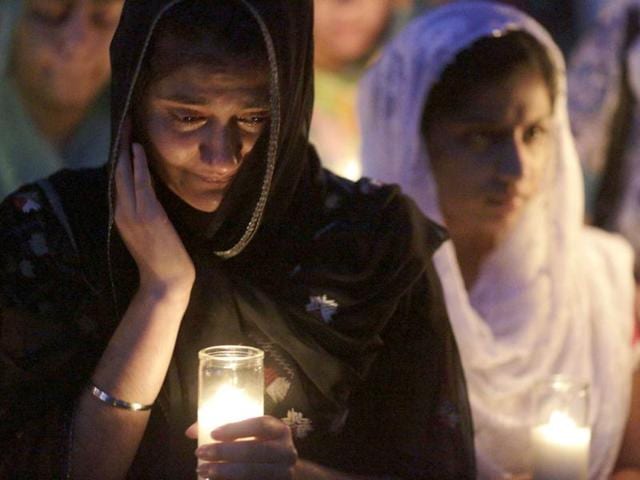
When my father-in-law passed away a few years ago, my mother-in-law, obviously shattered, took it as God’s will, showed strong resolve and exemplary self-control. She grieved silently but did not break down publicly or give in to hysteria as women of her times are wont to. In fact, she firmly admonished a relative from the village, who entered the house in a frenzy of loud wailing, and told her to refrain from such exhibitionism. She was the epitome of grace, restraint and quiet acceptance of her fate, now that her partner and companion of 50 years was no longer by her side.
My mother-in-law told me how as a young girl in Lahore, before Partition, mourning was serious business. Her mother would crumple her ironed dupatta, wear an old set of clothes, sport an extremely gloomy countenance and squeeze mandatory tears, if she had to attend a funeral, so as to show reverence for the dead and empathy for the family in their loss. The virtues, real or imaginary, of the deceased would be lauded and lamented amid loud weeping, dubious good deeds would be shamelessly attributed to him and he would thus get a magnificent send-off to heaven.
Nowadays not much has changed as far as mourning goes. One does come across the odd professional kind of a mourner whose expressions of grief makes you cringe and turn away in embarrassment. Many a times ‘bhog’ ceremonies become tiresome when someone gets hold of the microphone towards the end and starts narrating longwinded stories of saintliness accredited to the ‘Good Samaritan’ who is now in heavenly abode.
{{/usCountry}}Nowadays not much has changed as far as mourning goes. One does come across the odd professional kind of a mourner whose expressions of grief makes you cringe and turn away in embarrassment. Many a times ‘bhog’ ceremonies become tiresome when someone gets hold of the microphone towards the end and starts narrating longwinded stories of saintliness accredited to the ‘Good Samaritan’ who is now in heavenly abode.
{{/usCountry}}But as far as presenting a drab exterior is concerned, mourning practices have undergone a change. Tailors and boutiques work round the clock to stitch modest but smart outfits for such ceremonies. The dress code has to be neither too colorful nor too drab. But the pièce de résistance was the occasion when my sister-in-law attended a ‘bhog’ ceremony, sporting a scrubbed face devoid of makeup, a simple cotton suit and a serious expression. The widow was startled at the sight of her and very solicitously sought her out. Maybe for a moment forgetting herself and genuinely concerned, she started enquiring after my sister-in-law’s health and if all was well with her husband and family!
The writer is a Jalandhar-based freelance contributor