Ever heard of bomb proofing as early as the 17th Century? Welcome to the serene St Mary's Church on the premises of Fort St George, the seat of power for centuries.
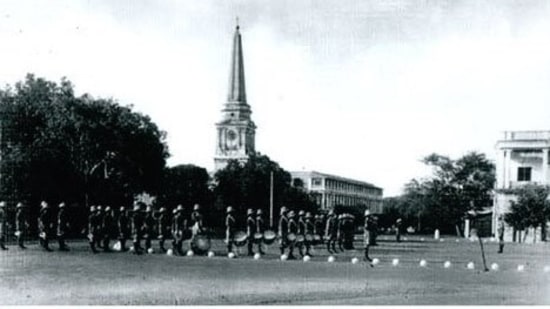
This is the church where Robert Clive's marriage with Margaret Maskelyne was solemnised. Clive (1725-1774) one of the key architects of the British empire in India, had also attempted to end his life in then Madras.
The church is a treasure house of important records, articles, marble plaques and tablets. Its Registers of Baptism, marriages and funerals, the colours of Madras European regiments and old silverware are famous. These are now in the Fort Museum.
On the church's bomb proof structure, an archaeologist from the Archaeological Survey of India (ASI) told PTI that a unique feature of the church is its thick masonry walls.
Also Read | Madras Day 2022: Chennai turns 383, celebrations at Elliot’s beach
"The masonry walls are nearly 4 feet in width and its roof is nearly 2 feet thick. The design was aimed at saving the church from bombardments." The roof's design is to withstand gunfire from the sea and land. A plaque on the church premises says that the "...three aisles arched with brick and stone have a bomb proof vaulted roof." Hostilities between local rulers, the British and French were common those days.
{{/usCountry}}"The masonry walls are nearly 4 feet in width and its roof is nearly 2 feet thick. The design was aimed at saving the church from bombardments." The roof's design is to withstand gunfire from the sea and land. A plaque on the church premises says that the "...three aisles arched with brick and stone have a bomb proof vaulted roof." Hostilities between local rulers, the British and French were common those days.
{{/usCountry}}Madras Day is celebrated on August 22 every year. It is believed that it was on this day in 1639 the foundation for the modern city was laid by the East India Company by buying land for building Fort St George from local rulers.
The St Mary's Church, consecrated on 28 October 1680 is the earliest Protestant church to be built east of the Suez, and the oldest surviving British era building in Chennai, according to the ASI.
The shrine was constructed through public subscription from English inhabitants during the times of Streynsham Master, the then Governor. The construction commenced in 1678 and completed two years later, and it is the oldest masonry structure inside Fort St George.
The church's interior has memorial plaques for British era stalwarts. The painting of the last supper at the altar and the artistic woodwork are striking. The tombstones within and outside the church are important. The organ of the Church, presented in 1894 is still in use.
According to the ASI, originally, the plan consisted of the prayer hall and the sanctuary alone. Additions were made in the 18th Century like the detached belfry tower (1701) on the west, the steeple (1710), the tower linked to the main building (1760) and the curved staircase on the line providing access to the gallery.