The new coaches were dispatched from Kolkata-based Titagarh Rail Systems Limited on trailers in the early hours of September 19.
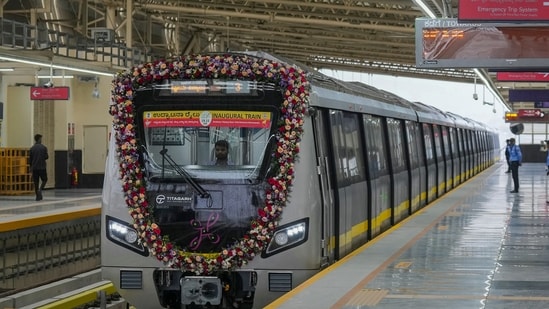
Once assembled at the Bengaluru depot, the train will undergo a 20-day testing cycle, including system integration checks with signalling, telecommunications, and power supply networks, according to a senior BMRCL official, The Hindu reported.
The 18.82-km Yellow Line, connecting RV Road to Bommasandra, was inaugurated by Prime Minister Narendra Modi on August 10, and opened for commercial operations the following day. The line links southern Bengaluru neighbourhoods and Electronics City to the metro network.
At launch, the corridor operated with only three trains, forcing commuters to endure waits of over 25 minutes during peak hours, causing severe overcrowding. The addition of a fourth trainset on September 10 slightly improved frequency, bringing intervals down to 19 minutes, but congestion persisted.
With the fifth trainset, officials expect further easing of passenger crowding, though additional trains will still be required to achieve optimal service levels.
{{/usCountry}}With the fifth trainset, officials expect further easing of passenger crowding, though additional trains will still be required to achieve optimal service levels.
{{/usCountry}}According to the report, each train is equipped with Communication-Based Train Control (CBTC) technology, enabling driverless operations, a first for Namma Metro.
While the system can theoretically reduce train intervals from 150 seconds to 90 seconds, manual operation by trained locomotive pilots continues during the initial phase.
The project faced significant delays in rolling stock procurement. Although civil works were completed nearly a year before commissioning, trains were not available on schedule.
Originally, in 2019, Chinese manufacturer CRRC had won a ₹1,578-crore contract to supply 216 coaches, with a requirement to establish manufacturing in India.
After failing to meet this obligation, CRRC received multiple notices from BMRCL and faced the potential invocation of a ₹372-crore bank guarantee.
Progress resumed only after CRRC partnered with Titagarh Rail Systems, which began supplying trainsets, although deliveries remain behind schedule. Consequently, BMRCL had to open the Yellow Line with a skeletal fleet, contributing to initial overcrowding.
(Also read: Bengaluru India’s 3rd most violent metro after Delhi, Mumbai, with 47% crime surge: Report)