
 E-Paper



Lockdown revives aquatic life in Chambal river
The dolphin population was falling steadily but for the first time in six years the population has increased.

 Prefer HTon Google


The aquatic animal population, including dolphins and gharial, in the Chambal river passing through Rajasthan, Uttar Pradesh and Madhya Pradesh has increased significantly in the past year due to a decrease in demand for fish and sand amid the Covid-19 pandemic-induced lockdown, officials said.
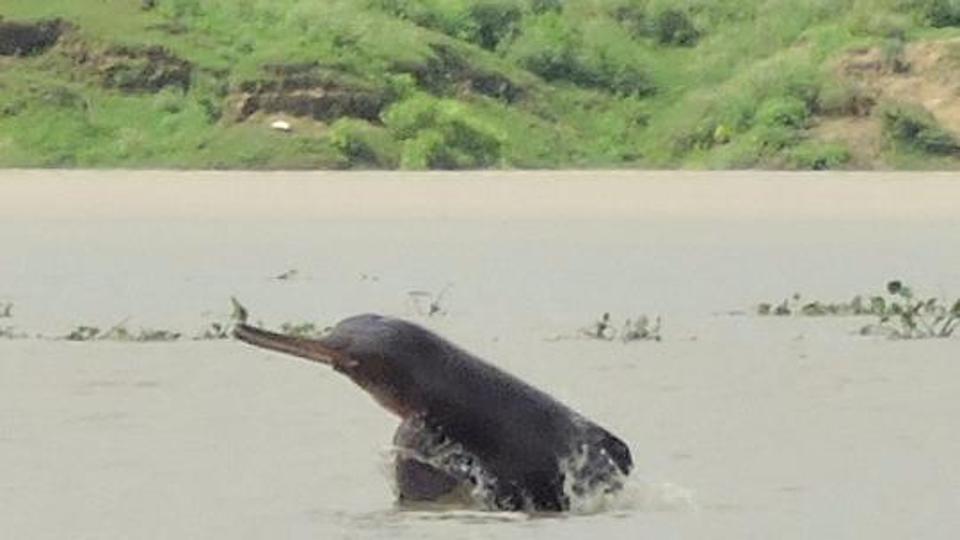
“We have identified the dolphin pools in 2019 and spotted 25 calves. We deployed Ghat (bank) in-charge near the pools to check illegal net fishing as it was a major reason behind the death of calves. Decrease of demand of both sand and fish due to lockdown also helped us in saving calves,” District Forest Officer (DFO) Chambal Amit Nikam said.
The dolphin population was falling every year between 2016 and 2020 but for the first time in six years the population has increased. This year, 82 dolphins and 20 calves were spotted in river Chambal, according to the annual animal survey in Chambal river conducted by three states.
Forest department officials said improvement of quality of aquatic life in the Chambal river also caused an increase in the population of gharial (type of crocodile) by 17% and crocodiles by 24%, according to the survey.
In the year 2016, only, 1,162 gharial were spotted in the river during the survey but this year, the population increased to 2,176. Similarly, there were 454 crocodiles in the river in 2016 which increased to 886.
The experts in UP, MP and Rajsthan said after illegal sand mining, illegal net fishing emerged as a new threat for dolphins in Chambal river and baby dolphin were dying every year due to this.
Nikam said the decrease in the number of dolphins was a matter of concern for them because illegal sand mining was spoiling the habitat and illegal net fishing was killing calves.
He further said this year, too, they spotted 20 calves and will put extra effort to save them.
“Dolphins were caught in the nets laid to catch other small fish, such as Rohu, Kirawat and Patola. With the slowdown of the business of hotels and restaurants during the lockdown and other restrictions imposed due to Covid-19, illegal net fishing has almost stopped. We have also increased our surveillance at the banks to save calves,” said Diwakar Shrivasatav, divisional forest officer, Chambal Sanctuary, Agra.
Experts feel the state government should come up with a plan to maintain this quality of aquatic life and habitat so that net fishing and sand mining does not increase once the lockdown is eased.
Senior scientist at Turtle Survival Alliance and working for Aquatic Animals of Ganga River System, Shailendra Singh, said, “A dolphin gives birth to only one child in a year and rarely two. It is necessary to save them from getting trapped in the net. Lockdown stopped illegal net fishing but the state government should also come up with a plan to control it.”
As the numbers have increased, experts will study the dolphin habitat as most of them were found in 40 kilometre stretch of the river only.
“This time we received separate instructions to calculate the dolphins and collect maximum information about their habitats. This time many dolphins were seen together downstream of Chambal river, which is a rare phenomenon. The maximum numbers of dolphins were seen from Barhi area of Bhind to Sahaso village of Etawaha in UP. More than 35 dolphins were seen in this 40-kilometre-long stretch,” said Jyoti Dandotia, expert at Chambal Sanctuary, who was part of the Aquatic Survey Team.


