E-Paper



83% dip in field fires but air quality still bad in Haryana
On Monday Kaithal district in North Haryana was second in the list of AQI at 393. Thoothukudi district of Tamil Nadu had the worst air under “severe” category at 486.

 Prefer HTon Google


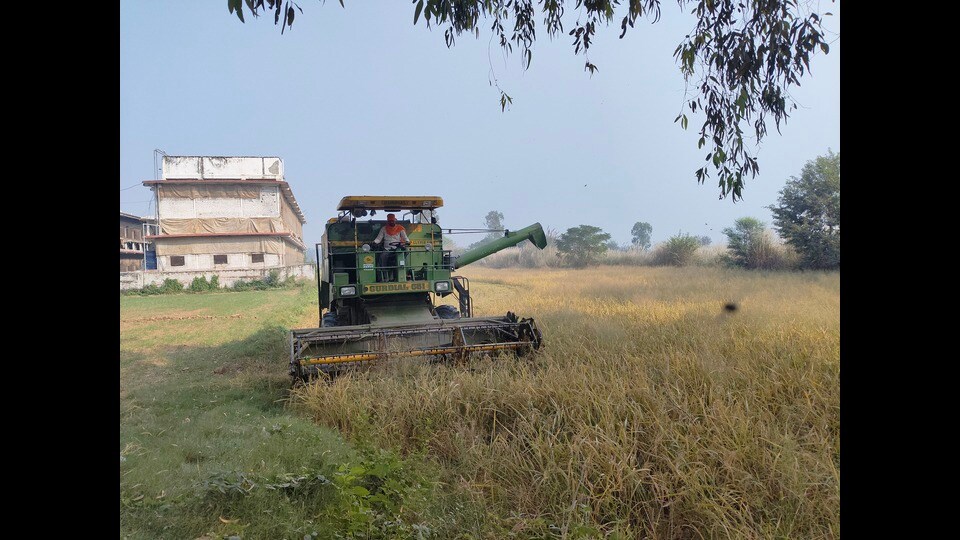
Baffling experts, the air quality index (AQI) of Haryana cities hover in the “poor” and “very poor” category despite a significant decline of 83% in stubble burning cases between September 15 to November 3.
On Monday Kaithal district in North Haryana was second in the list of AQI at 393. Thoothukudi district of Tamil Nadu had the worst air under “severe” category at 486. According to the Central Pollution Control Board (CPCB), of the 13 places in the country with “very poor” AQI, five belong to Haryana. They are – Jind (354), Manesar (340), Bhallabgarh (320) and Fatehabad (313).
As per data from the agriculture department only 145 farm fire cases were reported in the state as compared to 857 incidents during the same period last year, marking this one of the sharpest dips since the problem arose. The corresponding figures were 1,372 in 2023, 2,377 in 2022, and 3,438 in 2021, showing a consistent decline in the practice.
Officials attributed this sharp decline to the growing success of the state’s crop residue management initiatives including awareness, financial incentives and stringent enforcement. As per district-wise data, Jind has reported the highest number of cases (27), followed by Kaithal (23), Faridabad (20), Hisar (13), Sirsa (12), Palwal (10), Kurukshetra (8), Yamunanagar and Sonepat six each, Ambala and Karnal five each, Faridabad (3), Panipat and Bhiwani two each and Rohtak, Jhajjar and Panchkula one each.
Haryana is witnessing a silent revolution unfolding in its hinterland. Stubble, which was once a major source of air pollution in the region and trouble for farmers, now reaps benefits.
‘Harmful for farmer first, then others’
As one drives from city to village, stubble bales loaded tractor-trailers are now a common scenario. Bales scattered in farms have now taken the place of ash-filled fields, where farmers are transforming the stubble into profit.
45-year-old progressive farmer Dimple Sharma from Bhanokheri village of Ambala, believes that burning stubble is harmful for farmers first and then to others.
“I’ve been using a super seeder for the last 5-6 years on my 10 acres of fields. Farmers have now understood this that burning stubble is not helping anyone. They have now understood this. In fact, the residue works as a natural fertiliser. As the number of stubble burning cases reduced this time, farmers should be praised. Moreover, the reckless burning of crackers and vehicular pollution should be blamed for higher AQI levels, not farmers,” Sharma, also a private school teacher, said.
Similarly, Satnam Singh from Kheri Gadian village of Kurukshetra’s Ladwa, said, “When government is paying us ₹1,200 per acre as financial incentives and asking us not to burn stubble, else case will be registered and we will not be allowed to sell our crop, then there is no logic of doing so.”
Yogesh Kumar from Peont village of Karnal’s Assandh, echoed Singh’s sentiments and said, “Farmers are also law-abiding citizens and more than that, who love the environment.”
Youth don’t want to harm their prospects of going abroad by having FIRs filed against them
Ambala deputy director, agriculture (DDA) Jaswinder Saini said that apart from awareness camps and stringent actions, the farmers have shown interest to shun stubble burning.
“Infact, marking a red entry since last year, seems to have bearing results as farmers, who must have burnt stubble last year, came to know at the mandi gates that they won’t be able to sell wheat at MSP during procurement. Moreover, the young landowners don’t want to harm their prospects of being able to travel abroad because of FIRs being registered against them for burning residue,” he added.
Karnal deputy commissioner Uttam Singh said that village, sub-division and district-level committees along with nodal officers maintained a constant vigil to ensure compliance of the orders.
Breathing still difficult
Despite a steep decline, Haryana cities were ranked highest in the Air Quality Index (AQI) with the worst air since Diwali last month.
Not only NCR, places far from the national capital like Fatehabad, Jind, Ambala, Panchkula, Karnal and others also recorded AQI in the “poor” or “very poor” category.
While lack of research on exact cause behind hazardous air pollution every winter, the Haryana State Pollution Control Board (HSPCB) is also worried that despite a fall in stubble burning cases and no major industry in Fatehabad, Sirsa and Jind and others, the AQI remained in “poor” or “very poor” category.
A senior HSPCB official, not wishing to be named, said, “Though, it is a common phenomenon during winters that due to dip in temperature and atmospheric pressure, the air holds the dust particles for long. The industrial activities, vehicular pollution and stubble burning adds to the woes. But after constant efforts of the state government, the stubble burning has declined much this year, but the air pollution remains. This has become a new cause of concern and is being studied.”
BOX
Past CPCB data shows that AQI in Bahadurgarh town of Jhajjar remained the worst in the country on October 23, 24 and 28.
AQI in Dharuhera in Rewari was in the “severe” category on Sunday, also highest in the country. It was also ‘severe’ on October 30 and 21, but poorest on October 22.
Similarly, Jind district was also in “severe” and poorest post-Diwali on October 21.
AQI in other districts like Kaithal, Bhiwani, Bhallabgarh, Fatehabad, Gurugram, Rohtak and others have time and again recorded among top 5 with poor air.