
 E-Paper



A winter date with Chandigarh’s soul
Inside, the fog and filtered light perform a quiet miracle; high ceilings promise cool summers, wide windows open into green vistas, and delicately patterned jaalis scatter a soft glow across the rooms

 Prefer HTon Google


January wrapped Chandigarh in its familiar winter shawl — fog-softened mornings, school vacations, and long reflective walks. And in that quiet chill, I found myself on a gentle, unhurried date with my beloved city — at the humble yet dignified Pierre Jeanneret Museum in Sector 5, once the residence of the man who helped give Chandigarh its character.
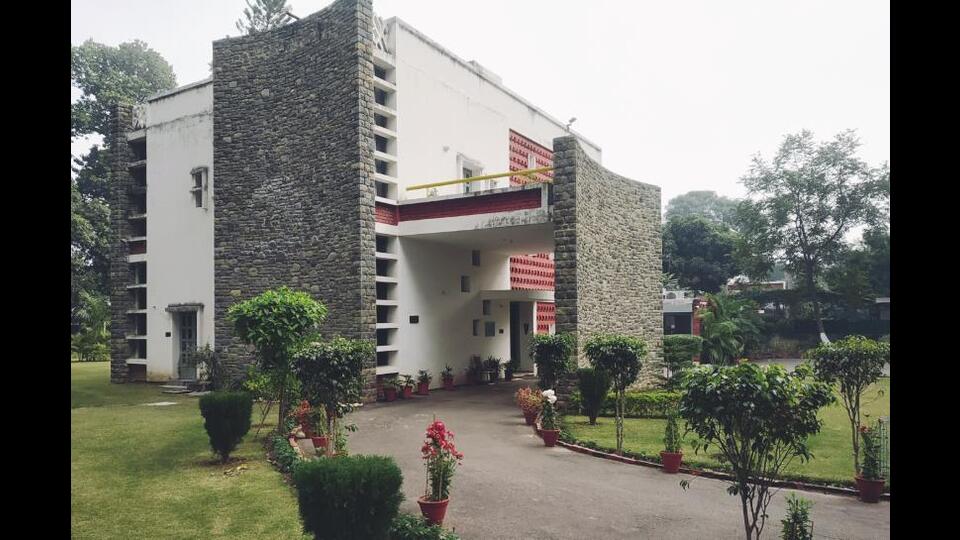
Plain at first glance, the red-brick house sits surrounded by towering Buddha coconut trees, its calm presence echoing stories of the Swiss-French architect Pierre Jeanneret — cousin, collaborator, and creative soulmate of Le Corbusier, who shaped Jawaharlal Nehru’s dream of a modern city.
Inside, the fog and filtered light perform a quiet miracle. High ceilings promise cool summers, wide windows open into green vistas, and delicately patterned jaalis scatter a soft glow across the rooms. The porches — elegant yet unassuming — speak volumes of an architectural mind rooted in simplicity.
This was the first private house Jeanneret built in Chandigarh, a lived-in manifesto of his design philosophy — functional, humane, democratic. His work ranged from government schools to the Panjab University campus, the iconic Gandhi Bhawan, libraries, civic buildings — timeless spaces that continue to inspire modern architectural practice even today.
Jeanneret struck an emotional chord with Chandigarh. His curiosity, craftsmanship and quiet creativity seeped into the city’s identity. He loved working with wood — crafting minimalist furniture, chairs and tables that blended beauty with modesty. When he eventually left Chandigarh, he gifted these precious creations to the museum — leaving behind not just objects, but fragments of his gentle genius.
He also designed paddle boats for Sukhna Lake — his retreat in life, and finally, his place of rest, where his ashes were scattered. The museum today stands not merely as a memorial, but as a learning space — an intimate archive of a thinker, maker, and city-lover.
A spiral staircase leads to the upper floor — three simple rooms now serving as guest spaces. Their modest bathrooms and sunlit balconies echo Plato’s timeless thought: “Beauty of style and harmony and grace and good rhythm depend on simplicity.”
One room holds a small, eye-shaped window — a sculptural marvel once opening toward Sukhna Lake. Though new constructions now obscure the view, I could still sense the lake beyond — its silence, its winter chill — and the words displayed at the Sukhna Gallery seemed to float back to me: “To see the stars in the sky and the stars in the mountains too, in the water — and all in absolute silence.”
Walking through this heritage home felt deeply personal — a quiet awareness that I was moving through the same spaces Jeanneret once walked, dreamed, worked, and loved. His understanding of people, culture, climate and comfort is stitched into every corner of this two-storeyed Maison Pierre Jeanneret — House No. 57, Sector 5 — a living lesson in sustainability, restraint and grace.
A city dreamed by Nehru. Planned by Le Corbusier. Given warmth and character by Pierre Jeanneret. Chandigarh is not just a city of brick and concrete — it is a city of dreams, of ideas made visible. Thank you, Pierre Jeanneret, for this quiet winter rendezvous — with the hidden gem in the crown of our City Beautiful.
(The writer is an assistant professor at the Department of Botany, DAV College, Sector 10, Chandigarh)


