
 E-Paper



Bathinda MC to build Punjab’s first solar-powered, zero-waste civic office
The civic body plans to make the building a model for sustainable construction, with officials saying it is being designed to meet the benchmark for a five-star green-building rating

 Prefer HTon Google


More than three years after conceptualising what it says will be Punjab’s first solar-powered and zero-waste public-sector building, the Bathinda Municipal Corporation has finalised a 5,000-square-yard site near the Rose Garden and floated tenders for its new headquarters.
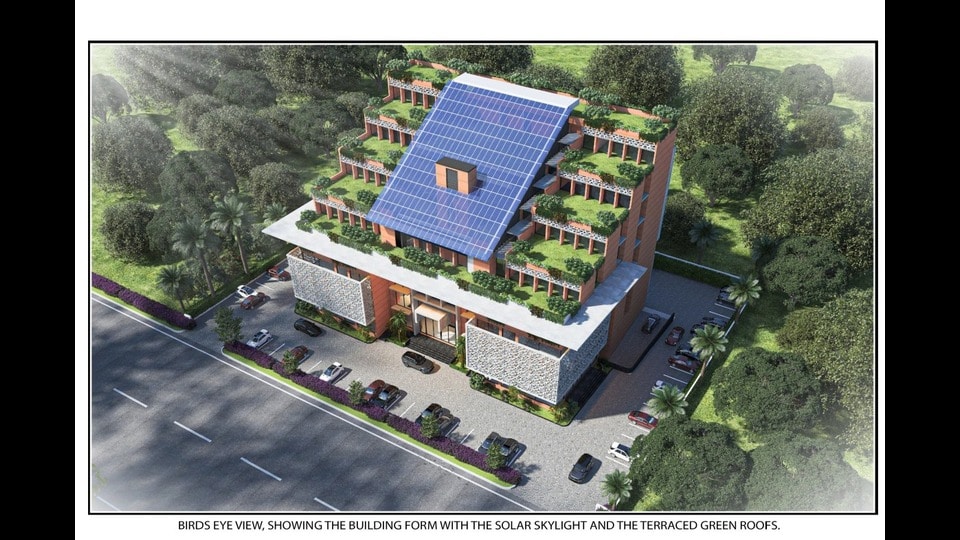
The proposed ₹37-crore, six-storey complex, to be built on the MC-owned land adjacent to the MC colony, will have a covered area of 90,000 sq ft and parking capacity for 168 cars. A terrace garden is planned on each floor.
Municipal commissioner Lovejeet Kaur Kalsi said the complex had been designed to bring all wings of the civic body under one roof, as several departments are currently functioning from different locations across the city, causing inconvenience to residents and administrative difficulties.
The civic body plans to make the building a model for sustainable construction, with officials saying it is being designed to meet the benchmark for a five-star green-building rating. A 120-kW solar power system is proposed, with most of the complex’s electricity requirements expected to be met through solar generation.
Among the key features is geothermal cooling technology, which officials said could help regulate the building’s temperature by around 4°C. Given Bathinda’s extreme summer and winter temperatures, the system is expected to help maintain a more stable indoor environment. The building will also have insulated walls and windows and has been designed to facilitate natural ventilation.
The corporation also plans to make the complex zero-waste through measures including an exclusive sewage treatment plant, compost pits and dual plumbing. Wastewater generated in the building will be treated and recycled for use in washroom flushing.
Building-integrated photovoltaic systems are also proposed, with transparent solar panels serving as skylights. Besides generating power, the panels are expected to allow natural light into the building and reduce the need for artificial illumination during the day.
The project was first conceptualised in March 2023 at an estimated cost of ₹31 crore. The estimate has since been revised to ₹37 crore due to the rise in construction and material costs. The civic body had initially proposed constructing the office near the District Administrative Complex. However, the proposal was dropped after it failed to secure the state government’s approval to take possession of the public land.


