
 E-Paper



Hospitals can’t show negligence in treating crime victims, says SC
New Delhi: The Supreme Court on Friday said hospitals cannot show negligence in treating victims of serious crimes requiring immediate medical attention, as it decided to frame broad guidelines for hospitals and law enforcement agencies to ensure that such lapses do not recur

 Prefer HTon Google


New Delhi: The Supreme Court on Friday said hospitals cannot show negligence in treating victims of serious crimes requiring immediate medical attention, as it decided to frame broad guidelines for hospitals and law enforcement agencies to ensure that such lapses do not recur. The apex court directed two private hospitals in Ghaziabad to pay a total compensation of ₹12 lakh to the family of a four-year-old rape victim who died after allegedly being denied emergency treatment.
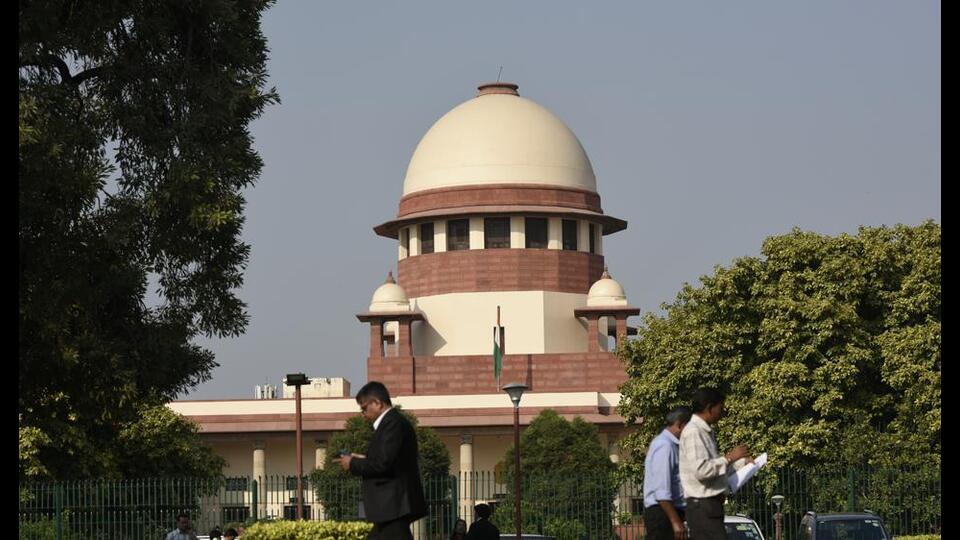
A bench headed by Chief Justice of India (CJI) Surya Kant said the case exposed serious failures on the part of both the police and hospitals.
“Both law enforcement agencies and medical institutions have been found lacking. We want to lay down the law. The Bharatiya Nyaya Sanhita has certain safeguards but there exists a gap between the normative law prescribing the statutory mechanism and the law in real which exists at the ground level. Our effort is to bridge that gap,” the bench, also comprising justices Joymalya Bagchi and V Mohana, said.
The court added, “We are further inclined to lay down guidelines for timely medical assistance to victims in such cases.”
The bench was hearing a petition filed by the victim’s father, a daily wage labourer, seeking a court-monitored probe into the March incident. The court had earlier constituted a Special Investigation Team (SIT), which found lapses in both the police investigation and the medical response.
According to the SIT, the four-year-old girl was raped by her neighbour and remained alive for nearly five hours after sustaining grievous injuries. She was taken to two private hospitals, including a multi-speciality facility, but was allegedly denied treatment before being shifted to a district hospital, where she was declared dead. The SIT also found that the delay in treatment contributed to her death.
Accepting the findings, the court directed St Joseph (Mariam) Hospital to pay ₹10 lakh and Khajan Singh Manvi Healthcare to pay ₹2 lakh to the victim’s family.
“On going through the SIT report, it was our prima facie opinion... that it was a clear case of sheer negligence on part of the hospitals,” the bench said.
Senior advocate N Hariharan, appearing for the victim’s family, argued that the police had also failed in their duty. He said there was a delay of nearly 30 hours in registering offences under the Protection of Children from Sexual Offences (POCSO) Act and sought directions for video recording of complainants’ statements at police stations.
“There was a 30-hour gap in registering the POCSO offence. Even the hospitals wasted five hours. The child could have been saved during this time. It is high time we call the Hippocratic oath taken by doctors a hypocratic oath,” Hariharan said.
A Hippocratic oath is an ethical code followed by doctors worldwide emphasising their duty towards treating any patient to the best of their skill and ability.
The bench underlined that timely medical intervention could make the difference between life and death.
“When a victim is haemorrhaging, the time is crucial. It has also been seen that the initial hours are always crucial in saving burn victims,” it observed.
Additional solicitor general Aishwarya Bhati, appearing for the Uttar Pradesh government, told the court that the police registered the POCSO offence within 24 hours of the SIT’s recommendation and that disciplinary proceedings had been initiated against the officials responsible for the lapses.
The court said the guidelines it proposes to frame would address training, accountability and supervision of both police personnel and medical institutions.
“It is extremely important that police officials at a particular level have to be periodically sensitised. As human beings they deal with one or the other crime every day. There is sensitivity involved in every matter. This involves human emotions, how to take care of victims. This is completely up to them how they manage it,” the bench said.
Hariharan also submitted that both hospitals had the necessary facilities and doctors on call but neither admitted the child nor summoned emergency doctors despite her critical condition.
Counsel for one of the hospitals said it was willing to pay ₹10 lakh as a voluntary contribution instead of compensation and requested the court to consider dropping the criminal case against it. The bench said it would consider the request while passing its final order.
The incident took place on March 16 in Ghaziabad’s Nandgram area, where the child was allegedly lured away by her neighbour, raped and brutally assaulted. The post-mortem report recorded severe injuries to her private parts, indicating aggravated sexual assault under the POCSO Act.


