National Independent Schools Alliance (NISA) on Sunday released a research report, “National Level survey on Learning Loss in School Education during the Pandemic”, aimed at understanding the learning gaps suffered during the pandemic and finding ways to bridge them.
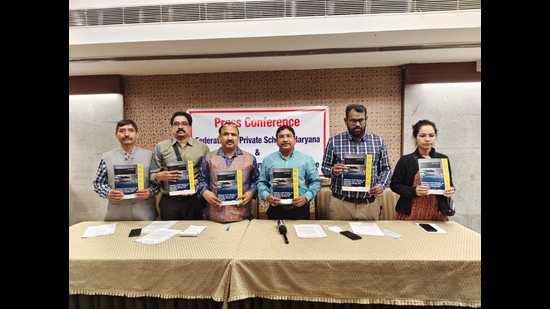
The survey involved 1,502 students from urban, semi-urban and rural private schools across 17 states, being assessed for their foundational abilities.
The major aspects being analysed in the survey, which also included a common web questionnaire, were students’ understanding abilities, reading and written skills of mother tongue and their grasp over English and mathematics
Kulbhushan Sharma, president of the NISA, said, “We have been working for the accessibility and advocacy of quality education since 2010. To take it further, we assessed the learning loss among school students of Classes 3, 5 and 8 during the pandemic at a national level.”
The final report, which was released in Chandigarh, arrived at a few significant findings on students’ abilities to overcome academic lapses. The report showed an overwhelming 85% of students exhibited good awareness of their present skill levels in languages and mathematics.
In another major finding, almost half, 42.3%, of the total respondents reported undergoing stress, tension and anxiety.
{{/usCountry}}In another major finding, almost half, 42.3%, of the total respondents reported undergoing stress, tension and anxiety.
{{/usCountry}}The survey also addressed the digital divide in schools in urban and rural parts of the country, finding that students from the latter category were unable to join online classes due to lack of internet access. Notably, almost all respondents, 98.6%, preferred offline classes.
The final report pressed for a few teaching reforms, with special focus on remedial classes and innovative curriculum. “The gap needs to be filled. Government should consider if bridge courses can be a part of the curriculum, and other schools will follow. There has been a huge loss, which might not be visible now but will reflect when the students are in secondary or senior secondary,” the group’s national coordinator and one of the researchers, Thomas Antony said.
“The survey’s findings would be of great assistance to the pedagogy of a classroom in suggesting measures to bridge learning gaps,” an official NISA statement read.