
 E-Paper



Centre, Khattar government had opposite stance on HSGMC Act
It is an undisputed fact that the Sikh Gurdwaras Act, 1925, is an Act of state legislature, Punjab government had said before the Supreme Court


The BJP-led central government had opposed the enactment of the Haryana Sikh Gurdwara (Management) Act, a law brought in during the Congress rule in Haryana in 2014, even after the reins of the Haryana government passed into the hands of the saffron party in October 2014.
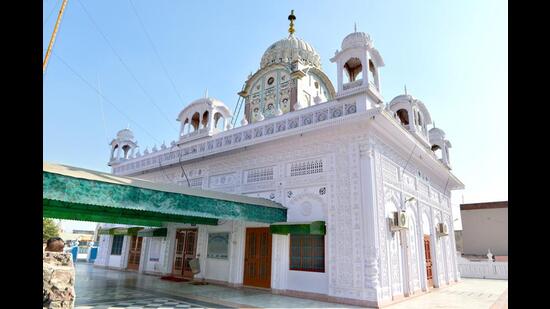
The Haryana Act, whose validity was upheld by the Supreme Court on Tuesday, provided for vesting of all moveable and immoveable properties of gurdwaras in the Haryana Sikh Gurdwara Management Committee (HSGMC) for better autonomous management and effective supervision of Sikh shrines and their properties in the state.
The apex court also dismissed the petition filed by the Shiromani Gurdwara Parbandhak Committee (SGPC) challenging the constitutional validity of the Haryana law.
Even as the Centre continued its opposition to the Haryana law, the BJP-led Haryana government went all out to defend the 2014 law, thanks to some sane piece of legal and political advice to chief minister Manohar Lal Khattar.
The state’s supportive stance was aimed at winning over the Sikh community in the state in light of the souring of ties during the farmers’ stir. Centre’s opposition towards the Haryana law even after Shiromani Akali Dal (SAD) walked out of NDA was surprising and considered politically imprudent by pundits.
Centre asked governor to withdraw assent to the Bill
The first instance of the Centre’s opposition to the Haryana law came to the fore a week after the Haryana Sikh Gurdwara (Management) Bill was passed by the state assembly on July 11, 2014, during the Congress rule.
The BJP-led Centre on July 18 created a flutter by asking the then Haryana governor Jagannath Pahadia to withdraw his assent to the contentious legislation. The governor had given his assent to the Bill on July 14 and it thus became an Act.
The central government had on July 18 written directly to the governor after the then Punjab chief minister Parkash Singh Badal met Prime Minister Narendra Modi to express his opposition to the Haryana law.
Badal’s SAD was in 2014 an ally of the BJP-led NDA government.
The then Union home secretary Anil Goswami had written to secretary to Pahadia to request him to withdraw his assent in view of the fact that the state legislature had no competence to pass such a Bill. Hence, the Bill passed was void and the governor had given his assent without reserving it for the consideration and assent of the President, Goswami had written.
He also wrote to the then Haryana chief secretary Satish Chandra Choudhary on similar lines. Choudhary had made light of the Centre’s letter saying that he found it “very amusing”.
“Once a Bill gets the governor’s assent, it becomes a law. The assent cannot be withdrawn. The Constitution has no such provision. Either the state legislature can repeal, modify or amend an Act or the courts can strike down the legislation,” Choudhary had told Hindustan Times.
The then attorney general Mukul Rohatgi, in his advice to the central government, had also said that the state government is denuded of any jurisdiction to pass any bill in respect of which Parliament has exclusive power to enact a law.
Rohatgi had said the Sikh Gurdwaras Act, 1925, falls within the Union List. “The law is already in place since 1925 and there is no justification for the Haryana assembly to have passed a law on the same subject,” he had said in his advice.
BJP rode to power in Haryana in October 2014
The BJP government in Haryana strongly defended the law before the apex court. In a response filed before the SC, the state government said that the object behind the enactment of 2014 Act was to empower the Sikh community in Haryana.
It said that significance of the federal structure under the Constitution and effective devolution of legislative competence on the states is the principal issue in the present dispute and the 2014 Act has been validly enacted under Entry 32, list II of the seventh schedule of the Constitution.
The state contended before the SC that the 2014 Act does not suffer from the vice of manifest arbitrariness and there was no violation of Articles 14 and 26. “The 2014 Act has been validly enacted by the competent legislature of the state of Haryana…..” the response read.
Centre’s continued opposition to the Haryana law
As per the SC judgment of September 20, additional solicitor general KM Nataraj, who represented the central government in the apex court, argued that under Section 3 of the Inter-State Corporations Act, 1957, which deals with interstate bodies, the state government is required to frame a scheme as the SGPC under the 1925 Act is sought to be reconstituted and reorganised being an interstate corporation.
Such a scheme is required to be forwarded to the Centre and thus the central government is competent to modify the scheme so framed. Therefore, it is contended that the SGPC under the 1925 Act being an interstate corporation can be dealt with only in the manner provided in the 1957 Act, Nataraj contended in the SC.
Punjab, Haryana on same page on powers to enact such laws
Both Haryana and Punjab took one stand before the SC and argued that the power to legislate the Haryana Act is not with the Parliament, but with the Haryana assembly.
The Punjab government in an affidavit told the SC that state legislation pertaining to the administration of gurdwaras within a state (such as the Sikh Gurdwaras Act, 1925, pertaining to gurdwaras in Punjab) is strictly within the dominion of the state, the power to enact or amend such state legislation cannot be usurped by Parliament and the contentions of the SGPC in this regard are denied as misconceived.
“There is a distinction between the central government’s power to issue directions and the competence of Parliament to legislate. The existence of one does not imply the existence of the other. Even such limited power of the central government to issue directions would cease to exist when appropriate legislation is passed by competent legislature in this regard. Any perceived omnibus power of Parliament to legislate or amend such statues, especially in the light of the Sikh Gurdwara (Amendment) Act 2016, is misplaced,” the Punjab government had told the SC.
It also said that it was an undisputed fact that the Sikh Gurdwaras Act, 1925, is an Act of state legislature enacted for the administration of certain Sikh gurdwaras within Punjab as it then existed and various amendments have been made to it by the Punjab legislature.


