
 E-Paper



Chikungunya grips Panchkula, cases spike from 20 to 117 in 10 days
Earlier, major hotbeds of the mosquito-borne disease were Kalka, Pinjore and Surajpur, but now a large number of cases are also being reported from Old Panchkula and urban areas of the city


Panchkula has been seeing an unexpected rise in Chikungunya cases with the district adding 100 new infections in just 10 days to its tally, which reached 117 on Tuesday.
The district has already registered more than 1,700 dengue cases this season, highest in a decade, and as more patients are presenting with severe joint pain, swelling, muscle ache and fever, health officials fear that chikungunya is now coursing in the community.
Earlier, major hotbeds of the mosquito-borne disease were Kalka, Pinjore and Surajpur, but now a large number of cases are also being reported from Old Panchkula and urban areas of the city.
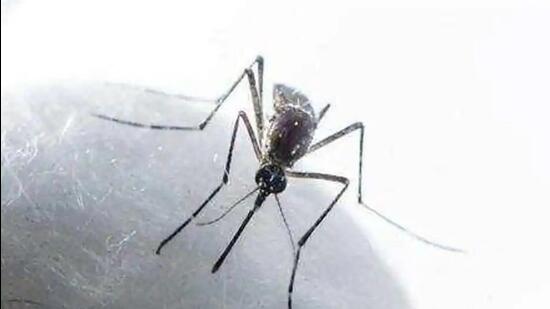
Most commonly, the mosquitoes involved in the transmission cycle are aedes aegypti and aedes albopictus. Both species can also transmit other mosquito-borne viruses, including dengue and zika.
“Patients are reporting with severe body aches, fever, and rashes. The disease takes its own time before patients are cured,” said a doctor at the Panchkula civil hospital, who was not authorised to speak with media.
There is no specific antiviral drug treatment for chikungunya. The clinical management primarily aims to relieve the symptoms, including joint pain.
“We have increased testing and house-to-house surveys are being carried out regularly. We are trying our best to diagnose as many cases as possible, so that no one remains untreated,” said Dr Mankirat Kaur, spokesperson for the Panchkula chief medical officer.
She added that fogging and sampling were being conducted on war footing.
As per the World Health Organisation, chikungunya derives its name from a word in the Kimakonde language, which means ‘to become contorted’ that describes the stooped appearance of sufferers with joint pain (arthralgia).
Symptoms of chikungunya
“Chikungunya is often misdiagnosed as dengue. But unlike dengue, it rarely progresses to become life-threatening,” a doctor on duty said.
After the bite of an infected mosquito, onset of illness usually occurs four to eight days later. Chikungunya is characterised by an abrupt onset of fever, frequently accompanied by joint pain. The joint pain is often quite debilitating which usually lasts for a few days, but may be prolonged for weeks, months or even years.
The virus can cause acute, subacute or chronic disease. Other common signs and symptoms include muscle pain, joint swelling, headache, nausea, fatigue and rash.


