The CSIR’s institute of Himalayan Bioresource Technology (IHBT) has introduced cinnamon cultivation in Himachal Pradesh on pilot basis.
If successful, it will be launched on a commercial scale, eventually cutting down India’s import of cinnamon that amounts to a whooping ₹909 crores per annum.
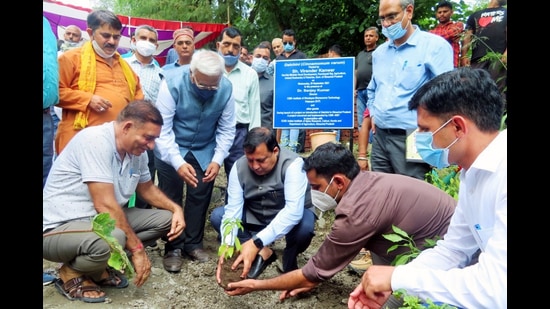
The cultivation was launched on Wednesday with state agriculture minister Virender Kanwar planting the first sapling in Una district.
Cinnamon, popularly known as dalchini, is an evergreen bushy tree whose bark is primarily used as a spice, said IHBT director Dr Sanjay Kumar.
In addition to its culinary uses in Asian and European recipes, cinnamon has critical applications in medicine and in boosting immunity. The true cinnamon is derived from Cinnamomumverum.
Cinnamomum cassia is yet another species used in place of true cinnamon, but has high coumarin content which is not good for health and the variety is banned in the United States of America, Ireland and the European Union.
True cinnamon or Cinnamomumverum is grown mainly in Sri Lanka, while minor producing countries include Seychelles, Madagascar, and India, said Kumar, adding that India imports 45,318 tonnes of cinnamon annually from China, Sri Lanka, Vietnam, Indonesia and Nepal.
No organised cultivation in India
{{/usCountry}}No organised cultivation in India
{{/usCountry}}Of the total imports, 37,166 tonnes of C cassia are imported from Vietnam, China and Indonesia. There is no organised cultivation and processing of cinnamon in the country.
“Realising the large import of cinnamon in the country and that the one imported in India is C cassia and not C verum, it was envisioned to extend its production after identifying the potential areas for cultivation,” said Kumar.
Our data suggested, he said, districts of Una, Bilaspur, Kangra, Hamirpur and Sirmour in Himachal Pradesh that have potential areas for cinnamon cultivation.
“Accordingly, we made efforts for introduction and processing of C verum in Himachal Pradesh. This project has been conceived by CSIR-IHBT and is being implemented in association with ICAR’s Indian Institute of Spice Research, Calicut, Kerala and Department of Agriculture, Himachal Pradesh,” said he.
Earlier this year, the IHBT had successfully launched cultivation of monk fruit in Kullu of Himachal for the first time in India.