The number of dengue cases reported in October this year is even higher than the annual caseload in the previous three years across the tricity.
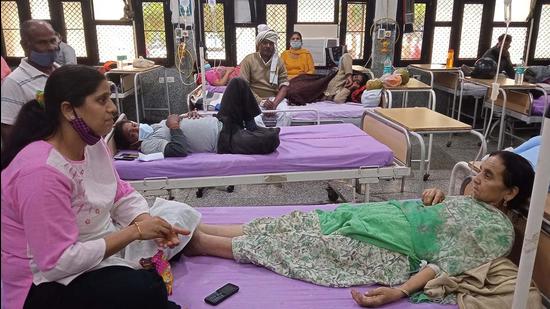
After recording the severest outbreak since 2017, the hospitals’ emergencies are overflowing with patients suffering from fever. However, the health authorities in the tricity believe that the infection will soon start ebbing with a dip in temperature.
This year, Chandigarh has recorded 889 cases till October 31, of which 805 surfaced in October alone. Three persons have also succumbed to the disease in October, while no death was reported in previous months.
While 301 cases were reported in 2018, cases dipped to 286 in 2019 and further to 265 in 2020. No death was reported in these three years. In 2017, 1,951 cases had surfaced.
However, Mohali is the worst-hit among the three areas with dengue count going up to 2,631 till October 31, of which 2,260 were reported in October. Also, Mohali recorded 31 deaths this year, of which 29 took place in October and two in September.
This is the highest death toll in at least a decade. In 2018, eight people had died while the toll stood at one in the following two years. No death was reported in 2017.
In Panchkula, 583 people got infected this year, of which 491 cases were reported in October. In 2017, 193 cases has surfaced, while the count was 143 in 2018, 33 in 2019 and 78 in 2020. The district also reported one death in October, the first this year.
{{/usCountry}}In Panchkula, 583 people got infected this year, of which 491 cases were reported in October. In 2017, 193 cases has surfaced, while the count was 143 in 2018, 33 in 2019 and 78 in 2020. The district also reported one death in October, the first this year.
{{/usCountry}}Hospitals are overwhelmed
“The dengue trend has changed this year due to climatic conditions. As of now, cases should have started ebbing but we are still recording high numbers daily. The emergency department of the PGIMER is overwhelmed with patients suffering from dengue, while many of are being admitted with extremely low platelet count,” said Dr Surjit Singh, director, PGIMER.
“Last year, people were extra cautious due to Covid-19 outbreak and not only dengue but diagnoses of other diseases was also low. This year, dengue cases increased because of late rains. The water was stagnant and temperature was suitable for the mosquitoes to breed,” said Dr Suman Singh, director, health services, Chandigarh, adding that with dip in temperature, cases will start receding.
Dr Rajendra Bhooshan, senior medical officer, Kurali, said the dengue cycle repeats every four years. “With Covid-19, the immunity has become weak, which further leads to complications if a person gets infected with dengue.”
Dr Mukta Kumar, civil surgeon, Panchkula, said that 10 special teams are visiting high-risk areas. Fogging is being done to check the breeding of larvae and violators are being challaned.