
 E-Paper



Discoloured paddy grain: As Punjab awaits relaxation in norms, farmers forced to sell crops below MSP
A 14-member Union ministry team that assessed paddy crops in Punjab has yet not submitted its report on the crop loss, which includes damaged and discoloured grains. The assessment, prompted by floods and untimely rains in late August and September, ended the previous week.


As the Punjab food and civil supplies department is awaiting a relaxation for discoloured paddy grain more than the permissible limits of 5% from the Centre, farmers in the state are forced to sell their produce at value cut between ₹50 and ₹500 per quintal over the minimum support price of ₹2,389.
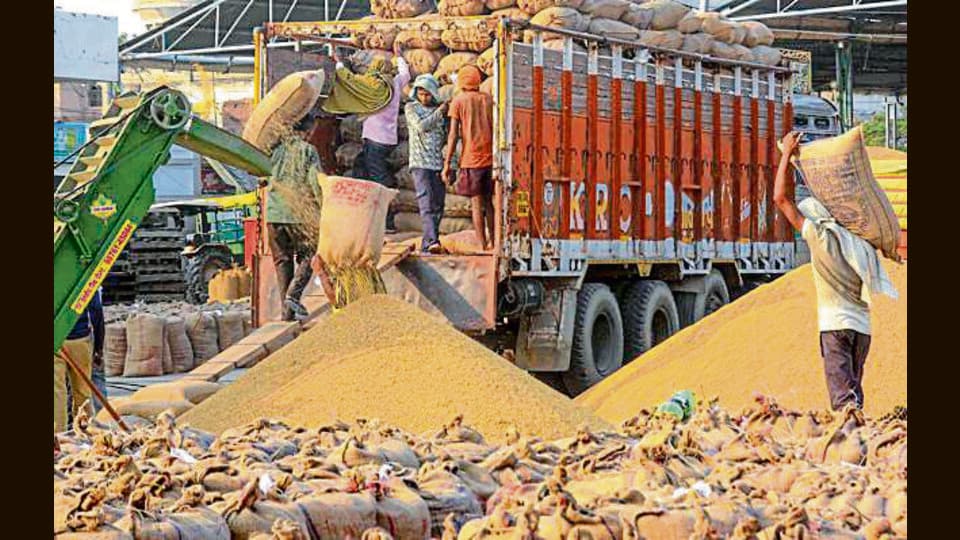
A 14-member Union ministry team that assessed paddy crops in Punjab has yet not submitted its report on the crop loss, which includes damaged and discoloured grains. The assessment, prompted by floods and untimely rains in late August and September, ended the previous week.
“We are awaiting the final report and relaxation. Meanwhile, we are not purchasing discoloured and damaged grain with more than 5% limit,” said an official of the state food department. The officials said the crop procurement may continue till November. So far 35% of the paddy has been harvested.
“Technically speaking the grain stocks having more than permissible limits of damaged and discoloured grain are not to be procured. However, farmers are in need of money and they sell the crop at a value cut which arhtiya and rice miller owns at the time of handing over of rice to the Food Corporation of India,” the official said.
This season paddy has suffered severe damage due to incessant rainfall and floods in August and September. The crop also suffered diseases such as loose smut and dwarf virus which affected the grain quality and yield. Before the floods it was estimated that the total produce will touch 185 lakh tonnes and to cater to early sown varieties, the procurement started early from September 16, but the crop maturing was delayed due to late rainfall and floods.
Gurbakshish Singh, a farmer from Bhawanigarh near Patiala, said that the farmers are getting ₹1,800 to 2,100 per quintal for the produce with discoloured percentage beyond the set limits.
“The Centre should come forward and support the farmers,” said Punjab Agricultural University, Ludhiana, vice-chancellor Dr SS Gosal, adding that paddy procurement is slow and low.
He said that discolouration and damage varies up to 12% depending on area and rainfall. “The farmers have suffered heavy losses this time,” he added. “We are waiting for the relaxations from the Centre, and hopefully the farmers will be adequately compensated,” said a senior official of the state food department.
Food and civil supplies minister Lal Chand Kataruchak said, “Hopefully, the relaxation from the Centre will be announced very soon.” He added that no value cut was imposed on the grain procurement.


