Haryana will bank on off-the-field consumption of nearly 25 lakh metric tonne (LMT) paddy stubble to curb crop residue burning during the upcoming paddy harvesting season, even as the paddy straw generation is estimated to touch 80 LMT, according to the action plan prepared to prevent farm fires.
State plans three-pronged strategy for 80 LMT crop residue
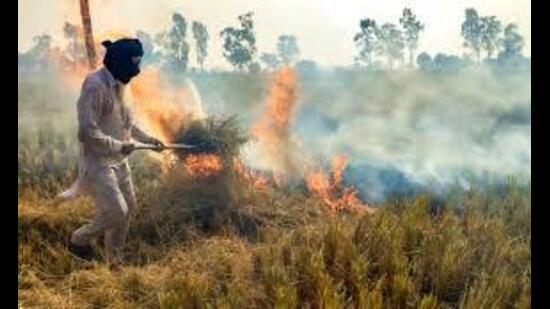
Under its multi-layered strategy to discourage paddy stubble burning, the agriculture and farmers welfare department has proposed to manage 45 LMT stubble with in-situ techniques and 10 LMT residue as fodder after lifting 25 LMT paddy crop residue for ex-situ management during the 2026 kharif season.
In 2025, the state had estimated to generate about 85 LMT crop residue, out of which, 44 LMT was managed through in-situ, 19 LMT through ex-situ techniques and 22 LMT was used for fodder.
Under in-situ crop residue management, harvested stalks are chopped into small pieces and incorporated into the soil, while in ex-situ management, crop residue is removed from the field and used in biomass power projects and other industries currently using paddy straw as fuel for running their boilers, compressed biogas (CBG) projects, ethanol plants, or for packaging cardboard and related sectors.
Also read: HPCL’s Bathinda plant for managing crop residue inching closer to completion
{{/usCountry}}Also read: HPCL’s Bathinda plant for managing crop residue inching closer to completion
{{/usCountry}}According to Rajnarayan Kaushik, director general (agriculture), the estimated area under paddy in kharif-2026 is about 16 lakh hectare, which will generate nearly 80 LMT of paddy crop residue. “The area under basmati is 4.26 lakh hectare and non-basmati paddy is 11.66 lakh hectare,” Kaushik said, adding that basmati may generate over 21 LMT and non-basmati over 58 LMT crop residue.
The state action plan says the primary reason behind cultivators resorting to paddy stubble burning is the narrow window between paddy harvesting cycle in October-November and sowing of the next crop.
The officials say farmers who opted for ex-situ disposal in previous years will be encouraged to adopt in-situ residue management. “The industrial utilisation of stubble will continue to provide an alternative to burning and help improve soil’s organic carbon through better residue management,” said an official.
According to official data, since the inception of the crop residue management (CRM) scheme in 2018-19, the state has added 52,850 CRM machines such as happy seeders, paddy straw choppers, zero till seed drills, super seeders etc. to deal with stubble.
Also read: Nearly 25% of crop residue machines now redundant, Punjab tells CAQM
Ex-situ strategy
At least 31% of the estimated paddy straw generation will be diverted for industrial utilisation, a major component of the state’s strategy to deal with crop residue.
For instance, four mixed fuel based biomass power plants; five paddy straw based biomass power projects; 15 other industries currently using paddy straw, also as a fuel for running their boilers; six compressed biogas (CBG) units, one ethanol plant at Panipat; three thermal power plants and pellet manufacturers are expected to procure about 24 LMT straw.
According to the action plan, mixed fuel and paddy-straw-based biomass power plants with a combined capacity of over 91 megawatt (MW) are expected to procure 12 LMT of straw, while 3 LMT by CBG plants, 50,000 tonnes by an ethanol plant and 7 LMT by thermal power plants.
Also read: Gurugram forms multi-level committees to curb stubble burning following NGT orders
Pellet plants are expected to utilise another 9,300 tonnes, while other users have indicated a requirement of 3,000 tonnes. At least 15 industries currently using paddy straw as fuel for their boilers have indicated combined procurement of 79,900 tonne straw.
Officials say that the CBG sector (compressed biogas projects) is also expected to emerge as an important avenue for ex-situ utilisation. Reliance Industries, Panipat, plant is likely to procure 2.63 LMT stubble. Two Reliance plants are currently functional, while three more are likely to become functional during 2026.
Thermal power plants–National Thermal Power Corporation (NTPC) Jhajjar and Haryana Power Generation Corporation Limited (HPGCL)–are expected to use 5.16 LMT of residue, while 1.78 LMT of pellet is proposed for co-firing in thermal power plants. The IOCL’s ethanol plant in Panipat has indicated procurement of 50,000 tonnes.
The action plan, however, shows a gap between the overall ex-situ management target of 24.77 LMT and the 23.37 LMT of approximate procurement plans listed for identified plants and industries.
Enforcement and interventions
During the 2026 kharif season, the government plans to deploy village level nodal officers per 100 farmers along with the parali protection force to monitor and prevent stubble burning. The nodal officers will also be tasked to ensure that environmental compensation is levied and realised in all stubble burning cases identified through ISRO protocol. “As per Supreme Court orders, local SHOs will also be roped in to strengthen enforcement,” an official said.
Three enforcement measures–registration of FIRs, issuance of challans and making red entries in land records–will be invoked against farmers found burning crop residue.
The government has also proposed incentives for panchayats improving their performance in preventing stubble burning. Panchayats moving from red zone (six and above Active Fire Location-AFL) and yellow (two to five AFL) to green zone will be awarded.
Haryana recorded 53% drop in farm fires in 2025
The government document quoting Indian Council of Agricultural Research (ICAR) data says there was a 53% decrease in farm fires in 2025 as 662 incidents were reported in 2025 compared to 1,406 in 2024.
According to official records, last year the Haryana government provided 9,892 CRM machines with 50% subsidy, incurring an expenditure of ₹121 crore. The official records show that 5.53 lakh farmers were given an incentive of ₹1,200 per acre for the in-situ and ex-situ management of paddy residue across 38.40 lakh acres, involving an expenditure of ₹461 crore.
As Haryana also gives incentives for crop diversification, 13,500 farmers who shifted away from paddy cultivation on 19,657 acre were given ₹16 crore in incentive, while 31,605 farmers adopted water saving directed seeded rice (DSR) technique to grow paddy in 1.67 lakh acre and were given ₹76 crore at the rate of ₹4,500 per acre.