
 E-Paper



Gurugram forms multi-level committees to curb stubble burning following NGT orders
Gurugram forms multi-level committees to monitor stubble burning, ensuring swift FIRs and penalties for violators to combat air pollution.

 Prefer HTon Google


Gurugram: The district administration has constituted multi-level committees to monitor stubble burning and directed the agriculture department to ensure swift FIR registration in identified cases of crop residue burning, officials said.
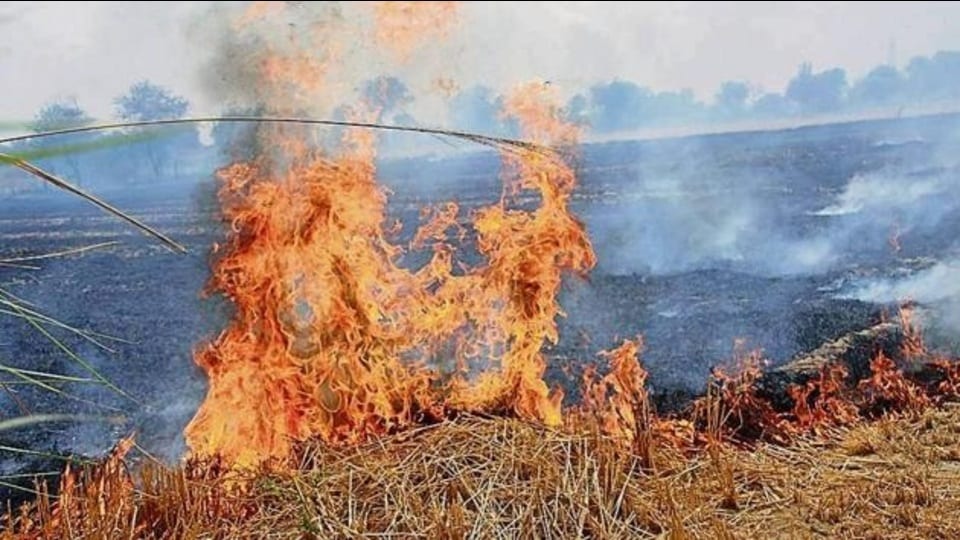
At a review meeting on Friday, deputy commissioner (DC) Uttam Singh said that any instance of crop residue burning must be acted upon immediately to prevent environmental damage.
Singh said that farmers violating norms will be flagged on the Meri Fasal Mera Byora portal. “Such action would have serious consequences, including disqualification from selling crops in mandis for the next two years and ineligibility for benefits under agriculture department schemes,” he said.
The DC also directed officials to ensure accountability, stating that if field teams fail to take timely action, show-cause notices will be issued against the officers concerned. He directed authorities to maintain strict monitoring in identified hotspots where incidents have been reported.
Singh also urged farmers to adopt sustainable alternatives to manage crop residue instead of burning it. He encouraged the use of available agricultural machinery and techniques to incorporate residue back into the soil, thereby contributing to environmental conservation.
The meeting was attended by deputy director (agriculture) Dr Anil Tanwar, regional officer of Haryana State Pollution Control Board (HSPCB) Siddharth, and Akanksha Tanwar, among other officials.
Multi-level monitoring committees formed
The action comes in compliance with National Green Tribunal (NGT) directions ordering surveillance on stubble burning sites.
Officials said committees have been formed at the district, sub-divisional, block, and village levels to monitor and prevent stubble burning in the district.
The district-level committee will be headed by the additional deputy commissioner and include, among others, the district revenue officer, district development and panchayat officer, deputy director (agriculture), and regional officer of the Haryana State Pollution Control Board (HSPCB). The panel will be responsible for overall supervision and coordination of anti-stubble burning measures.
“The committee at the sub-divisional level will comprise the sub-divisional magistrate (SDM) concerned, assistant commissioner of police (ACP), tehsildar, and officials from the agriculture department, along with HSPCB representatives,” the order stated.
Similarly, block-level committees will include the block development and panchayat officer, naib tehsildar, station house officer (SHO), and block agriculture officer.
At the village level, teams comprising patwaris, panchayat secretaries, agriculture supervisors, and local representatives, including sarpanches and numberdars, will be responsible for monitoring.
Officials said the committees have been tasked with closely monitoring fields, ensuring compliance with environmental norms, and taking prompt action against any instance of stubble burning. The move aims to strengthen ground-level vigilance and ensure timely intervention to prevent pollution spikes during the harvesting season.
The directive follows increasing concerns over air pollution in the National Capital Region (NCR), where stubble burning has been identified as one of the key contributors to poor air quality.


Stay updated with all the Breaking News and Latest News from Mumbai. Click here for comprehensive coverage of top Cities including Bengaluru, Delhi, Hyderabad, and more across India along with Stay informed on the latest happenings in World News.


