
 E-Paper



Fuel crisis: Ludhiana dyeing industry shifts to agro-waste energy system
Ludhiana's dyeing industry thrives on agro-waste energy, ensuring production continuity amid global fuel uncertainties and reducing environmental impacts.

 Prefer HTon Google


Dyeing and garment industry in Ludhiana has managed to avoid production disruption despite global fuel supply uncertainties, with units increasingly relying on agro-waste-based energy systems to power operations.
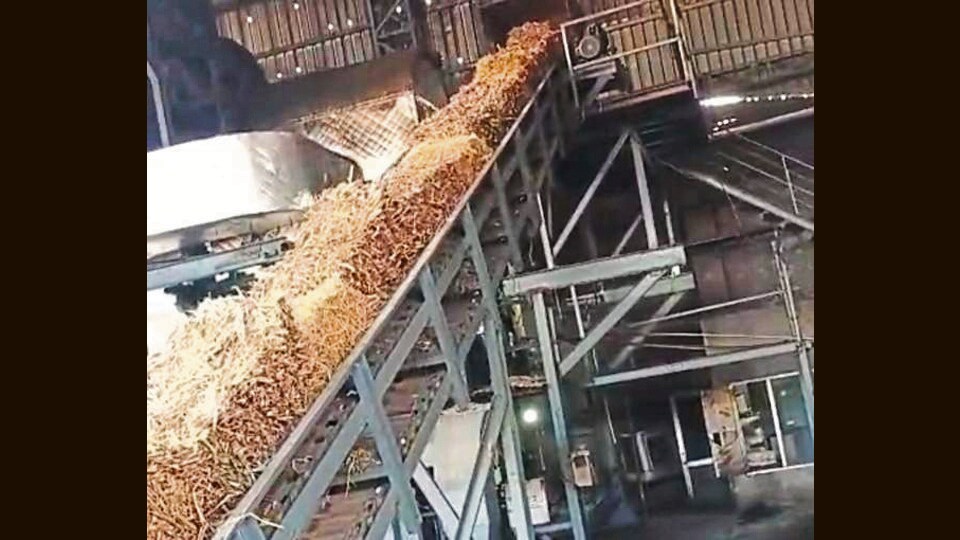
Industry members said the early adoption of alternative fuels has helped them maintain uninterrupted steam and electricity generation even as textile hubs in Surat and Bangladesh face production challenges due to gas shortages and rising fuel costs linked to geopolitical tensions in the Middle East.
The shift has significantly reduced dependence on conventional fuels, with industrial units now using rice husk, crop stubble, pulse residue and other biomass materials, including green waste, to operate boilers used in dyeing and processing units.
Officials and industry representatives said this transition has ensured operational continuity at a time when energy security remains uncertain. What began as a cost-driven adjustment has now evolved into a structured model of self-reliance across several industrial clusters in the city.
“Had we not diversified our fuel sources in time, many units would have been forced to shut down,” said Vishal Jain, member of the Punjab Dyers’ Association (PDA), Focal Point. “Agro-waste has provided both cost stability and operational security,” he added. Rahul Verma, another PDA member from Focal Point, said the ability to generate steam in-house has insulated the industry from external supply shocks. “We are no longer entirely dependent on fuel supply chains.
This has ensured continuity even when other textile hubs are struggling,” he said.
Industry members also pointed to environmental gains from the transition, noting that the use of agricultural residue has helped reduce stubble
burning while providing farmers an additional channel for disposal.
From Tajpur Road, Kamal Chauhan said the model benefits both industry and environment. “We are contributing to reducing stubble burning while keeping our units running. It is a practical solution,” he said.
Subhash Saini of Bahadurke said the initiative has strengthened long-term resilience. “It shows how local innovation can solve large-scale problems and make the industry future-ready,” he said.
The success of the model has also triggered wider discussions on creating dedicated dyeing clusters with shared infrastructure.
At the Punjab Invest Summit, stakeholders proposed cluster-based systems similar to those in China and Taiwan, where common boilers using municipal waste and agro-residue could supply energy to multiple units, creating a scalable waste-to-energy framework.


