
 E-Paper



Guest Column | Beyond the crop: Why value addition is key to agri growth
We still sell and consume too much produce raw or minimally processed. Increasingly, value is created through grading, cooling, processing, packaging, branding, certification, logistics, retail and exports

 Prefer HTon Google


At a national-level meeting on agriculture some years ago, a senior participant asked, almost dismissively, “Why should we worry so much about a sector that contributes only 14–15% to the GDP?” The room fell silent. I was then serving as agriculture secretary in Punjab. Given the setting and the authority behind the remark, no one challenged it. The Government of India was quick to contain the fallout, and the comment did not travel beyond the room.
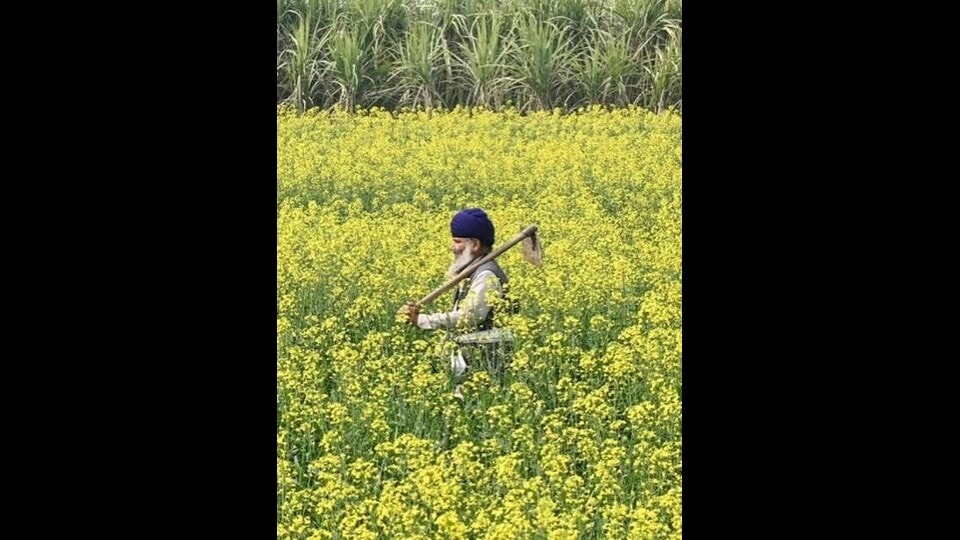
The episode stayed with me because it captured a misconception that still influences policy: as agriculture’s share in national income declines, its importance must also be declining. Nothing could be further from the truth.
In every developing economy, agriculture’s share falls as industry and services grow faster. What matters is the value it creates, the incomes it sustains and the people who depend on it. Our problem is not that agriculture contributes too little; it is that too many people survive on too little agricultural income. Agriculture and allied activities contribute nearly one-fifth of national income at current prices but support 46.1% of the workforce. That imbalance lies behind stagnant incomes, disguised unemployment and recurring agrarian unrest.
Agriculture is not going away. Food demand will rise as populations grow, cities expand, and diets change. The World Bank expects global food demand to increase by about 30% by 2050; earlier estimates suggested that agricultural production may need to rise by roughly 50% from 2013 levels. Demand will increase more for milk, fish, fruit, vegetables, pulses and processed foods—not cereals alone.
The question is not whether agriculture has a future, but whether we can build the agriculture of the future.
The future will not be secured merely by producing more wheat and rice, supplying more subsidised inputs or periodically raising support prices. Agricultural growth cannot be commanded by administrative order. It will come from creating more value from every acre, every drop of water, every unit of nutrient and every hour of labour.
Need to strengthen farmer’s capacity to earn
The first imperative is productivity. The Green Revolution overcame scarcity; the next revolution must overcome low returns. We need better seeds, climate-resilient varieties, precision irrigation, soil diagnostics, digital advice, and machinery suited to smallholdings. The problem is less an absence of technology than our failure to take it from laboratories to ordinary farms at an affordable price.
A small cultivator may never own a drone, laser leveller or harvester. But a cooperative, farmer-producer organisation, custom-hiring centre or village entrepreneur can provide these as services. Smallholder farming does not require every farmer to own every asset; it requires every farmer to have access to modern capability.
Public expenditure must also change direction. Subsidies may protect vulnerable cultivators, but they cannot indefinitely substitute for investment. Cheap fertiliser, power or water may reduce one season’s cost; they do not necessarily improve productivity for the next decade. More resources must go into research, extension, irrigation efficiency, veterinary care, storage, testing and local processing. The policy test is simple: does support merely postpone distress, or does it strengthen the farmer’s capacity to earn?
The second engine of growth lies in activities still described as “allied”. Livestock, dairy, poultry, fisheries, horticulture and agroforestry are no longer side occupations. The Economic Survey records that, over the decade ending 2024–25, livestock grew by 7.1% and fisheries and aquaculture by 8.8 per cent, compared with 3.5% for crops. Horticulture now accounts for about one-third of agricultural GVA.
These activities suit small holdings because they provide regular cash flows, reduce dependence on one harvest and create opportunities for women and young people. Yet diversification cannot be ordered from Delhi or a state capital. Farmers will shift only when technology, disease control, aggregation, storage, processing and reliable markets are available together. Policy must build the chain, not announce isolated schemes or episodic interventions.
The third—and potentially largest—source of value lies beyond the farm gate. We still sell and consume too much produce raw or minimally processed. Increasingly, value is created through grading, cooling, processing, packaging, branding, certification, logistics, retail and exports. National accounts may classify much of this under manufacturing or services, but the value begins with agriculture and must remain connected to the producer.
Risk management needs a reset
The country should therefore look beyond “agricultural GDP” and build a larger agrifood and bioeconomy. Crop residue can become bioenergy instead of smoke. Milk can become cheese and specialised nutrition; fruit can become pulp, juice and branded food. Value addition is where the next generation of rural incomes and jobs will come from.
This changes the youth question. Young people will stay connected with agriculture only when the rural economy offers income, dignity, technology and mobility—as machinery providers, drone operators, veterinarians, food technologists, processors and exporters. The aim is not to keep every young person on the family-holding, but to retain many within a modern agricultural economy.
Risk management also needs a reset. The government cannot indefinitely remain the buyer, insurer, lender, subsidiser and compensator of first resort. It must guarantee food security and act as an insurer of last resort, while risk is shared through credible insurance, better data, disaster funds and targeted income support.
There is, finally, a political truth that cannot be avoided. Agricultural protest is not merely a law-and-order issue, but neither can every mobilisation become a veto on reform. Repeated unrest reflects a collapse of trust: farmers fear markets because policies change abruptly, while governments fear reform because protest carries political costs. Export bans, loan waivers and sudden procurement decisions may calm one season but weaken investment for years.
The country needs a long-term, at least ten-year, National Agricultural Transformation Compact among the Union, states, farmer organisations, cooperatives, scientific institutions and industry. It should provide stable rules for water, markets, trade, technology, investment and ecological transition, while allowing states to choose pathways suited to their own crops, resources and conditions.
Agriculture is not a sunset sector. But it cannot remain vibrant by preserving yesterday’s crop patterns, subsidies and political bargains. The task is not to keep more people confined to farming; it is to ensure that everyone connected with agriculture creates and receives more value. Agriculture will stay, but we need to make it worth staying for our next generation of farmers. sureshkumarnangia@gmail.com
(The writer is a retired Punjab-cadre IAS officer. Views expressed are personal)


