
 E-Paper



Guest Column| Floods can revive Punjab’s depleted aquifers
For southwest Punjab and Fazilka in particular, the future hinges upon transforming calamity into a catalyst for change. With vision, collaboration, and accountability, the floods of 2025 could go down in history not merely for their destruction, but for sparking a renewed commitment to sustainable water governance.

 Prefer HTon Google


Punjab is confronting its gravest water crisis in four decades that has uprooted livelihoods, led to extensive crop devastation and forced families into relief camps. The disaster has laid bare the Punjab paradox – perpetually swinging between the extremes of water scarcity and destructive surplus. Yet, within this moment of reckoning, there is a unique chance to break this cycle, forging a future where floodwaters secure tomorrow’s prosperity.
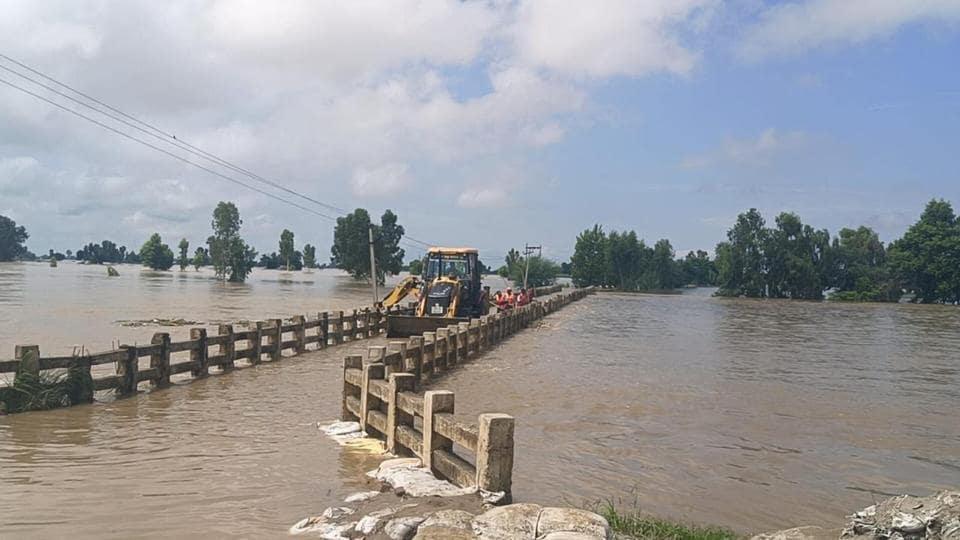
Fazilka, Ferozepur, Muktsar and the broader southwest face a stark contradiction: While groundwater aquifers have plummeted 9 to 22 metres due to decades of over-extraction, mismanaged paddy cultivation, and scant rainfall — just 82mm annually in Fazilka — these same lands also drown under the onslaught of rare but intense flooding. The crisis is not a mere function of rainfall. Poorly maintained drainage infrastructure of the Abul Khurana, Langiana, Chanbhan drains and especially the Aspal extension drain and failing water governance have compounded the devastation.
Drainage dilemma
The Aspal Extension and other drains, built to safeguard low-lying fields by channelling excess water, have transformed into a conduit of disaster thanks to flawed design, inadequate capacity, and chronic neglect. Instead of averting flood risk, it has amplified destruction, inundating homes and farmlands. Crucially, this is neither unique to Fazilka nor an isolated lapse — drains across Muktsar, Bathinda, and other districts mirror this inertia.
My commitment to farmers’ welfare has propelled sustained advocacy. In 2019, I filed original application number 596/2019 (Vikram Ahuja vs. State of Punjab & Others) before the National Green Tribunal (NGT) against the faulty designs, unchecked release of untreated sewage and effluents from 21 municipalities into Punjab’s drains and rivers, including those feeding the Sutlej. The NGT’s monitoring committee confirmed severe pollution in major drains — like the Aspal Extension — mandating the installation of sewage treatment plants (STPs) and other remedial measures. This landmark case exposed how lax governance and failing infrastructure directly pollute farmlands, degrade crops, and aggravate flooding, as contaminated overflows render the soil unusable for agriculture.
In 1999, I led vital litigation before the Rajasthan high court (D.B. civil writ petition number 1068/1999, Vikram Ahuja & Others vs State of Rajasthan & Others), advocating repairs and upgrades to the Indira Gandhi Nahar Pariyojana canal system. Judicial intervention prompted decisive government action in Rajasthan, preventing water wastage and ensuring better irrigation for border farmers, demonstrating the role courts can play in holding the authorities accountable for sustainable development.
The irony in southwest Punjab can’t be ignored. While surface waters invade farmlands, falling aquifers breed a deepening drought cycle. Over 79% of Punjab’s administrative blocks are “over-exploited”, drawing more from aquifers than nature can replenish each year. Scarcity here breeds the following challenges: Saline intrusion as freshwater recedes; chemical contamination, with elevated fluoride and arsenic threatening health and crops; soil productivity loss when farmers resort to low-quality irrigation water. The impact is most acute in Fazilka and neighbouring districts, where the rural economy teeters on the brink.
Opportunity in disaster
The floods, catastrophic as they are, open a radical opportunity. We can harness excess floodwaters to recharge the region’s depleted groundwater.
Southwest Punjab’s underground formations can hold up to 50 billion cubic metres. It is a vast, untapped water bank capable of absorbing surplus that would otherwise ravage the land.
Proven techniques such as managed aquifer recharge (MAR) and underground taming of floods for irrigation (UTFI) offer hope. The UTFI, for example, uses percolation ponds, recharge wells, and spreading basins to direct trapped floodwaters below ground for sustainable use in dry periods. Lessons from pilot programmes in Punjab and Uttar Pradesh reveal that up to 1.88 km³ of water can be safely stored per year. This significantly offsets groundwater deficit, while reducing future flood intensity.
In Fazilka, the natural gradient of drains lets excess water collect in low areas. By retrofitting systems like the Aspal Extension with check dams, silt traps, and diversion channels, and reviving village ponds for infiltration, floodwater can be transformed from menace to resource. We need STPs to filter out contaminants, because addressing the accompanying pollution and funding these interventions under schemes like the Atal Bhujal Yojana and Pradhan Mantri Krishi Sinchayee Yojana (PMKSY) is essential.
Obstacles and roadmap
The following are the key obstacles.
Infrastructure gaps: Recharge facilities remain rare, village ponds are often silted, and proper outlets are missing.
Water quality risk: Floodwaters polluted with agrochemicals and sewage pose threats to aquifers unless treated first.
Policy inertia: Subsidy-driven extraction and ineffective crop diversification reinforce unsustainable patterns.
Short-term governance: Focus on relief diverts attention away from systematic, long-term water infrastructure upgrades.
The following may be examined as a roadmap for revival and reform.
Immediate actions (within one year): Commission technical audits of Aspal Extension and nearby drains, prioritising immediate repairs, de-silting, and regrading. Set up temporary recharge pits with pumps to divert stagnant waters for groundwater replenishment. Launch village pond desilting drives using programmes like MGNREGA. Deploy mobile water-testing labs to ensure only uncontaminated flood water enters the aquifer.
Medium-term solutions (three to five years): Redesign drains (like Aspal Extension) as multi-purpose conduits for both drainage and recharge. Pilot UTFI demonstration sites in hard-hit villages, using state-community partnerships. Foster community water-user groups and train local volunteers in managing recharge infrastructure. Enforce rainwater harvesting mandates for schools, towns, and public buildings.
Long-term framework (beyond 10 years): Incentivise crop diversification, shifting away from paddy in arid zones, aided by procurement reforms. Establish a Southwest Punjab Water Resilience Authority, integrating planning across Fazilka, Muktsar, and Bathinda. Implement digital water mapping (via GIS and IoT) for aquifer monitoring and better planning. Apply the NGT’s polluter pays principle, redirecting resources lost to neglect toward remedial action.
Break cycle of neglect
Effective governance and participatory action are essential. The monitoring committee’s findings confirm unregulated sewage not only pollutes drains but also magnifies flood damage. This challenge can be addressed through judicial intervention. Farmer-led technical innovations, such as recharge through pipes and tubewells, should be promoted, provided pollution is controlled first.
For southwest Punjab and Fazilka in particular, the future hinges upon transforming calamity into a catalyst for change. These floods, while devastating, have revealed that with vision, collaboration, and accountability, the floods of 2025 could go down in history not merely for their destruction, but for sparking a renewed commitment to sustainable water governance.
Tying floodwaters to aquifer revival and breaking the cycle of neglect is not just an opportunity. It is an obligation that we owe to our future generations. Our farmers feed the nation. Water security is not optional for them. It is survival. letterschd@hindustantimes.com

The writer is an agri entrepreneur, environmental activist and petitioner in key water rights cases in Punjab and Rajasthan. Views expressed are personal.


