
 E-Paper



Guest Column | Food for thought & thoughtful food
A truly meaningful gesture doesn’t just acknowledge pain— it tries to comprehend its roots; and sometimes, that shift in perspective is all it takes to nurture deeper, more respectful relationships


“The biggest difference between boys and girls is how people treat them. “I’ve always admired the words of IW Gregorio, surgeon by training, young adult writer by passion. My oft-repeated request to mothers is, “If I can treat my girls just a little like boys, why can’t you treat boys a little like girls?” Why, after all, do we teach boys to sympathise with a crying girl rather than to empathise with her? Sympathy offers pity; empathy seeks understanding. A truly meaningful gesture doesn’t just acknowledge pain— it tries to comprehend its roots. And sometimes, that shift in perspective is all it takes to nurture deeper, more respectful relationships. This idea of understanding over performance applies beautifully to another space close to many hearts: the kitchen. I appreciate a man who cooks, not the one who, with theatrical flair, announces, “Aaj khana hum banayenge,” and proceeds to take over the kitchen like a master chef or a visiting dignitary. That’s performative, and often leaves his partner in the spot of a sous chef or as the uncredited backstage crew, expected to prep before and clean up after his so-called chef-d’œuvre.
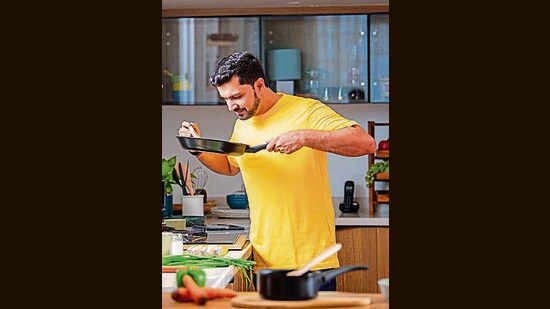
In contrast, the man who truly values his family and expresses that through food does so quietly, frequently, and without fanfare. He cooks not to impress but to nourish. He doesn’t wait for an occasion to step in. He preps, cooks, and cleans because he understands that love shows up in everyday acts. The difference between the two lies in intention: one seeks applause, the other, connection. And that, much like empathy over sympathy, is what makes all the difference. The other day, while on a personal errand, I found myself seated in the principal’s office of a local school. Our conversation meandered through many topics, and eventually settled on something both of us felt deeply about—the need for a truly holistic approach to education, one that nurtures students not just academically but as responsible, well-rounded citizens of tomorrow.
As we talked, the door creaked open, and in walked a line of six students, led by their teacher. Each student wore a chef’s mesh cap, their faces glowing with pride and a hint of nervous excitement. Of the six, four were boys and two were girls. One of the boys carefully held a tray, meticulously arranged with plates, bowls, spoons, and what looked like a delicious spread of dishes. The sight was unexpectedly heartwarming. As they offered me to sample their dishes, one of the boys explained each and every dish— the ingredients, the cuisine and its benefits— I couldn’t help but marvel at this certainly unique experience. The principal then explained to me that these students had prepared everything at the school’s food lab, a place where boys learnt to cook as enthusiastically as the girls. This simple moment spoke volumes. It wasn’t just about students learning to cook— it was about breaking stereotypes, encouraging shared responsibilities, and fostering dignity in everyday tasks. Boys and girls, shoulder to shoulder, not in competition, but in collaboration. It was a powerful testament to the holistic vision we had just been discussing— a vision that teaches young minds the value of empathy, equality, and expression, both in and out of the classroom.
sonrok15@gmail.com
(The writer is an associate professor at SD College, Ambala Cantt)


