
 E-Paper



Roundabout: The play is still the thing for him and the world his stage
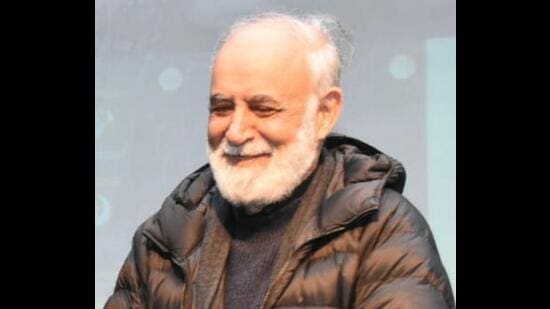
MK Raina has a long association with Chandigarh where he staged a beginning with plays of the Punjabi soil ranging from Parai Kukh to Karmawali and held the audience in rapture as he recounted those times


Growing up in the 70s in the midst of a love for radical poetry, intense plays, long walks and turning the pedals of bicycles towards an era of togetherness across class and creed may have been a dream that was bound to flee with the changing decades. But those were the times of amazing experiments with life and art.
The finest remembrances of that era gone by were long debates on poetry, politics sans popcorn and goosepimpeling through live performances of passionate plays and nights awake at the Sangeet Sammelan.
This and more came alive with iconic theatre director, actor and activist who never gave up hope, MK Raina of course, on stage delivering the Kashmiri Lal Zakir Memorial lecture on Thursday. Indeed, one heard a senior writer gasp and say in admiration: “It was a rewind to an entire era when plays made an impact and corporate culture had not monetised entertainment.”
There are, however, some who will not give up the fight amidst the razmataz of changing times and Raina here is one of those who may have been troubled by what the changing times unfurled. He nonetheless retains the spirit of keeping the flame blazing.
Born in 1948 in Srinagar in a Kashmiri Pandit family and named Maharaj Krishan, which he grew up to change quickly into the modest MK, he defied the family pursuits of medicine and engineering to pursue theatre. After completing college at his hometown, he joined the National School of Drama (NSD) in 1970. Four years on, he had his hands on his first memorable role as an actor — in Avtar Kaul’s classic parallel cinema ‘27 Down’. Struggle followed, but there was no looking back and he moved from cinema or theatre, his real calling.
Raina raised his voice when needed: be it losing his home in Kashmir, or being a witness to the 1984 violence or the fall of the Babri Masjid in 1992. He has an enviable body of work and immense contribution through his art to the turbulent times as he says in his talk: “People all over the world seem to be losing their homes and becoming refugees.”
Should old acquaintances be forgotten?
Probably among the first points of contact with theatre for many was a Hindustani adaptation of Hernik Ibsen’s ‘Ghosts’ in 1975, directed by Raina for the department of Indian Theatre, Panjab University, as an uncertain student of journalism.
How it happened is yet another story from the past. Our reporting and feature writing teacher late Tara Chand Gupta, with his sola hat, a walking stick and sulky demeanour of the In Indian leftists of yore, was a friend of the department head Balwant Gargi. He made students ushers, us guiding guests to their seats, handing them brochures and in the bargain watching the play. I was 19 going 20 when I watched, wrapped in wonder, the intense drama replete with “venereal disease, incest and euthanasia” in a forceful demolition of the 19th century morality.
One could not fathom the complications, but the talent of the actors and the finesse of the director made one come face-to-face with high emotions and intense acting.
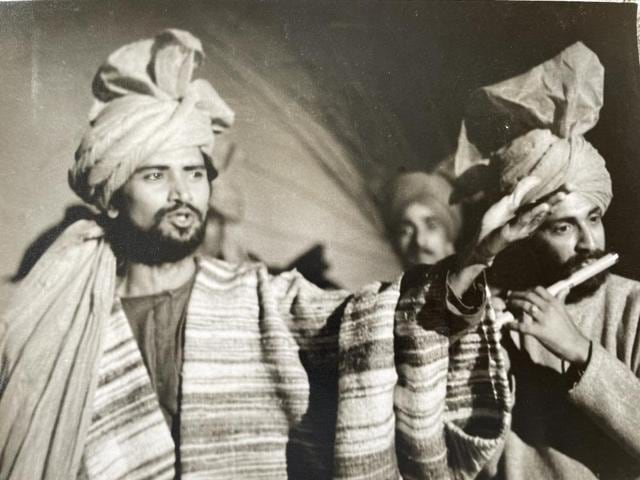
The next date with Raina’s art came via the short-lived splendour of the Punjab State Theatre Repertory Company. It was a Punjabi adaptation of the most celebrated of Bertolt Brecht’s ‘The Caucasian Chalk Circle’ renamed ‘Parai Kukh’ — with the finest of Punjabi poets Amitoj and Amarjit Chandan penning songs and scripting it in Gurmukhi.
Raina directed the play, set in the backdrop of World War II, with aplomb, weaving in the best of Punjabi sung by the greatest theatre singer-composer Kamal Tewari. A lifetime has passed, but I still hum the songs and relive the scenes of war and peace. Speaking of this play in particular and all his musicals in general, Raina said, “Music is always an integral part of my plays and not an ornamental device.”
The next play that saw Raina and Tewari team up was based on Zakir’s novel ‘Karmawali’, which in turn was based on a painful-yet-elevating real-life tale from the Partition violence that unfolded itself in the Punjab villages around what was to become Le Corbusier’s city of the future. Raina and Kamal teamed up to have the best of Sufi poetry embedded. It had to be Sufi music, Raina pointed out, that has held together the two separated Punjabs in the pain and sorrow, adding, “The Sufis were all refugees like you and me.”
Endnote to the bond of pain
It would be meaningless to talk about the awards and accolades that Raina or Tewari won. Art such as his is an award in itself. All one would like to say with sincerity is a “thank you for being there”, to articulate the bond of pain that connects us, as Faiz Ahmad Faiz would say.


