
 E-Paper



Haryana: Action plans discussed to tackle NCR pollution
At review meet, progress showcased on measures taken for better air quality; city-specific strategies for NCR municipal corporations—Gurugram, Faridabad, Sonepat, Karnal, Panipat, Rohtak and Manesar — were discussed during the meeting

 Prefer HTon Google


Haryana on Monday presented a picture of steady and wide-ranging progress in its fight against air pollution in the Delhi-NCR region in a review meeting chaired by chief secretary Anurag Rastogi. The review meeting, aligned with directions of the Commission for Air Quality Management (CAQM) and the Union ministry of environment, forest and climate change, assessed action taken reports (ATR) and finalised state and city action plans for 2025–26.
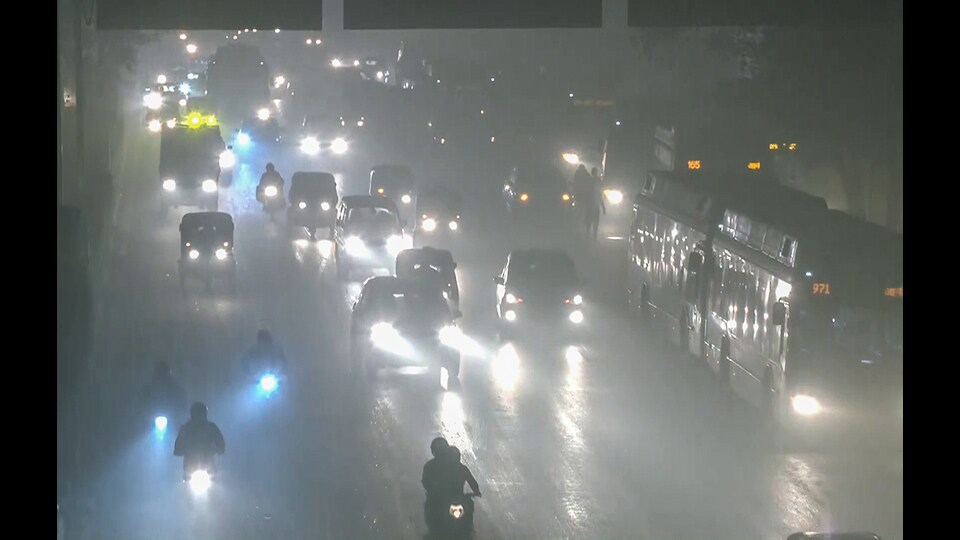
Detailed city-specific strategies for NCR municipal corporations—Gurugram, Faridabad, Sonepat, Karnal, Panipat, Rohtak and Manesar — were discussed during the meeting. A key highlight of the meeting was Haryana’s push to curb stubble burning through large-scale adoption of crop residue management (CRM) machinery.
An official spokesperson said ex-situ utilisation has gained momentum, with paddy straw being channelled to pelletisation units, thermal power plants, brick kilns and industries. Several compressed biogas (CBG) plants across Jhajjar, Kurukshetra, Ambala, Fatehabad and Panipat are now operational, collectively consuming thousands of tonnes of paddy straw annually and converting agricultural waste into clean energy.
Thermal power plants lead biomass co-firing
The spokesperson said thermal power plants within 300 km of Delhi have crossed key sustainability milestones. As of November 2025, all operational units have exceeded 6% biomass co-firing, with at least 50% paddy straw, barring one unit under scheduled maintenance. Plants at Khedar, Panipat, Yamunanagar and Jhajjar reported significant biomass consumption, reflecting a shift towards cleaner power generation. Brick kilns in non-NCR districts have also begun mandatory 20% biomass co-firing, backed by revised consents and inspections, the spokesperson mentioned.
Industries have been directed to complete installation of Online Continuous Emission Monitoring Systems by December 2025, with daily monitoring by the pollution control board. Emission control devices, DG set retrofits and compliance with thermal power plant emission norms were also reviewed.
“With winter pollution challenges looming, the state expressed confidence that its sustained measures would translate into cleaner air across the NCR,” the spokesperson added.


