: The recent heavy rains and flooding have wreaked havoc on agricultural lands in Ludhiana, with approximately 1,750 hectares of paddy fields feared to be severely damaged, requiring re-sowing. The worst-hit areas are the farms situated along the banks of the Sutlej river, spanning over three blocks, Machhiwara, Sidhwan Bet and Mangarh.
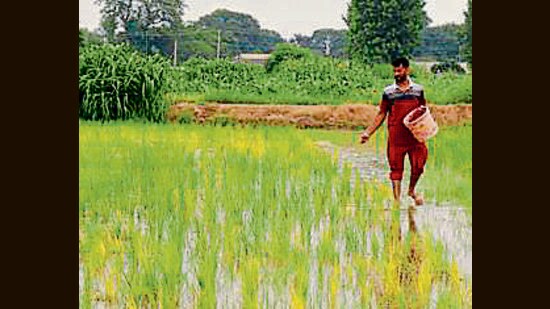
Out of the 2,56,900 hectares land under paddy cultivation in Ludhiana, around 6,500 hectares were affected by the floods. While water has drained out of 4,750 acres of the affected land, leaving them with plant nursery in good condition, 1,750 acres are still submerged.
Chief agriculture officer, Ludhiana, Narinder Benipal, said, “We are actively conducting surveys to assess the extent of paddy losses in the district. So far, 1,750 hectares of paddy fields have been identified as requiring re-sowing of nursery. To aid the re-sowing process, we have already distributed free-of-cost nurseries covering 300 acres and sowed seeds for nurseries that will be ready in the next 20-25 days.”
In response to the flood damage, Punjab Agricultural University and the district agriculture administration are providing free-of-cost paddy nurseries to affected farmers. However, certain fields located near the Sutlej river remain inundated and are not yet suitable for transplantation.
One such farmer, Pritam Singh from Kanian Hussaini village in Sidhwan Bet tehsil, shared his ordeal. “The recent floods submerged our entire two-and-a-half-acre land where paddy was planted on June 30. The land being situated near the Sutlej river is still under water and not ready for transplantation. If this situation persists for the next 10-15 days, as indicated by the alerts on rising water levels, we will be left with no opportunity to transplant paddy, resulting in significant loss of earnings this season.”
{{/usCountry}}One such farmer, Pritam Singh from Kanian Hussaini village in Sidhwan Bet tehsil, shared his ordeal. “The recent floods submerged our entire two-and-a-half-acre land where paddy was planted on June 30. The land being situated near the Sutlej river is still under water and not ready for transplantation. If this situation persists for the next 10-15 days, as indicated by the alerts on rising water levels, we will be left with no opportunity to transplant paddy, resulting in significant loss of earnings this season.”
{{/usCountry}}PAU and the agriculture administration are distributing only PR 126 and PUSA Basmati 1509 varieties, which are short-term varieties and ideally should have been planted between June 20 and July 10 for maximum yield. As the recommended window has passed, the yield of paddy nurseries sown now is expected to be significantly lower.
The deputy director extension, PAU, Manoj Sharma, said, “While we are doing our best to provide farmers with as many nurseries as possible, the condition of the land is dependent on the weather. If the farmers are unable to re-sow their fields with paddy due to any reason, they can consider alternatives like maize fodder, sesame, and vegetables that can fetch them good profits within a limited time span.”
Typically, paddy harvesting begins at the end of September, but in the case of re-sown fields, the harvesting date may extend to November 15. This delay could severely impact the quality and quantity of rice, as increased moisture and dropping temperatures can lead to rice breakage, making it less suitable for export.