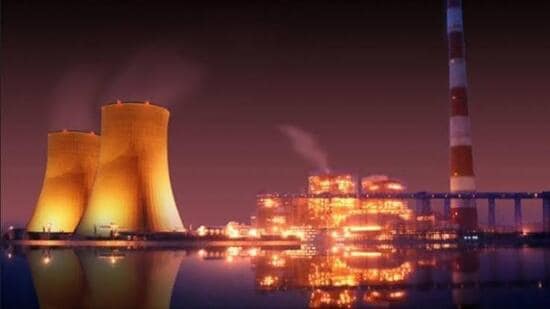
The Rajiv Gandhi Thermal Power Plant (RGTPP) at Khedar in Hisar requires nearly eight years to clear 33 lakh metric tonnes (LMT) of fly ash currently stored at the plant for utilisation, according to a timeline submitted by the plant before the National Green Tribunal (NGT).
In an additional reply filed with the NGT, accessed by HT, the plant, which currently has around 45 LMT of ash stored in its operational ash dykes, has said that 12 LMT must be retained for the safety of the dyke structures, leaving 33 LMT for lifting or utilisation.
Under the proposed schedule, RGTPP plans to utilise 3 LMT during 2027-28 and 5 LMT annually for the next six years, taking the targeted utilisation of the 33 LMT to March 31, 2034.
The plant, however, made it clear that the timeline is dependent on market conditions, demand for fly ash, infrastructure projects and applicable statutory guidelines.
The submission was made in response to an application filed before the principal bench of the NGT. The plant said the additional reply was filed in view of the tribunal’s May 14, 2026, proceedings to place on record the tentative timelines for utilisation or disposal of available fly ash and details of pollution-control measures at its fly ash silo system.
The plant management maintained that the ash presently stored in its two dykes does not fall under the category of “legacy ash” because both dykes are operational and continue to receive ash generated by the plant. It said the current action plan, therefore, concerns gradual utilisation of the stored ash while simultaneously ensuring utilisation of freshly generated ash.
{{/usCountry}}The plant management maintained that the ash presently stored in its two dykes does not fall under the category of “legacy ash” because both dykes are operational and continue to receive ash generated by the plant. It said the current action plan, therefore, concerns gradual utilisation of the stored ash while simultaneously ensuring utilisation of freshly generated ash.
{{/usCountry}}In its report to the NGT, the plant referred to the Union ministry of environment, forest and climate change notification of December 31, 2021, which mandated 100% utilisation of fly ash by thermal power plants. It also cited the December 30, 2022, amendment defining ash stored in ash ponds or dykes other than operational ash ponds or dykes designated for temporary storage as legacy ash.
The RGTPP said it had undertaken several measures to maximise ash utilisation, including transparent open e-auctions of dry fly ash, reservation of quantities for micro and small enterprises, repeated auctions where there was inadequate response, reduction of reserve prices and offering pond ash for free lifting when commercial auctions failed. It has also permitted eligible users to lift ash free of cost, with transportation costs borne by the users, and used pond ash in road works while bearing transportation expenses.
The plant claimed that these measures helped it achieve 100% ash utilisation during its first compliance cycle, with annual ash utilisation compliance reports prepared by a Central Pollution Control Board–authorised auditor–already submitted before the tribunal.
The thermal plant attributed part of the difficulty in utilising the stored ash to limited demand in western Haryana and higher transportation costs, saying unlike some thermal power stations located close to large cement manufacturing clusters, expressways and major infrastructure corridors, the plant has comparatively fewer nearby consumers for fly ash.
The plant said it would continue with open e-auctions and re-auctions, reduce reserve prices wherever commercially justified and offer pond ash free of cost and it is also exploring long-term contracts with end-user agencies for dry fly ash, with incentives for lifting pond ash.
However, on the fly ash silo system, the plant said a joint committee that inspected the plant had found adequate pollution-control measures in the silo area.