
 E-Paper



Improved fog forecasts by IITM Pune help northern airports cut winter disruptions
Over the past month alone, IITM, an autonomous institute under the Union ministry of earth sciences, predicted dense fog conditions across the region as many as 25 times, with around 60% of the forecasts proving accurate

 Prefer HTon Google


The decade-long Winter Fog Experiment (WiFEX) by the Indian Institute of Tropical Meteorology (IITM), Pune, has significantly improved fog forecasting across northern India, particularly aiding airport operations during the winter season.
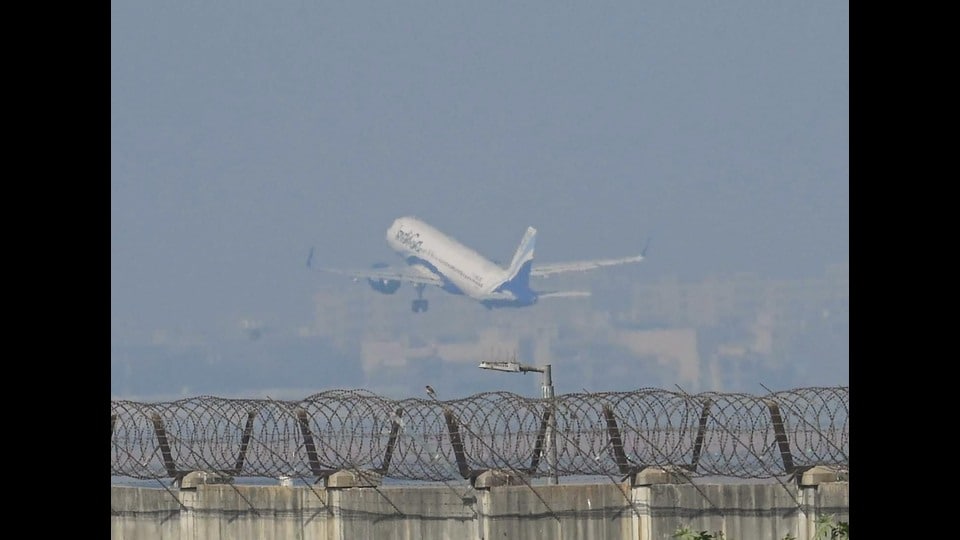
Over the past month alone, IITM, an autonomous institute under the Union ministry of earth sciences, predicted dense fog conditions across the region as many as 25 times, with around 60% of the forecasts proving accurate.
Through advanced monitoring of microphysical and meteorological parameters, scientists are now able to predict the onset, density, duration and clearance of fog up to 36 hours in advance.
A major outcome of WiFEX has been the development of a high-resolution fog forecasting model, which achieves accuracy of over 85%. The model helps airports plan runway operations, reducing flight delays, diversions, cancellations and improving safety during peak fog periods.
The Indira Gandhi International (IGI) Airport in New Delhi — the worst fog-affected airport in the country — was selected as the primary site when the experiment was launched in 2015. Data collected at IGI Airport, along with observations from Hisar airport in Haryana, are further used to support fog forecasting for other northern airports, including those in Chandigarh and Amritsar.
“There has been a drastic improvement in fog monitoring and forecasting systems at IGI Airport, New Delhi. The data on fog and ambient conditions collected here are shared with other fog-prone airports in the northern region,” said Dr Sachin Ghude, project director of WiFEX, told Hindustan Times during a visit to IITM organised by the Press Information Bureau (PIB).
The improved fog prediction capability has also translated into economic benefits, helping airlines considerably reduce the ₹33-crore losses incurred on an average annually, he further shared.
According to WiFEX research, Chandigarh airport experiences high-density fog during December and January, with visibility often dropping below 50 metres.
IITM provides improved forecasting of these events, focused on fog timing and persistence to aid aviation.
The project entered its second phase last year and has expanded to provide localised, runway-specific fog forecasts to additional airports in north and north-east India. These include the upcoming Noida International Airport at Jewar and Guwahati Airport in Assam.
Under WiFEX, scientists are conducting detailed studies on atmospheric aerosols and key meteorological parameters such as relative humidity and temperature to better understand fog microphysics. Earlier, the processes governing the formation, intensity and dissipation of fog were poorly understood, limiting forecasting capability.


