E-Paper



In 4 yrs, snow leopard count in Himachal up from 51 to 83: Survey
The results showed approximately 83 individuals, suggesting an increase in the population of snow leopards from the first population estimation exercise held in 2021, which estimated 51 individuals

 Prefer HTon Google


The wildlife wing of the Himachal Pradesh forest department concluded the state-wide assessment to estimate the snow leopard population, confirming robust snow leopard numbers.
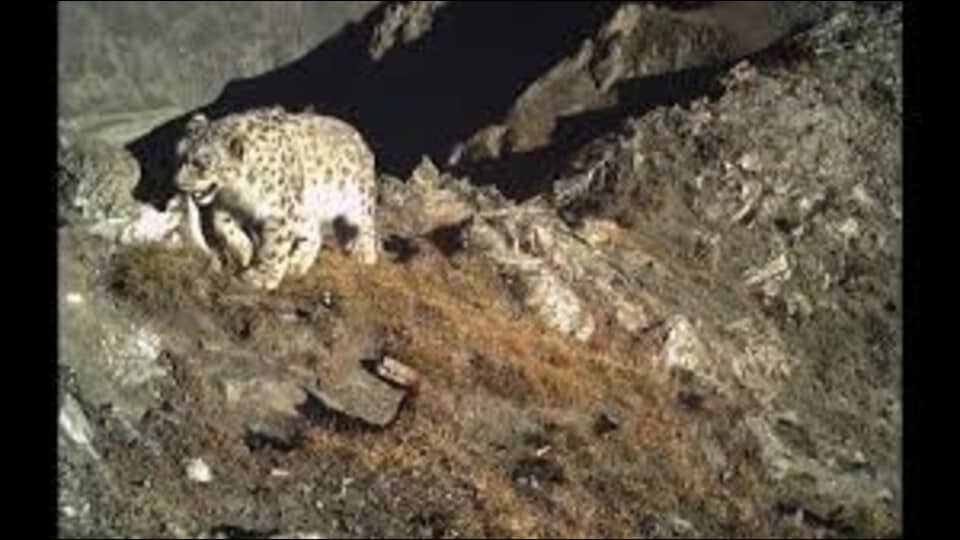
The results showed approximately 83 individuals, suggesting an increase in the population of snow leopards from the first population estimation exercise held in 2021, which estimated 51 individuals. The survey, the second of its kind after 2021, employed a large scale camera trapping exercise across six sites representative of the 26,000 km² snow leopard habitat in the state.
This study was carried out by the wildlife wing of the Himachal forest department in partnership with the Nature Conservation Foundation (NCF), Bengaluru. “These surveys were conducted in the high and low-density areas to ensure representation. This large-scale camera trapping survey reported the detection of 44 unique snow leopards, the same as in the previous survey, and these individuals were detected 262 times. Subsequent analysis indicates that the snow leopard population size of the state is 83 snow leopard individuals (excluding cubs),” officials said.
The snow leopard density, as per the study, ranges from 0.16 to 0.53 individuals per 100 km², with the trans-Himalayan regions of Spiti and Pin valley, followed by Upper Kinnaur and Tabo, recording the highest densities.
First official sighting of Pallas’s cat in Kinnaur
Notably, the study recorded the first official sighting of Pallas’s cat (Otocolobus manul) in Kinnaur and the rediscovery of the woolly flying squirrel (Eupetaurus cinereus) in Lahaul.
Beyond snow leopards, the study also reported the detections of other mammals found in the same landscape to estimate their distributions using an ensemble modelling approach. Refined distribution maps were generated for key prey species such as blue sheep (Pseudois nayaur), Himalayan ibex (Capra sibirica), and musk deer (Moschus leucogaster). Additional mammals—including the Himalayan wolf (Canis lupus), brown bear (Ursus arctos), common leopard (Panthera pardus), red fox (Vulpes vulpes), stone marten (Martes foina), mountain weasel (Mustela altaica), and yellow‑throated marten (Mustela flavigula)—also had their distributions refined.