Jammu and Kashmir received the much-needed normal rainfall this time after two years of deficit monsoon seasons, weather officials said.
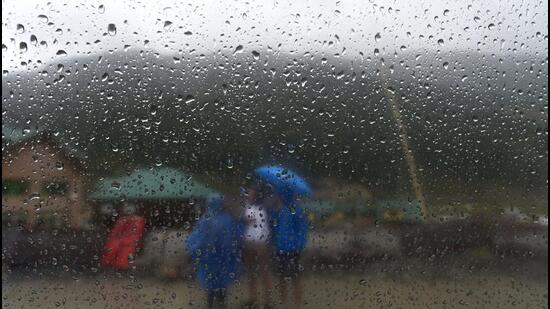
They said that Kashmir valley received 270mm average rainfall from June 1 to September 29, an increase of 6% than the normal of 254mm. Similarly, Jammu division experienced 886mm average rainfall in the four monsoon months, an increase of 7% than the normal 826mm.
“It was necessary that we get some good rains in monsoon. We had deficit, almost negligible, rains in March and April which otherwise are the wettest months here,” said Mukhtar Ahmad, deputy director, meteorological department.
Also, the monsoon this year was much wetter than the past two cycles.
“We had 28% deficit rains in the 2021 monsoon season and 23% deficit in 2020,” he added.
The union territory had witnessed ‘almost normal’ monsoon way back in 2019. “In 2018, we had 13% above normal rains while 2017 saw a small deficit of 3%,” Mukhtar said.
Independent weather spotter, Kashmir_Weather, stated that the best-performing month was June with 53% excess rainfall, followed by August at 39%.
“Except Ganderbal, Shopian and Bandipora districts, which received below-normal rainfall this season, the rest of seven districts received above normal rainfall in the Kashmir region. In the Jammu region, below-normal rainfall was recorded in Kathua, Kishtwar and Reasi districts,” it said in a series of tweets.
Kashmir gets 70% of its precipitation through Western Disturbances – moisture laden winds from the Mediterranean – with normally January and February as snow months and March and April (receiving above 100mm each) as the wettest rain months.
{{/usCountry}}Kashmir gets 70% of its precipitation through Western Disturbances – moisture laden winds from the Mediterranean – with normally January and February as snow months and March and April (receiving above 100mm each) as the wettest rain months.
{{/usCountry}}But this year, Valley residents struggled due to hot and dry weather with temperatures hovering 8-10 degrees above normal in March and April.
“There was a deficit of 50% in March-May,” said meteorologist Muhammad Hussain Mir of the weather department.
The deficiency was due to the absence of any strong Western Disturbance and hence the cities of Jammu and Srinagar largely had remained dry. The average rainfall annually is usually between 700-750mm in J&K.
“The periodicity of the rainfall has changed this year. We had winter months of January and February which saw above normal precipitation, then pre-monsoon months of March-May were deficit and then the monsoon months of June-September were normal,” said Mir.
“Overall, we had normal rainfall till September if we see it collectively,” he said.
The monsoon months also saw some massive cloudbursts with one taking the lives of 16 pilgrims near the Amarnath cave shrine in July.