
 E-Paper



Less raw material inflow puts brakes on Punjab’s cotton ginning
This time the market trends suggest that Punjab’s cotton production may be decimated to 4 lakh bales or 20 lakh quintals, against the 29 lakh quintals in the 2021-22 kharif season.


All 82 cotton ginning units of Punjab are unable to keep their operations running to capacity due to a shortage of the required natural fibre in the market.
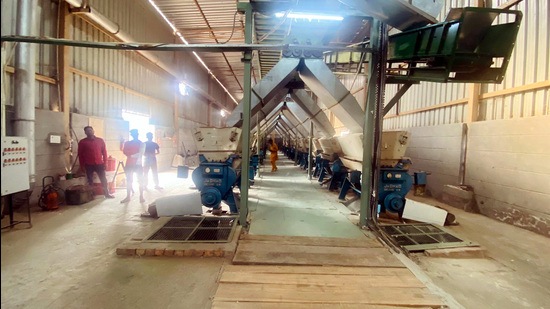
Industry sources attribute the shortage of raw cotton to dismal production across the semi-arid districts.
State cotton co-ordinator at Punjab mandi board Rajnish Goel said till October 20, the arrival of the ‘white gold’ in different mandis was 79% less than the corresponding period of 2021.
“To date, Punjab mandis have recorded 1.03 lakh quintals of cotton whereas last year 4.86 lakh quintals had arrived in the market by October 20,” said Goel.
Data says farmers are being paid much higher than this marketing season’s minimum support price (MSP) of ₹6,380 for long staple varieties.
Market watchers say this time the market trend suggests that Punjab’s production may be decimated to 4 lakh bales or 20 lakh quintals against 29 lakh quintals in the 2021-22 kharif season. Last year, the crop was severely hit by the pink bollworm infestation as the state produced a bumper 49.50 lakh quintals in 2020.
Factory owners say they are facing financial losses as this season, less than 5 units are able to start processing raw cotton into cotton and cotton seed.
They demand the state government grant a special package for the ginning units in the same way in which cotton farmers are compensated due to a failed crop season.
A veteran factory owner from Bathinda’s Sangat town, Ashwani Kumar said a unit requires about 200 bales or 1,000 quintals to run a factory but this year there is hardly any flow of raw cotton in the market.
“A factory has an estimated annual budget of ₹35-50 lakh on three elements of salaries, maintenance and fixed electricity charges. Till 1992, Punjab had over 450 ginning mills and for years my factory was processing up to 2 lakh quintals in a season. This year I could not start work even once and I am planning to wind up the operations from next year,” he said.
Punjab Cotton Mills and Ginning Association president Suresh Bansal said owing to the negligent attitude of the state government, more than 75% of factories closed down since 2005.
This time only a handful of units were operational for a few days only, he added.
Blaming the state government for the absence of a dedicated policy for agriculture and the industrial sector, Bansal demands a waiver of fixed electricity charges to reduce the financial burden.
“A cotton ginning unit operator has to pay about ₹one lakh fixed electricity charges every month. As there is an insufficient crop for the second consecutive season, we are unable to run factories. But factory owners have to pay fixed charges even when electricity is not used,” he said.
An arthiya and cotton mill operator from Mansa Mukesh Kumar said, unlike the previous season, cotton quality is better but production is dismal.
Units are buying cotton from mandis at competitive rates but thread factories have started paying less for the processed cotton which is further hitting the financial prospects of ginners, he said.
“Fearing attack of pink bollworm and whitefly, a sizeable number farmers in several areas ploughed cotton crop to sow paddy. By the first week of September, the crop was very good but the prospects were dashed when untimely rain hit by the end of September,” said Kumar.


